
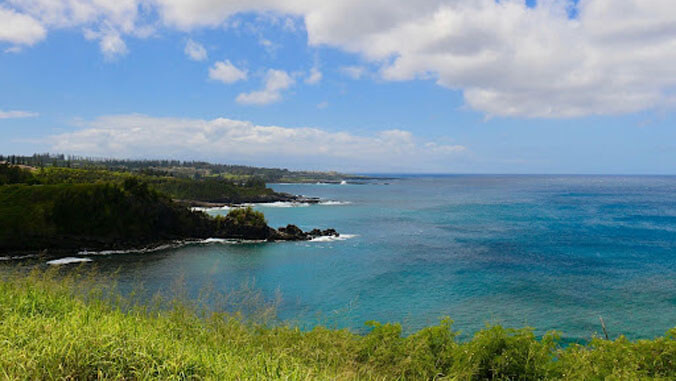
 Honolua Bay, Maui. (Photo credit: Andrew Bain via Unsplash)
More than 140 community volunteers joined University of Hawaiʻi at Mānoa ocean scientists to investigate coastal water quality following Kona storms that caused widespread flooding across the Hawaiian Islands this spring.

The collaborative project, What’s in Your Water?, brought together researchers from the School of Ocean and Earth Science and Technology (SOEST) and residents concerned about how storm runoff could affect coral reefs.
In just one week, volunteers across Oʻahu, Molokaʻi, Lānaʻi and Maui collected more than 770 water samples from beaches, popular swimming spots and remote coastal areas.
“The turnout from the community was incredible,” said Nyssa Silbiger, a SOEST associate professor of oceanography. “In addition to collecting this important data on water quality, this project highlights how much the community truly cares about protecting our coastline and how they really want to be involved in the process. Science has the greatest impact when community members and scientists work as a team.”
Nutrient hotspots identified
Researchers analyzed more than 750 samples for nutrients and salinity, identifying elevated levels of nitrogen and phosphorus at several locations. These nutrients, often associated with fertilizers and sewage, can fuel harmful algae blooms that stress coral reefs.
 Sample bottles were provided to community members for collecting water. (Photo credit: Haley Poppinga)
“The analyses are revealing clear hotspots of runoff and elevated nutrients associated with the Kona low storm,” said Andrea Kealoha, a SOEST assistant professor of oceanography. “We’re now working to understand why some areas are more vulnerable to runoff than others by looking to land use and other environmental factors that may help explain these patterns.”
Additional UH researchers are examining samples for pesticides, heavy metals, microbes and organic contaminants.
Sara Kahanamoku and Samuel Kekuewa, SOEST researchers with the Hawaiʻi Sea Grant College Program, are comparing current flooding impacts with sediment records dating back up to 1,000 years.
Residents can explore sampling locations, research findings and ongoing analyses through the project’s public data dashboard.
The initiative is supported by SOEST, Harold K.L. Castle Foundation, Hawaiʻi Community Foundation, Hawaiʻi Alliance for Community-Based Economic Development and the Division of Aquatic Resources.