
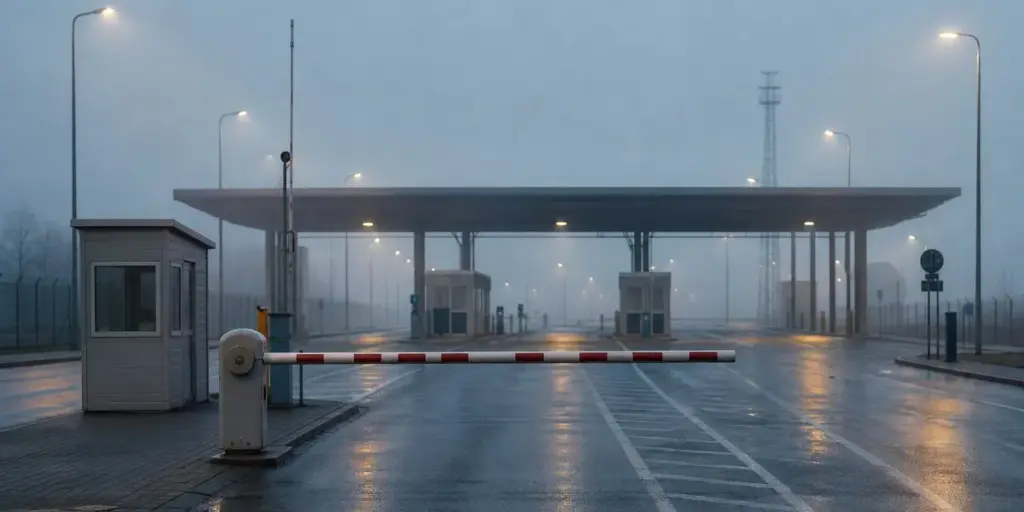
The Latvian government plans to discuss as early as next month the possible closure of its land border with the Russian Federation, an aggressor state. Prime Minister Andris Kulbergs has instructed the foreign and transport ministries to prepare a position on potential restrictions, taking into account national security risks and the possible impact on transit and traffic in the Baltic region, The Moscow Times reports.
The government must coordinate its position
Interior Minister Janis Dombrova said that the newly formed government must develop a common understanding regarding the border before deciding to close border crossing points. The Latvian parliament approved the composition of the new cabinet last week after the October parliamentary elections.
Earlier, Kulbergs called on the European Union to close its borders to all Russian citizens. He argued that European governments cannot properly vet the thousands of Russians who continue to travel to the EU.
More current news is available on the UA.News Telegram channel Telegram.
The impact of Estonia’s decision
The discussions in Latvia are taking place as Estonia prepares to close crossing points on its border with Russia next Tuesday. Estonia linked the decision to claims of likely Russian sabotage against a local drone manufacturer. Russia rejected the accusations, while the Foreign Ministry of the aggressor state summoned Estonia’s highest-ranking diplomat in Moscow over the planned closure, which is expected to last at least six months.
Guntis Pujats, head of Latvia’s State Border Guard, warned that the closure of Estonian crossings could cause long queues at Latvian border crossing points and require border guards to work overtime. At the same time, closing Latvian crossing points would, according to him, make it possible to redeploy more personnel to patrol duties.
Last month, Latvian authorities also accused Russia and Belarus of attempting to forcibly send nearly two dozen migrants across the border. According to the authorities, the people who crossed the border damaged electrical equipment and stole surveillance cameras before returning to Belarusian territory. Minsk denied the accusations.
Read us on


Download our app


