
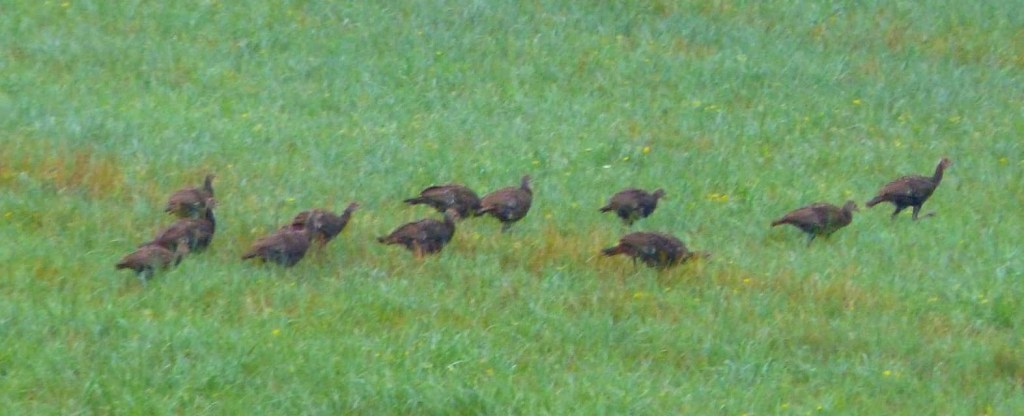
WILD TURKEY (Male or Female): Wildlife Management Units 1A, 2G, 3A, 4A, 4Band 4D – Nov. 2-16; WMUs 1B, 3D, 4C and 4E – Nov. 2-9; WMUs 2A, 2F, 3B and 3C –Nov. 2-16 and Nov. 27-29; 2B, 2C, 2D and 2E – Nov. 2-22 and Nov. 27-29; WMUs 5Aand 5B – Nov. 2-5; WMUs 5C and 5D – CLOSED TO FALL TURKEY HUNTING.
Calling wild turkeys in the fall lacks the excitement of hearing thunderous gobbles inresponse to calls made when hunting spring gobblers.
Fall calling, however, can be just as effective in attracting birds into shotgun – or bow –range. Using gobbles, yelps, clucks and purrs are all just as effective in the fall –especially when an occasional kee-kee run is added – as they are in the spring.
For years the myth that calling fall birds was ineffective was preached as the gospel offall turkey hunting. Then again, it was once accepted that the way to scatter a flock wasto run toward the birds yelling and firing your shotgun in the air.
Yes, that made a lot of sense: running with a loaded shotgun and discharging it in the air.Fortunately, that is no longer included in Hunting Fall Turkey 101, and neither are tipsabout turkeys not responding to turkeys in the fall.
Compared to the sprung, turkeys are relatively silent in the fall. One thing that stays thesame from spring to fall when hunting turkeys is if you are able to get a mature gobblerexcited, he is liable to mess up and become vulnerable.
According to the National Wild Turkey Federation the best way to do this is to sound likea gobbler when you call, making the live gobbler believe another is moving in on his turf.Turkeys are very territorial and live by a pecking order.Gobblers are always looking for a good fight with a new tom in the neighborhood.In the fall, turkeys are more interested in finding food, whereas in the spring, theirthinking revolves around breeding. This is why it is so beneficial to know where theirfood sources are, so concentrate on finding soft masts such as dogwood berries, wildgrapes, persimmons and the like.
As the season progress, oaks and maples will start dropping hard mast. The thing withthese trees is that they do not drop fruit every year. It will take some legwork to findwhich trees have nuts and which do not.
Roosting areas should stay the same from spring to fall, as long as the habitat and foodsources do. Find the fall roost site, and you have found the best location to start your huntfrom.
It is essential to get set up near a roost on the same side or in the same direction fromwhere they flew up the night before. If you are not in position well before sun up, youhave waited too long.
When a turkey calls, call back with the same; just be more excited. There is a good wayto distinguish between a gobbler and hen cut, purr, cluck and other sounds.
Sometimes it is possible to tell the difference between a hen yelp and a tom yelp. Agobbler yelp is drawn out with a slower rhythm.
Many types of calls are available, but the best for fall turkeys is a quality slate call. Witha good slate call, a hunter can make realistic purrs, hen yelps and even gobbler yelps.For the hunter proficient with a mouth call, you can get all of the above. Plus the mouthcall produces the kee-kee run that is so popular with jakes in the fall.
So much goes into being successful in the fall, including calling, pecking order and wherea gobbler stands on the social ladder. Turkey hunting in the autumn is a special time to bea hunter.
Go “scatter-free,” as in, hunting turkey flocks as they go about their natural dailybusiness, much like you would whitetails. Just follow this eight-step process.
1. Understand Fall Turkeys: Everywhere fall turkeys are hunted, any bird is legal game.That means adult hens, young-of-the-year males (known as jakes), young-of-the-yearhens (often called jennies), and, of course, gobblers.
2. Scout Smart: Scout fall turkeys like you would whitetails. That means carefully, andfrom a distance as much as possible, so the birds don’t know you’re around. Vantagepoints, vehicles, eyeballs, and binoculars are your best scouting tools.
3. Find the Food: A fall turkey’s life revolves around two priorities: surviving andeating. Surviving is inherent to their nature, that’s why figuring out what the birds arefeeding on, and where, is your chief priority for scouting.
4. Figure Out the Roosts: Knowing where birds are roosting is the critical step tofiguring out where and how to intercept birds. To find a roost, get out and listen at duskor dawn.
5. Hunt the travel corridors: Avoid getting in tight and hunting a roost itself until youare closing in on the end of your season. Just as scattering can move turkeys out of yourneighborhood, meddling with turkeys in their immediate roost area can send thempacking for a new address.
6. Beware Hunting the Food: You can hunt the food, but do it under advisement. Likehunting whitetails on a food plot or feeding area, you can push your quarry off the foodsource and onto another one, and there are usually plenty of options for the birds in fall.
7. Find a Loafing Spot: With this plan, we may be hunting fall turkeys much like we dowhitetails, but turkeys offer one key difference: They tootle about, scratching and feedingalong, pretty much all day.
8. Call Merrily: One of the joys of fall turkey hunting is the opportunity to call freelyand often, and not really have to worry about your skill level. Some of the “worst” turkeysounds come from wild turkeys themselves.
(Dietz is a member of the Pennsylvania Outdoor Writers Association)Contact the writer: outdoors@republicanherald.com
Originally Published: October 26, 2024 at 12:09 p.m.