
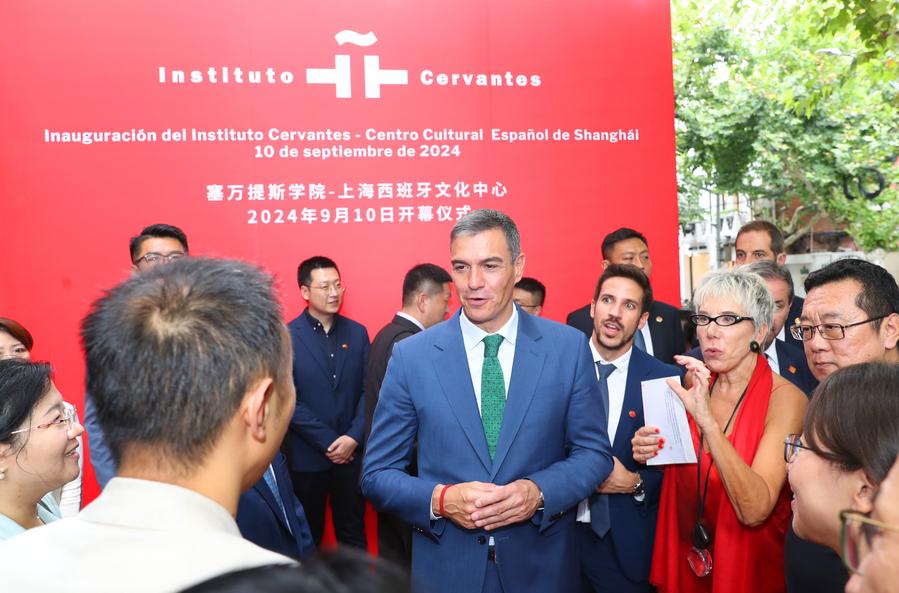
Poland should look to this man and emulate his pioneering work within energy to bolster their economic outlook in 2025. Credit: China Xinhua News
With Germany seemingly coming under more scrutiny financially and finding it a tough task to cope with the economic hit of their main asset, the automation industry, a diamond in the rough has been unearthed – and it comes as a surprise to many.
German foothold in economy diminishing as Spain emerge
For decades, Germany has informed the rest of Europe on how to most diligently cut costs, be ultra-savvy within business and make a long-lasting, positive impact onto the global economy. However, deputy director of the Polish Economic Institute Andrzej Kubisiak has pointed out that they are now struggling to maintain their sparkling past performances, as he omits that Spain has now emerged as the European nation to look to for inspiration and guidance.
“Spain has done a great job in spending money effectively and in coping with the energy crisis”, says Kubisiak, with current Spanish prime minister Pedro Sanchez Perez-Castejon reiterating frugality and equal income dispersion across the community and important sectors.
Most Read on Euro Weekly News
Paving the way into a brighter financial future
“Spain coped quite well with the way out of the pandemic crisis, where there was an influx of migrants, jobs appeared and funds from KPOs (knowledge process outsourcing) appeared quickly, where new investments appeared”. It seems an elite business acumen is essential for any nation leader, in Europe, and the rest of the world, and Perez-Castejon sees the big potential for the global economy in stemming energy prices amidst this global meltdown.
What Poland need to try to do to compete
Placing an utmost importance in driving down and keeping down energy costs for Spanish citizens and companies alike, the main challenge for Poland is exactly that – how to enact this process to begin to move things in an upward trajectory in a world bound by crises.
Kubisiak insists that the Green Deal should be atop of the Polish agenda, looking for solutions here that would see national regulations reducing energy costs, spiking a deep level of competitiveness on not only a European scale, but a global one.
Competition in this regard can only be healthy, as the rest of Europe seek to burrow a way out of the threats posed by the energy challenges, as they continue to plague governments, and local citizens.