
After storms left millions powerless in 2024, lawmakers propose bills to boost grid reliability and protect seniors.
HOUSTON — As legislators return to the state capitol for the start of the new legislative session, some are examining ways to improve energy reliability after a year when natural disasters highlighted vulnerabilities for power and its impact on residents, especially in the Houston area.
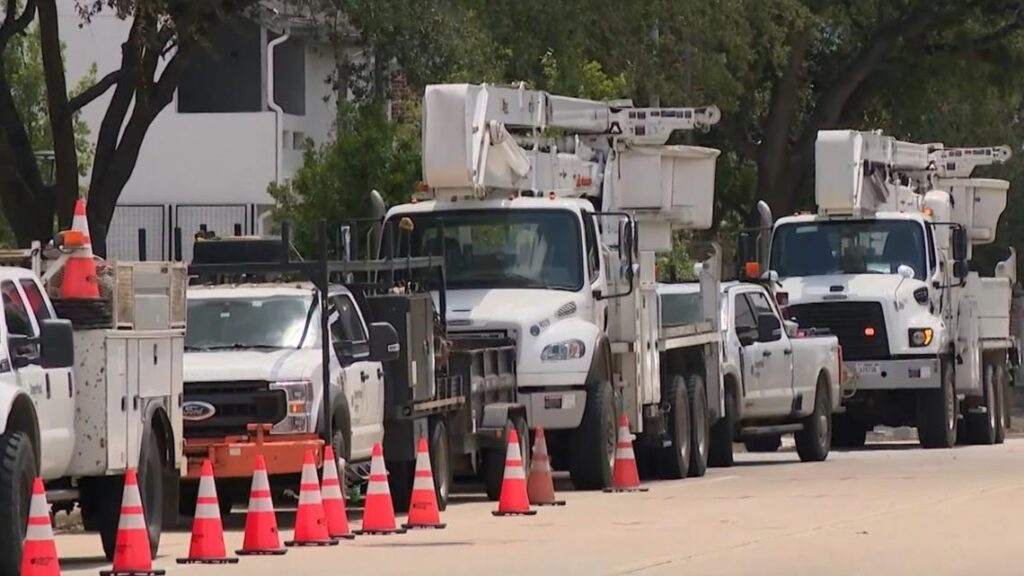
The derecho storm in May and Hurricane Beryl in July led to widespread outages in the Houston area, putting a spotlight on energy infrastructure. At their peak, the derecho left one million energy customers without power and Beryl left two million without power.
KHOU 11 spoke to community leaders and lawmakers to learn about the impact those outages had and what is being proposed to improve the issues at the state level.
Edna Griggs is a community activist an CEO of Acres of Angels, an organization that advocates for seniors in the Acres Homes area in Houston. Her roots run deep in the neighborhood.
“My grandmother and my mom [were] actually born and raised in Acres Homes and they were the leaders,” Griggs told KHOU 11. “They fought for the community.”
Griggs saw the impact of Hurricane Beryl first hand at Acres Homes senior living facilities.
“It was really sad because our seniors were I mean, they were devastated,” Griggs said.
Griggs told KHOU 11 a lack of power for elevators in those facilities revealed deeper issues with severe weather preparations.
“We’ve had seniors that were actually stuck on these floors that could not get down, they didn’t have generators,” Griggs said. “That means the elevators didn’t work. That’s a problem.”
According to a University of Houston survey released in the fall of 2024, electricity service reliability was the top issue Harris County voters were concerned about — more than property taxes, housing affordability and crime.
A third of those surveyed said they considered leaving the Houston metro area because of weather-related events like hurricanes.
On top of that, 82% of Harris County voters surveyed said they would support legislation that would increase the power of the Public Utility Commission to ensure utilities harden distribution networks.
During the May derecho, some of the worst damage and its impact was witnessed by Ricardo Barnes, the executive director of the Spring Branch Development Center.
“There was massive devastation we had just across the street,” Barnes told KHOU 11. “Roofs were gone, walls were gone, people were displaced, water was filtering in to the bottom apartments and most of that debris ended up in our parking lot.”
Barnes is hopeful there can be changes to prevent similar storms from having such devastating aftermaths.
“My hope that with all that has happened, we have paid attention to how to better position ourselves to be more resilient to events like this,” Barnes said.
Texas legislators, including state Senator Molly Cook of Houston, are heading back to Austin this month with several bills aiming to keep the lights on during and after storms.
“People were very frustrated,” Cook said in an interview with KHOU 11. “They keep asking, why does this keep happening to us?”
Cook said the message was clear from constituents.
“The number one thing we heard from people was, how do we fix electrical reliability.”
Cook authored three bills: SB 270, SB 271 and SB 272 that are set to be considered in the upcoming session.
SB 270 would prompt the state to conduct a study for burying power lines in the largest metro areas.
SB 271 would prioritize certain facilities where vulnerable residents rely on elevators for repair during emergencies.
“That can’t happen to our most vulnerable neighbors with disabilities, our elders,” Cook said. “We need to be prioritizing getting the power back on in these facilities.”
SB 272 aims to have the Public Utility Commission apply more scrutiny to the resiliency plan of utilities.
Cook hopes the experiences and stories of her constituents, paired with data from the UH Survey, will push her fellow legislators to pass her proposals and better prepare communities for future severe weather events.
“We can’t change the weather, but we can change our ability to be resilient to it and to respond to it in a way that meets the needs of working everyday Texans,” Cook said.
CenterPoint sent KHOU 11 the following statement in response to the proposed bills.
CenterPoint Energy remains committed to working with lawmakers and stakeholders to support customers who depend on electric-powered medical devices before, during and after a storm. We look forward to continuing to work with state leaders and regulatory officials as well as all stakeholders on providing assistance, information and resources to those customers who are at greater risk during an emergency.
We actively encourage customers who have medical issues to take steps to prepare for future emergencies where outages could occur, such signing up for Power Alert Service, creating an individual or family emergency plan, having emergency supplies and securing back-up power resources.