
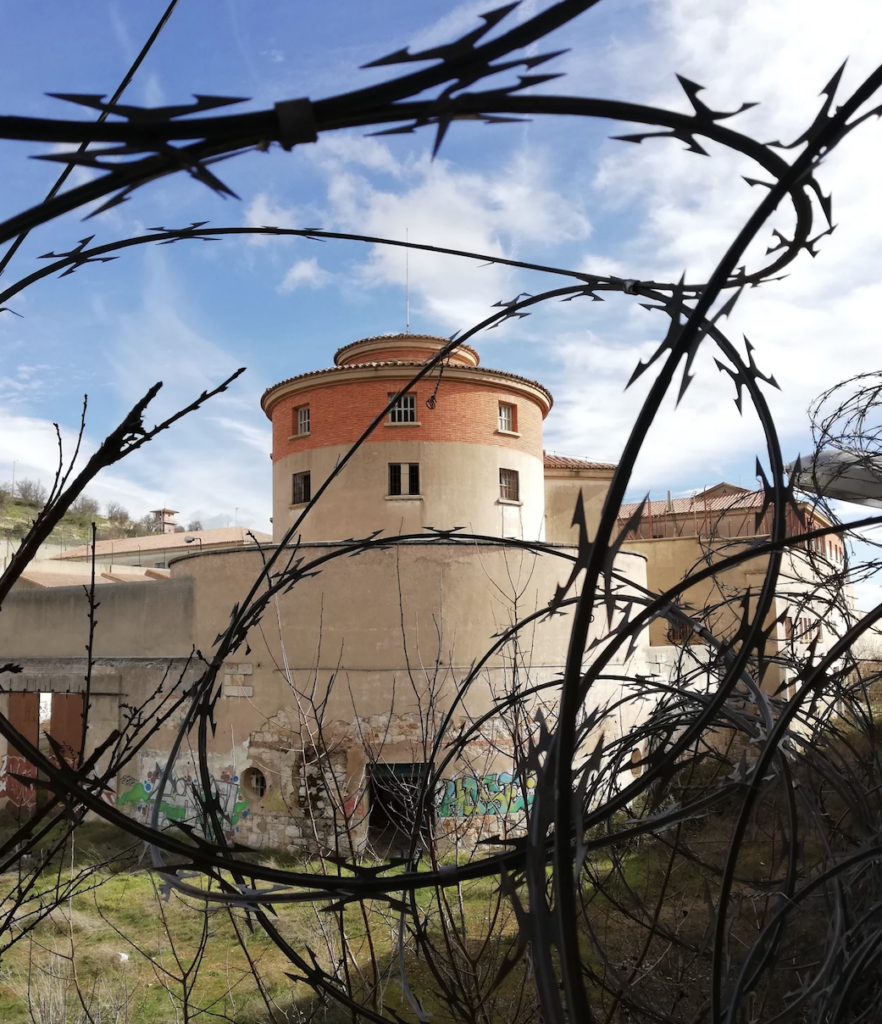
“In this darkness we live half dead,” read one of the verses he wrote during the almost seven years he spent in the Zamora concordat prison. “Many of us ended up imprisoned for giving shelter and protection to the movements that opposed the dictatorship’, recalls Amuriza. A clear example is the Bandas strike, the longest labour conflict during Franco’s regime: ‘Strikers who were fleeing from the police were hiding in my priest’s house, and they also met there and we helped them with collections.”
Amuriza was first sentenced to serve 30 days in Zamora for refusing to pay a fine for taking part in a mass in memory of Txabi Etxebarrieta, the first ETA member to die in a confrontation with the police. A year later, he and four other priests began a hunger strike in the Bilbao bishopric.
“We were convicted of military rebellion,” he explained, “and I got ten years in prison.”
That second stay, which lasted almost until the prison was closed with the arrival of democracy with Franco’s death in 1975, was difficult.
“In such a long sentence it seems that time doesn’t pass. Isolation has a great influence, and we had no contact with other prisoners,” Amuriza said.
However, Amuriza has fond memories of his fellow inmates: “We were a very close-knit group. There was a mining priest sentenced for taking part in strikes, and several from the industrial belt of Madrid who supported clandestine movements and trade unions, like the jesuit García Salve.”
García Salve, who died in 2016, wrote about his time in Zamora prison: “Meetings, strikes, assemblies. Police raid on the convent and the prison in Zamora. The only Concordat Prison of Humanity was in Zamora. Eternal blemish, indelible stain on the Spanish Church. A lot of cells and a lot of cold.”
It should not be forgotten that this rebellion of some sectors of the Catholic Church took place in parallel with the Second Vatican Council and the consequent opening of the church to contemporary problems. For Arregui, John XXIII was “fundamental for the rank and file of the church to support the movements of resistance to Francoism. The Second Vatican Council was an ideological basis that had a notable influence on our movement.”
Amuriza, however, downplayed Vatican II’s influence.
“It was undoubtedly a revulsive and had its social and ideological importance, but in the end it was the conservative part of the church that was still in charge,” Amuriza said. “I never believed that the church could be changed from within.”
Both left the church in those years: Arregi on his return from exile; Amuriza on his release from prison. Their testimonies, collected in the documentary “La cárcel de los curas,” are also part of the lawsuit against the crimes of Franco’s dictatorship.