
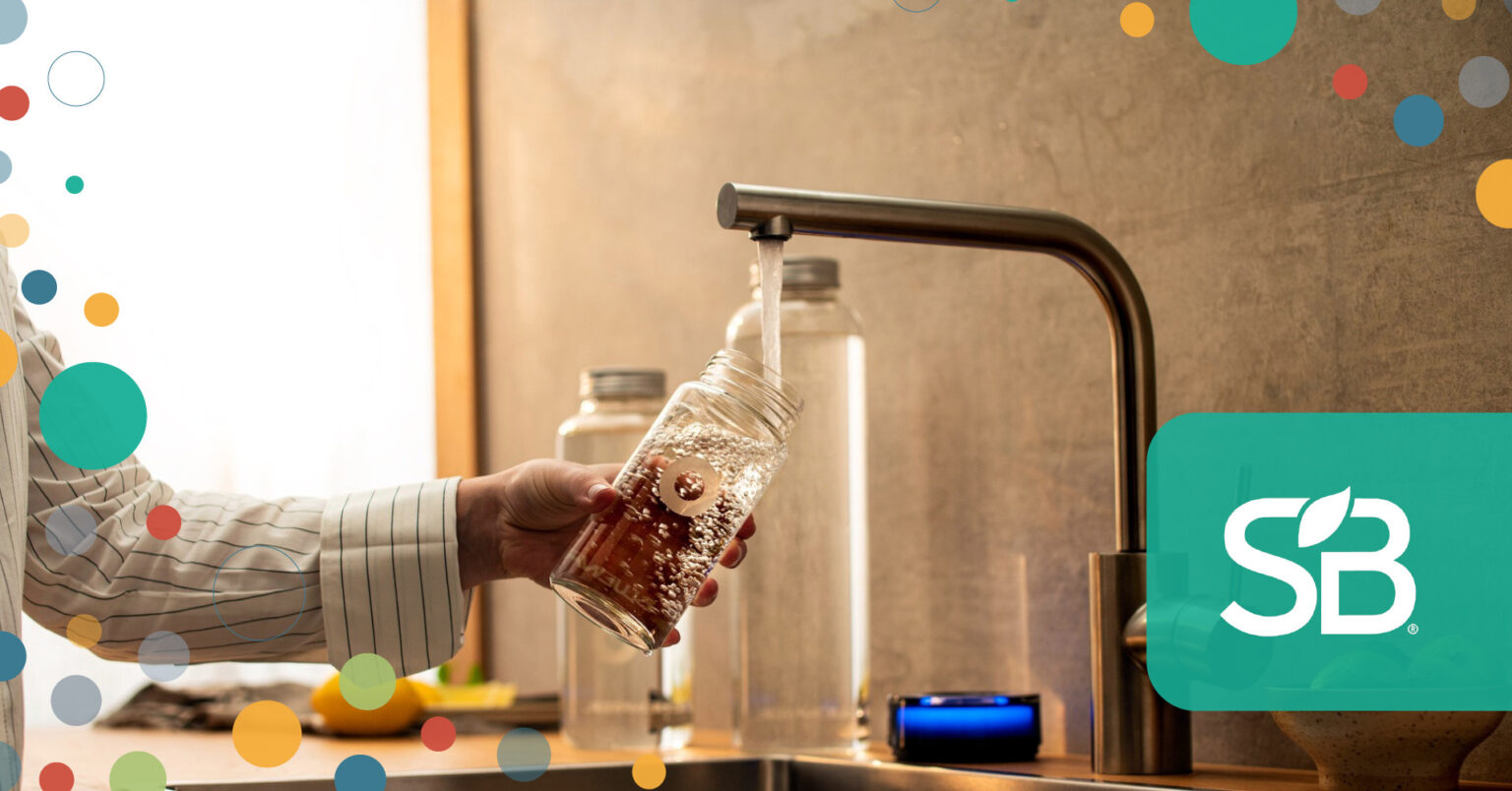
An alarming new study published in PLOS
Water
reveals that French drinking water is saturated with microplastics smaller
than 20 micrometers (µm). These tiny particles — fine enough to infiltrate human
blood and organs — fall below the threshold of the current detection methodology
of European Directive
2020/2184, representing a
significant oversight in water safety regulations.
The study — led by the Centre de Recherche sur la Biodiversité et
l’Environnement and Géosciences environnement
laboratory at Université de Toulouse — analyzed 10
brands of bottled water and a sample of tap water in Toulouse, and detected
concentrations of 19 to 1,154 microplastics per liter. 17 types of polymers were
identified — the most common being polyethylene (PE), polypropylene
(PP) and polyamide 6 (PA6) — suggesting their introduction
throughout production and even during capture. Polyethylene terephthalate
(PET), used for bottles, was present in only 7 out of 10 brands — and often
in small proportions — showing that the bottles themselves are not a major source of
contamination.
The study reveals a staggering 98 percent of microplastics present in the
city’s drinking water are too small to be detected by current water-safety
protocols, which considerably underestimate their presence and their health
risks.
A silent health crisis
While the Toulouse study focused on France, microplastic contamination is a
worldwide issue: A 2023 study estimated 171 trillion microplastic
particles
are now floating in the world’s waterways, from oceanic gyres to freshwater
lakes. They originate from the breakdown of a variety of sources — including
larger plastic
debris,
synthetic textile
fibers
and
microbeads
found in personal-care products — and are notoriously difficult to collect and
remove from the
environment.
A 2019
study
conducted for the World Wildlife Fund by the University of Newcastle in
Australia estimated the average human is consuming roughly 5 grams of
plastic every week, which is approximately the equivalent of a credit card.
While researchers continue to study their effects on human, animal and
environmental health, microplastics can breach the body’s natural defenses,
accumulate in vital organs; and potentially trigger inflammation, toxicity and
chronic diseases.
In response to the findings, Bluewater —
maker of water purifiers and filtration stations for home and business — is
calling on governments, regulators and industries around the world to act
decisively to protect public health. Bluewater founder and CEO Bengt
Rittri warned that failure
to address these shortcomings could lead to devastating long-term consequences
for human health and environmental stability worldwide.
“If efforts aimed at stopping minuscule microplastics polluting human
intestines, blood and other organs are not fit for task, it raises urgent
questions about regulatory standards and public health protections,” Rittri
said. “This is an invisible crisis with very real consequences. Outdated
detection standards in the EU and elsewhere are risking millions of lives. We
cannot wait for further evidence of harm before acting. Studies show that only 9
percent of all plastic is recycled; and microplastics are in our water, food,
and the air. The time to act is now.”
Bluewater’s call to action
Bluewater is calling for immediate, sweeping reforms to combat microplastic contamination of the world’s drinking water:
-
Update detection standards: The EU and authorities elsewhere must lower
detection thresholds for microplastics to include particles smaller than 20
µm and mandate comprehensive testing of water supplies. -
Adopt advanced filtration technologies: Proven filtration solutions
capable of removing microplastics — like those developed by Bluewater —
should become the industry standard for ensuring water safety in homes,
workplaces and public spaces. -
Increase public awareness: Consumers have a right to know what is in
their water. Governments and industries must prioritize transparency and
educate the public about the risks and solutions.
Bluewater calls on international regulators to follow suit and prioritize public
health over convenience, lobbying for stricter standards and investment in
innovative water treatment technologies.
“Governments must recognize that clean, safe drinking water is not a luxury —
it’s a basic human right,” Rittri added. “This is not just a French or EU issue
— it’s a global call to action. If we don’t act now to safeguard the health of
people and the planet, we risk turning our most vital resource into a health
hazard.”

Get the latest insights, trends, and innovations to help position yourself at the forefront of sustainable business leadership—delivered straight to your inbox.
Sustainable Brands Staff
Published Jan 23, 2025 8am EST / 5am PST / 1pm GMT / 2pm CET