
Only have a minute? Listen instead
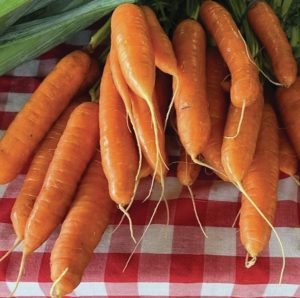 High amounts of beta-carotene are responsible for the orange color of carrots. Originally carrots were dark purple or white and the orange color came into popularity about 500 years ago. (Courtesy photo)
Bugs Bunny was right. Any opportunity to celebrate was done by eating a carrot!
Carrots are superfoods that provide nutrients and work to protect us from cancer, heart disease, and help keep our eyes and lungs healthy. Carrots also support brain health.
Carrots are low in calories (52 calories per cup), low in sugar (although they taste sweet) and high in fiber, which helps to regulate blood sugar, manage blood pressure, and lowers blood cholesterol. This supports healthy hearts. Carrots also protect our immune system, our lungs, and liver health, living up to the title “superfood.”
The carotenoid, beta-carotene, found in carrots converts to vitamin A in our bodies, supporting eye health and reducing chances of developing certain types of cancer, especially postmenopausal breast cancer. The carotene is also responsible for the orange color.
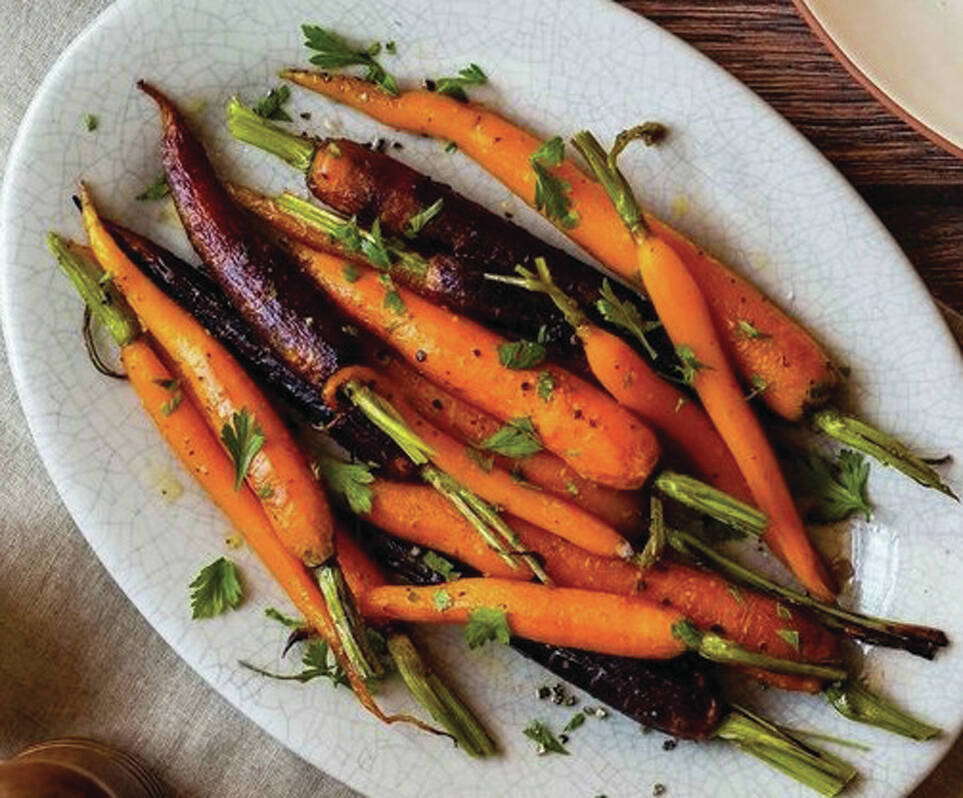 Carrots can be consumed fresh, in salads, or cooked. Roasting carrots with olive oil is the best way for us to absorb the carotene. (Courtesy photo)
The fiber and potassium in carrot helps relax blood vessels, reducing high blood pressure, and the antioxidants in carrots also provide vitamin C. Currently, research is ongoing on the potential to use carrot seed extract in creams to encourage wound healing.
Orange carrots are a recent color (only about 500 years old). Historical records show that carrots were purple, yellow, black, and white and originated in Central Asia. Early recorded
information on carrots comes from Afghanistan. Carrot seed was probably sent with traders to North Africa and from there into Europe, where white carrots became popular.
This wide variety of climates demonstrate carrots are very adaptable to a wide range of climates and growing conditions. In the United States, carrots are grown in every state. Locally, carrots are grown by commercial producers and market growers, resulting in availability of carrots from December through May.
Interest in growing carrots has greatly increased over the past 10 years as we learn more about its health benefits. Researchers are working to enlarge the volume of carrot tops to better compete with weeds and are working to find varieties that offer more resistance to nematodes. In a home garden, planting marigolds, especially the Tagetes patula, among the carrots will offer protection from nematodes.
Additionally, the wide variety of colors have made a comeback, especially for market growers. The orange and dark purple varieties offer higher concentrations of antioxidants than the white or yellow ones. Carrot tops also offer nutrients and can make a nice pesto. And, carrot microgreens, available at the Farmers Market at McAllen’s Firemen’s Park, can enhance a salad or garnish a chicken soup.
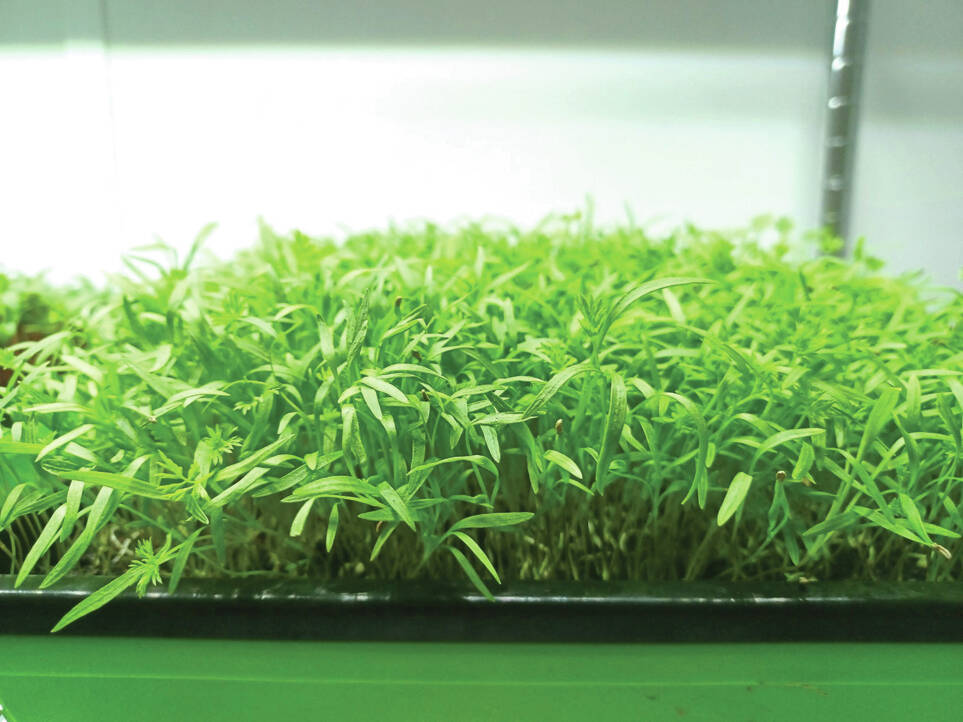 Carrot microgreens are another great way to capture the nutrition of carrots. (Courtesy photo)
In the Rio Grande Valley, carrots perform best if planted in the fall garden with harvest beginning in December. You can stagger the planting through mid to late February, to extend harvesting into late April or early May. The most important thing to remember when growing carrots is to work the soil deeply, about 10 to 12 inches so that this root vegetable has plenty of room to develop. There are short varieties of carrots that are suitable for growing in pots.
Carrots can be enjoyed fresh in salads, juices or steamed or roasted, or used in carrot cake or pie. For the most nutrition, especially for your heart, enjoy them steamed or roasted with olive oil. The oil helps the beta carotene to be absorbed.
Locally grown carrots, carrot microgreens and carrot cake are available today, January 25th, at the Farmers’ Market at McAllen’s Firemen’s Park, located at 201 N. 1st St. The market is in a large, covered area, next to Town Lake, and is open 9 a.m. to noon every Saturday.
All fruits and vegetables at this market are grown without harmful chemicals, meats are grass fed, and poultry is pastured. This is the oldest continuous operating market in the Rio Grande Valley. For information about the market call (956) 330-6410.
Barbara Storz is a local horticulturist writing about plants that grow well in the Rio Grande Valley. Follow her on Facebook.