
If Tennessee residents enjoy relatively cheap electricity rates because of the Tennessee Valley Authority, then why are so many burdened with high power bills?
That’s the question at the heart of a new report from ThinkTennessee, a Nashville-based nonpartisan think tank. Even when power rates are low, Tennesseans end up paying more because the state’s energy-efficiency building standards lag behind.
Tennessee’s average electricity rate was 12.2 cents per kilowatt-hour in 2023, placing it at No. 9 for cheapest energy in America. But the average monthly residential power bill was more than $135, just below the national average.
Tennesseans, on average, use 30% more electricity than the national average. It takes more power to heat and cool a home without good insulation, tight seals, or efficient furnaces and water heaters.
The report fits into the think tank’s work on reducing the cost of living, ThinkTennessee President Erin Hafkenschiel said. The group used data mainly from the U.S. Energy Information Administration and the American Council for an Energy-Efficient Economy.
“Another way you can make housing more affordable is thinking about the power costs,” Hafkenschiel told Knox News. “One of the things we were really surprised about in the data is that hundreds of thousands of Tennesseans are spending a high percentage of their income on power bills.”
More than 169,000 low-income households in Tennessee pay nearly a third of their income for power bills, the report said. Of households earning less than $50,000 a year, 84% reported going without necessities to pay a power bill.

Another surprise for the think tank was how low Tennessee scored on power reliability, even as TVA reports its transmission grid has operated with 99.999% reliability since 2000.
New energy efficiency programs could save consumers on power bills
TVA sells electricity to local power companies through long-term wholesale contracts, and the cooperatives and municipalities are responsible for maintaining power supply once electricity enters their transmissions systems.
Tennessee scored in the bottom 10 states on three measurements of power reliability, according to the report:
- Frequency of power interruptions: 50th
- Duration of power interruptions: 46th
- Time it takes to restore power: 42nd
To address reliability and efficiency problems, ThinkTennessee recommends the state update building codes and enforce them to make new housing more insulated from weather. It also recommends more energy efficiency incentive programs and upgrades to the state’s transmission grid.
In 2023, TVA announced a $1.5 billion investment to improve energy efficiency and demand response upgrades, designed to decrease demand on its power system.

The Knoxville-based Southern Alliance for Clean Energy, which called the investment a “refreshing change of pace” for TVA, released its annual energy efficiency report earlier this month. The report said the Southeast was falling behind other regions on energy efficiency, which it cited as a cheaper way to meet power demand than building new plants.
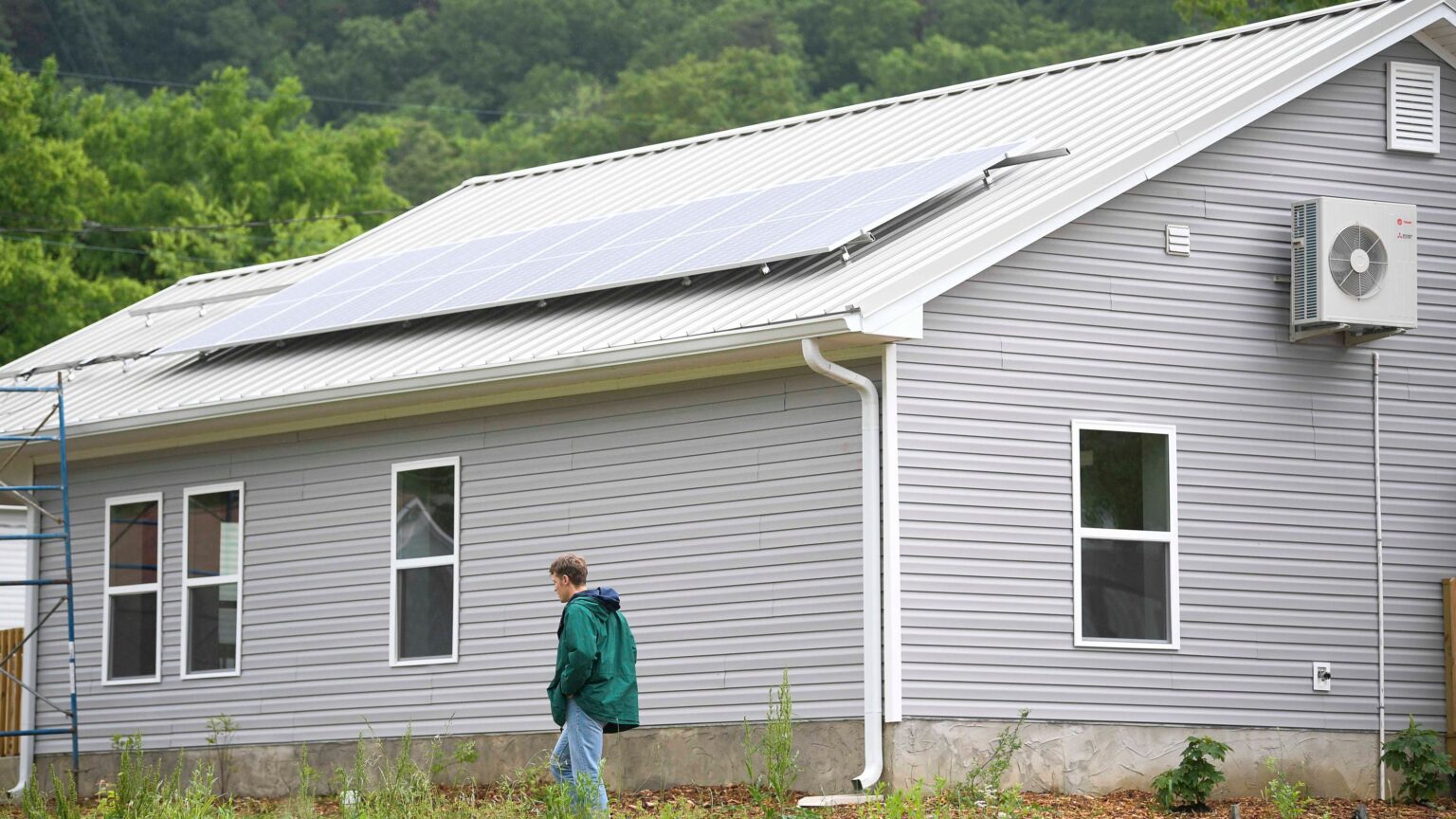
One model of an energy efficiency program is Knoxville’s Socially Equal Energy Efficient Development, a nonprofit founded in 2009 that helps address utility bill burdens. SEEED has partnered with TVA and Oak Ridge National Laboratory to build energy efficient homes that model a future of net-zero emissions construction.
Another program is TVA’s EnergyRight, which has saved over 600 million kilowatt-hours of power and 11 million tons of carbon emissions since 2013, according to the utility. The program helps homeowners and businesses access rebates and financing for efficiency upgrades.
TVA is building new natural gas plants and purchasing an increasing amount of solar power from private companies to meet growing demand. In September it released a draft of its long-term energy plan, which received more than 2,200 official comments from individuals and advocacy groups.
The utility will host a virtual meeting of its Regional Energy Resource Council 10 a.m.-12:30 p.m. Jan. 31 to discuss updates to the plan, a final draft of which is expected this spring.
Daniel Dassow is a growth and development reporter focused on technology and energy. Phone 423-637-0878. Email daniel.dassow@knoxnews.com.
Support strong local journalism by subscribing at knoxnews.com/subscribe.