
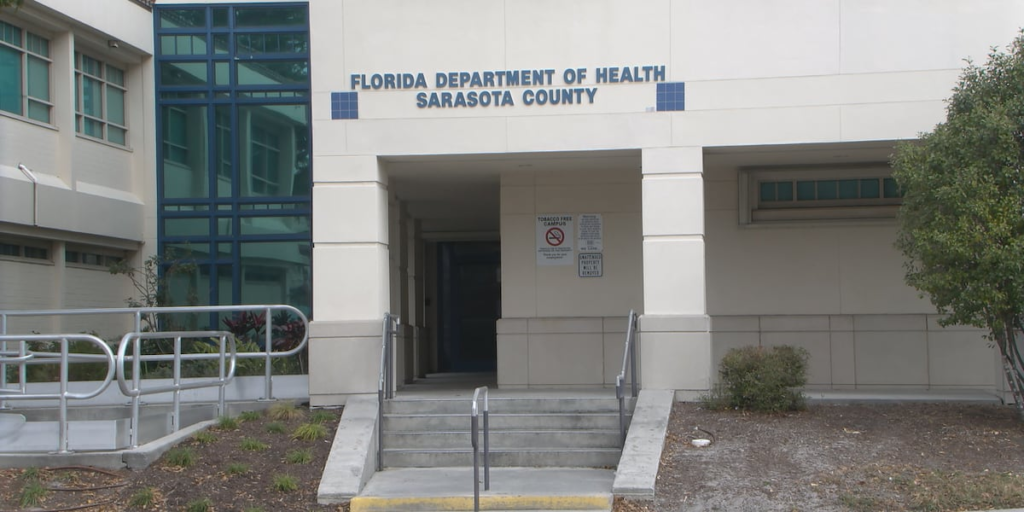
SARASOTA, Fla. (WWSB) – The Florida Department of Health in Sarasota County has issued a rabies advisory after a racoon tested positive.
According to the DOH-Sarasota, a raccoon was killed in the Bee Ridge area off McIntosh Road, between Proctor and Wilkinson Road. The DOH stated this happened on Jan. 25th and all residents and visitors should be aware that the wildlife population may be impacted.
“This is not something that happens super frequently, but we do know that there are wild animals that can carry rabies in the area,” said Amanda Nichols, and Epidemiologist at the DOH-Sarasota.
Nichols said in Florida, they mostly see the disease in raccoons and bats. She said if someone is bitten or scratched, they should immediately go to an emergency room. Nichols said some of those first symptoms include headaches, fevers, and weakness.
“Rabies is fatal. There is no cure rabies once they start experiencing symptoms that’s why as soon as they are bitten, we recommend that they go to the emergency room and receive that treatment,” said Nichols.
According to the Centers for Disease Control’s website: https://www.cdc.gov/rabies/php/protecting-public-health/index.html
rabies is rare but a serious health concern. The website stated that before 1960, several hundred people would die of rabies every year.
Today, the website explained fewer than 10 people die each year which they attribute to vaccinations and advancements in medical care. The CDC said of the 4,000 animal rabies cases reporter, more than 90 percent occur in wildlife like bats, raccoons, skunks, and foxes. They carried on explaining the last three pose a higher threat to humans.
“We are encouraging people to just of course stay away from wild animals. If you see an animal that looks sick or injured, leave that to the wildlife rehabilitators that are licensed and trained and experienced with that,” said Nichols.
Nichols said the DOH-Sarasota will continue to monitor the situation and send out samples for testing. She also said residents should immunize their pets and livestock. Additionally, Nichols said if an animal gets bitten, they should immediately go to a veterinarian for treatment.
Copyright 2025 WWSB. All rights reserved.