
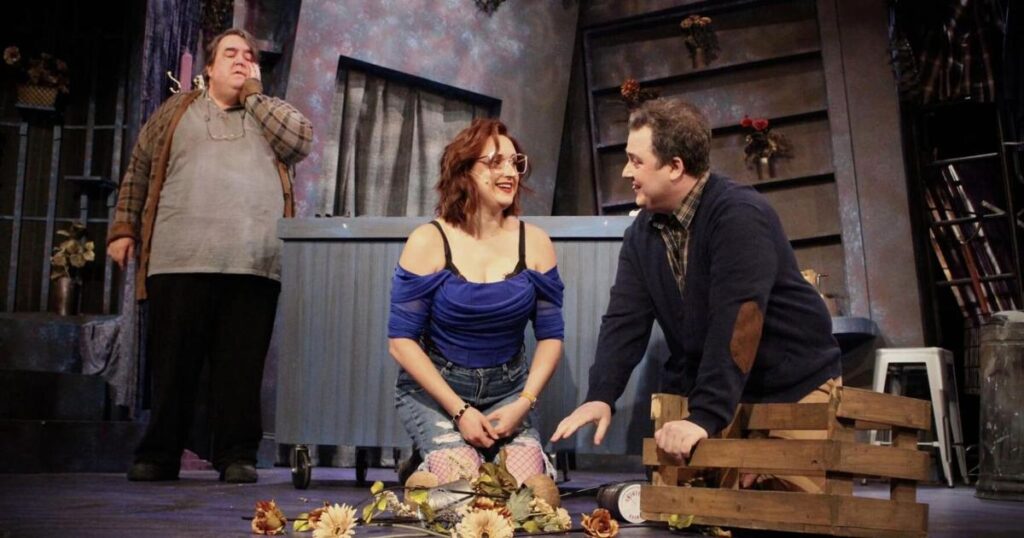
“They were trying to make the space work,” Fichter said. And for a time it did.
Fichter acknowledged “there are issues that have to be addressed. To access the lights, you need a 30-foot ladder — that’s the No. 1 safety issue.”
She was able to see how multiple theater spaces worked during her time in New York City, completing a master’s degree in directing.
“We have to put the safety of the humans first,” she said. “The electrical system has to be upgraded. We’ve pieced together so many things. Things overheat, we’ve blown out a lightboard with a power surge … and the backstage area is not really accessible.”
Recently, one of two backstage heaters went out. “So that’s a $7,000 problem right there,” Fichter said.
To give the space a complete overhaul, an expenditure of $300,000 might be required, and immediate problems would be resolved.
But as owners of an older building, Trustus was often grandfathered in when regulations changed over the years, especially for plumbing and electrical issues. Doing any significant renovations now would trigger requirements to bring everything up to code, adding an additional price tag of perhaps $600,000 for upfits such as installation of a sprinkler system.
It makes it hard for the theater group to plan for the future. “The building is holding us hostage,” Fichter said.
“The budget is balanced,” she added proudly. But while Trustus paid off its original mortgage long ago, there is some outstanding debt that is being paid down, essentially a line of credit that the theater has depended on in lean times.

Photographs for the Trustus Theatre production of Sweeney Todd
Thomas Hammond/Provided
“We need to have control of the building,” Fichter explained, “or come up with a plan B.”
Options for plan B could involve an eventual relocation, selling the current space and renting somewhere inexpensive, possibly a venue already suited for a theater.
They’ve explored options in Cottontown and elsewhere, but as of late January, Fichter said Trustus is staying in place; the focus will remain on presenting quality work, while also prioritizing facility maintenance and repair — and securing adequate funding for those repairs.