
 Listen to this article
Great River Energy and two other local energy providers are moving ahead with plans to develop the Upper Midwest’s first 765-kilovolt (kV) transmission line, a mega project that will stretch hundreds of miles through parts of Minnesota, South Dakota and Wisconsin.
Maple Grove-based Great River Energy — along with ITC Midwest and Xcel Energy — said in a press release Monday that the project will “meet the significant growth in electricity use projected in the coming decades and improve access to new energy sources needed to serve communities throughout the region.”
The energy providers said they have filed a “Notice of Intent to Construct, Own and Maintain” the new transmission line with the Minnesota Public Utilities Commission. Next steps include public outreach and an environmental review process overseen by the commission.
Matt Ellis, manager of transmission strategy and development for Great River Energy, said the notice moves the transmission line from the planning to the project development stage.
“We’re talking about the project to the public,” Ellis said in an interview. “We’re soliciting input on things like the route and, ‘How do we minimize impacts through these communities where it will eventually be located?’”
Ellis estimates that construction will begin in roughly 2030 and that the transmission line will be in service by 2035. The next few years, meanwhile, will “all be about public meetings, public involvement.”
The project ties in with the region’s transition from coal-fired plants to renewable energy, Ellis said, adding that many of the coal plants are expected to retire by 2040 and will be replaced with renewable energy and some natural gas.
“There will be other technologies in the mix, like hydrogen and battery storage, and these new generation technologies require new bulk transmission lines to be able to deliver that energy from those new sources to customers, to power their homes and to their businesses,” Ellis said.
Meanwhile, he said, the demand for electricity is growing.
“There are some projections that … electric use could double over the coming decades. I think we’re just starting to see the cusp of that,” Ellis said. “And so when we think about this new transmission, we’re really trying to meet our immediate needs, but also setting it up so that we can meet the future needs.”
The transmission line is “one of several” projects approved in December by Midcontinent Independent System Operator (MISO), the region’s grid operator, as part of its Long Range Transmission Plan, according to the release. Overall, MISO has approved 24 transmission investments totaling $21.8 billion, including the 765-kV transmission line and other projects in Minnesota, North Dakota and South Dakota.
MISO estimates that the 765-kV projects in Minnesota “will total approximately $3 billion,” Ellis said, adding that it’s a “ballpark estimate” subject to change.
The energy providers will develop the 765-kV transmission project in several segments. Running from eastern South Dakota through Minnesota and into Wisconsin, the 410-mile line will connect the Lakefield, Pleasant Valley and North Rochester substations in Jackson, Mower and Olmsted counties.
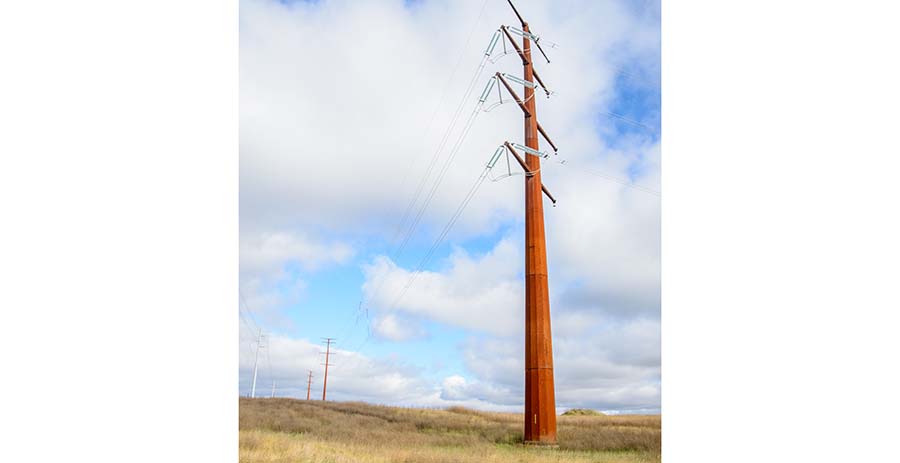
A single 765-kV electric transmission line can deliver approximately the same amount of electricity as six 345-kV transmission lines with “similar land impacts and structure heights as existing high-voltage transmission lines,” the providers said.
“This new 765-kV transmission line will ensure reliability every hour of every day for our member-owner cooperatives,” Great River Energy President and Chief Executive Officer David Saggau said in the release. “By building this high-capacity line, we can minimize the environmental and community impact to cooperative members while strengthening our grid infrastructure. This is an important step for Minnesota’s energy landscape and one that sets us up for the future.”
ITC Midwest President Dusky Terry said, “Modernizing the electric grid provides tremendous benefits for electricity consumers through improved reliability, increased capacity and greater access to diverse generation resources. We are committed to working with landowners, local communities and our utility partners throughout the process to meet the growing demands on the electric grid across southern Minnesota.”
Ryan Long, president, Xcel Energy—Minnesota, North Dakota and South Dakota, said the project will “help us accelerate our clean energy goals by delivering more wind and solar energy to customers in a reliable way that keeps costs low.”
According to the press release:
- The companies expect to file a Certificate of Need application in Minnesota in early 2026 and will “work closely with landowners and communities throughout the project area to help determine the best locations for the route to include in their future Route Permit application.”
- Each application’s review process takes approximately 12-18 months and includes “public information meetings and hearings throughout the project area.”
RELATED:
Great River Energy, Minnesota Power gear up for $1B transmission line
Utilities complete contentious land swap to clear way for power line in Mississippi River refuge