
To get to a place where the Cerrado’s pulse can be experienced untamed and raw, take the road north out of Brasília. It first runs arrow straight through the suburbs, then direct to the factory farms. Rows of soybeans roll to the horizons; grain trucks outnumber cars. Tractors spray the fields with white mist. More than 150 million gallons of pesticides, Brazilian environmental journalists report, douse the Cerrado each year. “The land has been decimated,” says Brazilian ecologist Paulo Oliveira, editor of The Cerrados of Brazil, a book that explores the natural history of the region. And soybeans, for the most part, aren’t eaten by people—they’re shipped around the globe to feed cattle. The world demands beef.
After a couple of hours of driving, the windshield spattered with bugs, hills rise up, the giant farms dissipate, and the Cerrado exists in a natural state. The terrain, admittedly, can appear weird. Soil toxicity meddles with tree growth, making the trunks all gnarled and hunched. The frequent fires scorch the buds at the ends of branches, which are replaced by lower buds that grow at contorted angles, then those eventually get fire-burned too, and so on. It’s basically a big thicket of elbows.
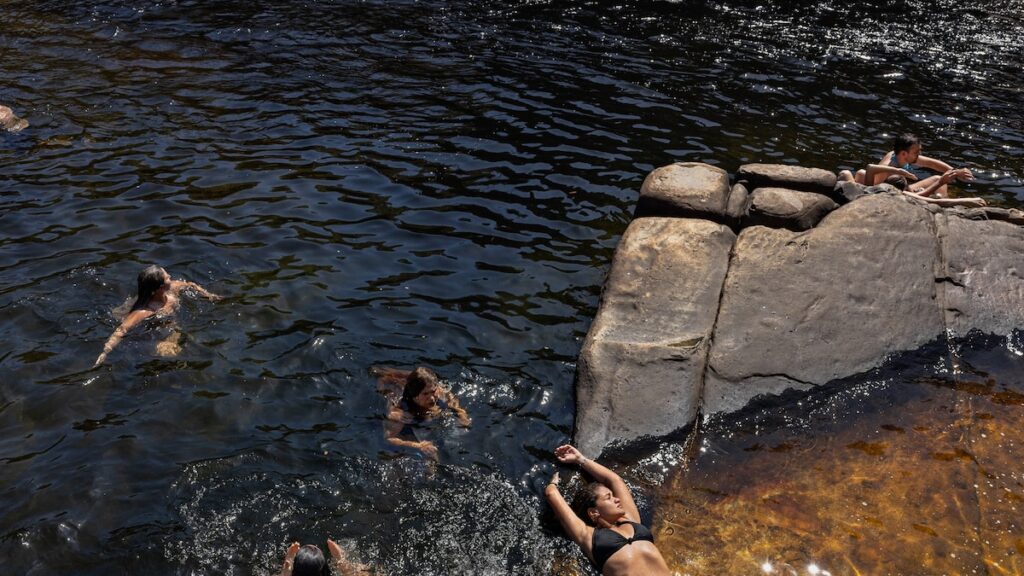
Though not every Cerrado landscape looks Dr. Seuss strange. The Cerrado is one huge, interconnected biome composed of a dozen varieties of smaller ecosystems, ranging from open grassland to dense, full-size woods. Driving deeper in, some 150 miles from Brasília, travelers approach Chapada dos Veadeiros, one of the national parks in the Cerrado, where sections of closed-canopy forest shroud tumbling rivers. There’s a tourist town here, Alto Paraíso—High Paradise—where a steady stream of visitors, primarily from other parts of Brazil, hire certified hiking guides, lounge in streams, and purchase genuine Cerrado crystals, from pendant-necklace size to paperweight, dug from the ancient soil and perfect, say the shopkeepers, for cleansing your aura.