
- This marks the first human case of bird flu in Ohio, though there have been 68 cases nationwide since Jan.1, 2024.
- Ohio is experiencing a high number of bird flu outbreaks, impacting poultry flocks and causing egg prices to rise.
- Bird flu rarely infects humans, and transmission typically occurs through close contact with infected birds.
Ohio’s first human case of bird flu has been reported by the state’s Department of Health.
The Ohio Department of Health announced Wednesday that a man from Mercer County who works on a farm came into contact with deceased poultry that was infected with the virus. Mercer County, whose county seat is Celina, is located in west central Ohio along the border with Indiana.
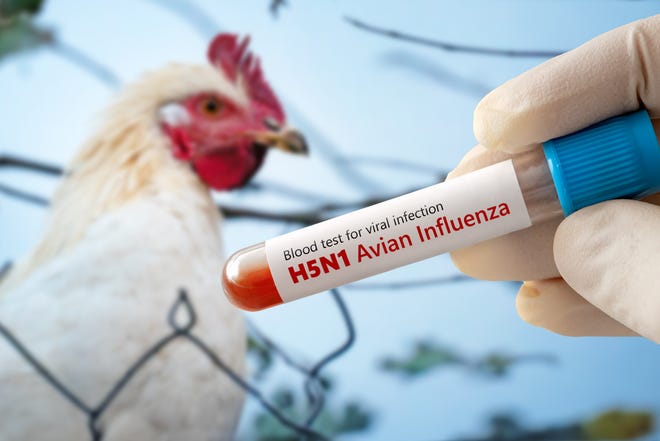
The overall risk to Ohioans remains low, ODH said, but those in close contact with sick or dead poultry or wild birds should take precautions. People should avoid direct contact with wild birds or sick or dead poultry or other animals.
There have been 68 human cases of bird flu in 11 states since Jan. 1, 2024, including one death in Louisiana. All but three of those cases were in connection with exposure to commercial agriculture and related operations or wild birds, according to the ODH.
In Ohio, one dairy herd and dozens of poultry flocks have been infected since the outbreak began in 2022.
In Nevada, a dairy worker was infected by the same variant of bird flu as the farm worker in Mercer County, USA TODAY previously reported. There have been no additional confirmed cases in the state.
Ohio leading country in bird flu cases
Ohio has been experiencing the highest levels of bird flu outbreaks in the nation, The Dispatch previously reported. There have been nearly 40 commercial flocks and 8.7 million birds affected in the state, according to USDA data.
The outbreak has caused egg prices to spike, with over 2,100 Waffle House diners across 25 states even tacking on a 50-cent price per egg surcharge. There are 83 Waffle House locations in Ohio.
In Columbus, the outbreak has led the Columbus Zoo on Feb. 1 to move birds indoors and to temporarily pause feeding raw poultry to their animals out of precaution.

The bird flu, also known as avian influenza or H5N1 virus, is caused by influenza type A virus infections in bird species, according to the Mayo Clinic. Bird flu may cause infected poultry to have no symptoms, mild illness, serious illness, or lead to death of the bird.
The bird flu rarely infects humans, and people usually catch the virus from being in close, long-term contact with live poultry, typically on farms or in backyard coops.
Symptoms of bird flu in humans can vary. They can include fever, muscle aches, headaches, coughs, and sore throat. On the severe end, humans who are infected may experience nausea, diarrhea, vomiting, and extreme tiredness.
In guidance for people who work with birds, the ODH said poultry owners and farmers should wear personal protective equipment like gloves, N95 masks, and eye protection. Workers should wash their hands properly after touching sick birds.
“As we continue to respond to these incidents, our staff on site continues to educate farmers and their workers on best biosecurity practices. We strongly encourage all Ohio farmers to use good biosecurity to help keep disease away from the farm,” Ohio Department of Agriculture director Bruce Vanderhoff said in a prepared statement.
Is it safe to eat eggs and poultry?
The ODH says it is still safe to eat poultry and dairy products as long as they are properly prepared. This means that the food should be cooked at an appropriate internal temperature that kills bacteria and viruses.
@ShahidMeighan
This story was updated to add a gallery.