
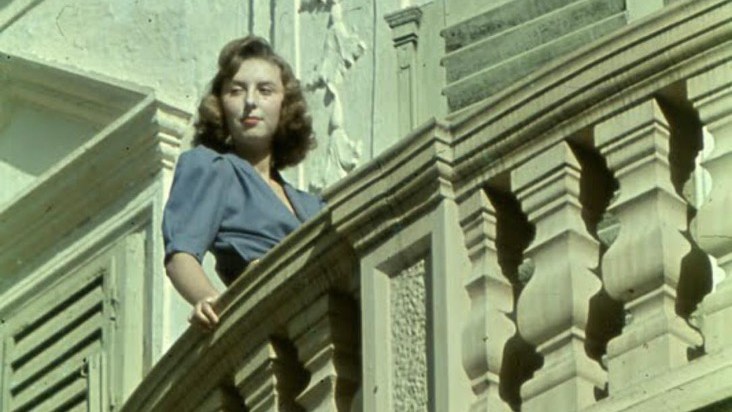
Around the time Katalin Banffy de Losoncz was born, the former subjects of the Austro-Hungarian empire were grappling with the harsh realities of post-imperial history and the political upheaval that followed. The Treaty of Trianon, signed in 1920, had diminished Hungary’s territory and population by two thirds. The country’s turbulence was mirrored in the personal struggles of Katalin’s father, Count Miklos Banffy de Losoncz. His only daughter was born outside of wedlock. It was a testament to his unwavering love for Katalin’s mother, Aranka Varady Weber, an actress his father refused to accept as a daughter-in-law, that he ignored his warnings and threats.
Weber was revered as one of the leading actresses of her day at Budapest’s National Theatre, a legacy she inherited from her distinguished literary family, who were dramatists. Class consciousness, especially among Hungary’s aristocrats, was still clearly pitted against eldest sons marrying outside the nobility, even in the early 20th century. Most of Hungary’s politicians still came from the aristocracy.
The Banffy family had a rich and distinguished history. In the 19th century, they produced a prime minister of Hungary, and Katalin’s father was foreign minister under Count Istvan Bethlen’s premiership. Bethlen had the unenviable task of resurrecting Hungary from the ashes of Trianon, which he undertook with the unstinting support of Katalin’s father.
The first 15 years of Katalin’s life were blighted by the social consequences of the bar sinister being, at least metaphorically, struck across her escutcheon. She was born in 1924, but her father did not marry her mother until 1939. Weber divorced her first husband, a distinguished medic, Dr Sandor Fekete, the year of Katalin’s birth, causing tongues to wag in Budapest’s more fashionable coffee houses. Count Banffy ended the malicious gossip by adopting Katalin, giving her the famous Banffy name and the status of countess. Father and daughter were very close. Katalin lived with him at Banffy Palace in Budapest and the family’s Transylvanian estate,Bontida, was often described as the most beautiful country house in the former principality.
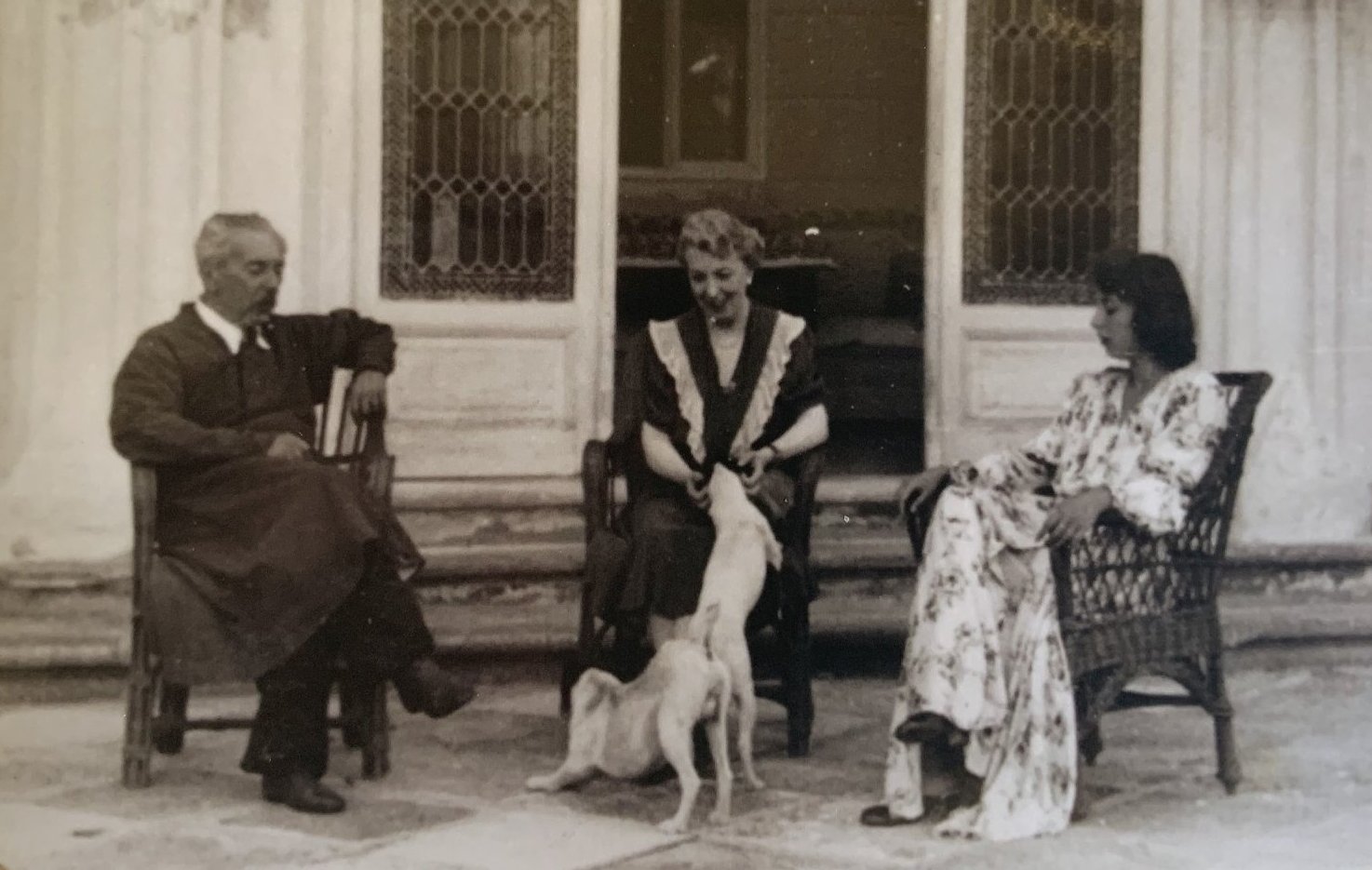
Miklos Banffy with his family at his Transylvanian estate, Bontida
Miklos Banffy’s literary masterpiece, The Transylvanian Trilogy, was published in Hungarian just before the outbreak of the Second World War. It earned its author the moniker “the Tolstoy of Transylvania”.
When Admiral Miklos Horthy, Hungary’s regent, decided to side with Nazi Germany, Katalin’s fate was sealed, as was that of her father. In 1943, Count Banffy tried to negotiate a secret deal between the Allies and the governments of Antonescu in Romania and Horthy in Hungary. As the German army withdrew from Romania in August 1944, they took much of Katalin’s inheritance with them. Seventeen German trucks were loaded with Bontida’s silver, oriental carpets, priceless old master paintings, furniture and rare books. They then torched the castle, burning centuries of Banffy family archives that also documented the history of Transylvania. The devastating theft was unfortunate. The bombing by the Allies from the air of the convoy just outside the estate walls was even more tragic.
Like many Hungarian aristocrats, the family’s struggles were just beginning. By 1948, communist administrations in Hungary and Romania were determined to wipe out all remnants of the old aristocratic families. Miklos Banffy was trapped in Romania, unable to join his wife and daughter in Budapest.
Katalin married Theodore (Ted) Jelen, a US naval attaché, in Budapest in 1947. The following year, they settled in Tangier, arriving from Rome via Casablanca. Jelen was appointed naval attaché at the American legation in Tangier. It was a move that marked the beginning of a new chapter but also underscored the weight of the young couple’s challenges. In an emotional letter written after Katalin moved to Tangier, the count told his daughter that it was unlikely they would ever meet again. Still, he reassured her that she was lucky “to leave behind this unfortunate and destroyed continent of Europe”. Katalin wrote to her father, saying, “In Tangier, I can feel the breath of the whole world.”
The young countess’s life in Tangier differed significantly from staid Budapest. Sir John Lavery’s “White City” had largely disappeared, and the city of William Burroughs’s beat generation had yet to be born. However, it was designated an international free port at this time and attracted a host of curious characters. Banffy-Jelen soon became part of Tangier’s social set.
The doyen of the group was David Herbert, the second son of the 15th Earl of Pembroke and the consummate remittance man. Herbert, dubbed “the Queen Mother of Tangier” by Ian Fleming, was the self-appointed arbiter of who was or was not acceptable in Tangier’s raggle-taggle social world. The countess and her husband passed the old snobs’ social litmus test with flying colours. She became part of the social whirl comprising Yves St Laurent, the Woolworth heiress Barbara Hutton, and the author Paul Bowles.
Banffy-Jelen lived in a charming villa on Tangier’s Old Mountain. The king of Morocco’s aunt was a neighbour. Another local, Patrick Thursfield (obituary, September 12, 2003), a former Times journalist, would help to bring her to international attention when he translated her father’s magnum opus, The Transylvanian Trilogy, into English. Banffy-Jelen did a rough translation from her father’s original Hungarian language manuscript, and Thursfield polished it into immensely stylish English, not knowing a word of Hungarian. Their collaboration won the Oxford-Weidenfeld prize for translation in 2002. They also translated Banffy’s political memoir The Phoenix Land, a brilliant account of post-Trianon Hungary.
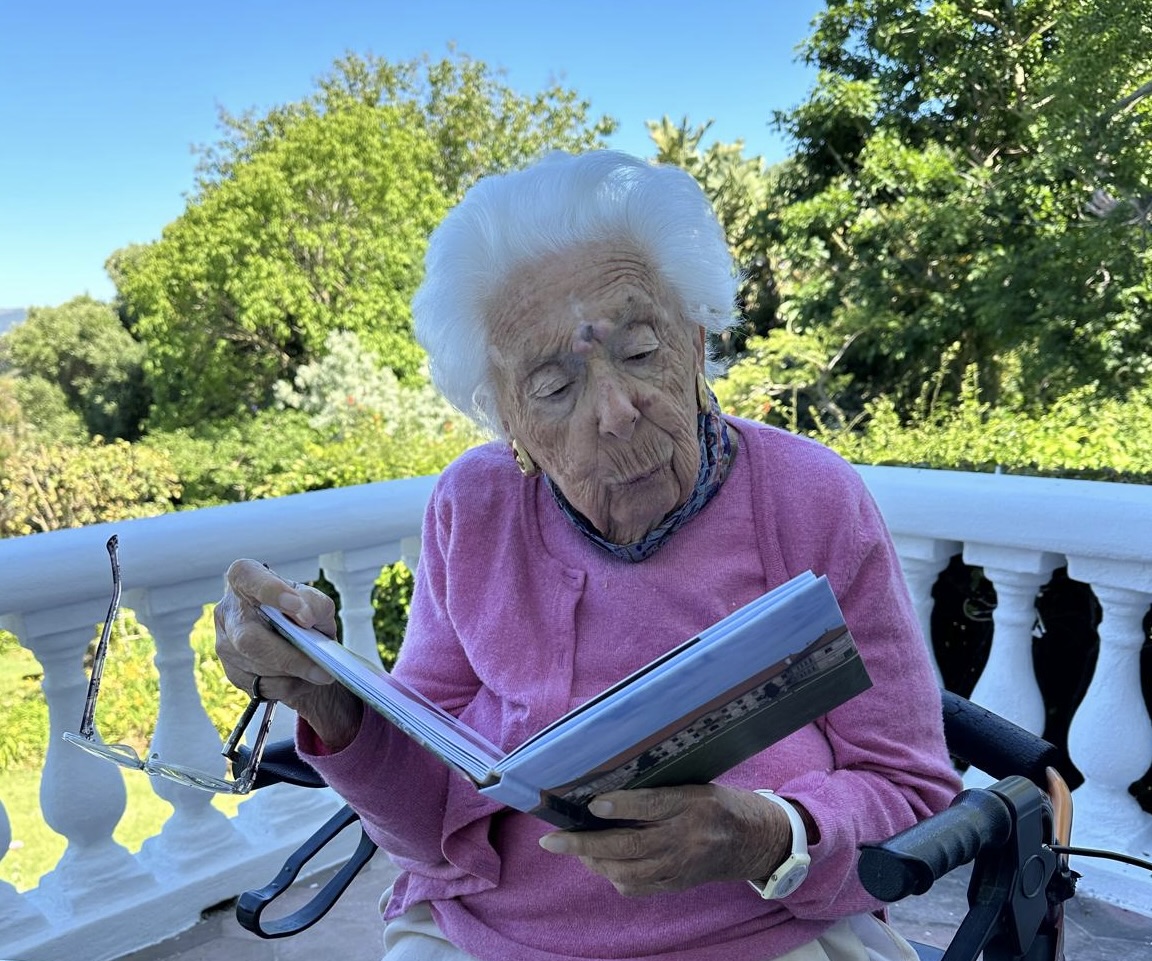
After the fall of Ceausescu, Banffy-Jelen was given back Bontida, the ancestral home where her family had lived for 600 years, under a scheme of restitution. The castle and estate had been left in such a ruinous state by the communist regime that it proved impossible for her to assemble the funding necessary for its restoration. A trust was established to undertake the task, and today the ancient seat looks once again as if it is becoming an important part of Transylvania’s cultural life. Banffy-Jelen is survived by her two daughters, Elizabeth and Nicolette. A son, David, predeceased her.
Banffy-Jelen was one of the last witnesses to a way of life in Hungary and Transylvania observed by Patrick Leigh Fermor in Between the Woods and the Water. She was also one of the last witnesses to a way of life in the Maghreb, which Thursfield described before his death as “no longer like greeting an old friend but rather saluting a memory”.
Countess Katalin Banffy-Jelen was born on June 5, 1924. She died on February 15, 2025, aged 100