
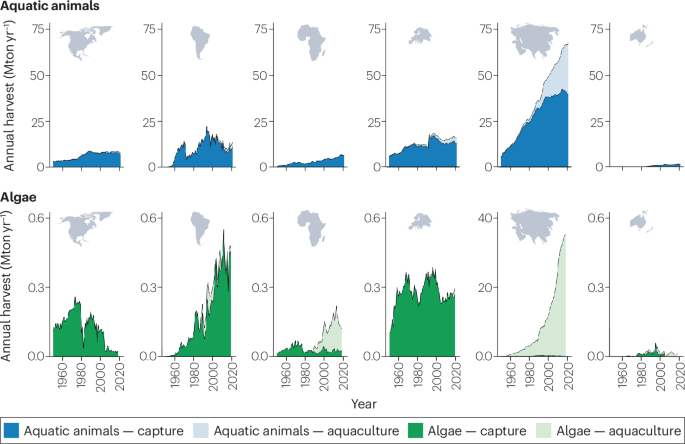
Food and Agriculture Organization. The State of World Fisheries and Aquaculture 2022. Towards Blue Transformation (FAO, 2022).
Simone, M. N. & Vopel, K. The need for proactive environmental management of offshore aquaculture. Rev. Aquac. https://doi.org/10.1111/raq.12874 (2023).
Boyd, C. E., McNevin, A. A. & Davis, R. P. The contribution of fisheries and aquaculture to the global protein supply. Food Secur. 14, 805–827 (2022).
Holmer, M. & Kristensen, E. Impact of marine fish cage farming on metabolism and sulfate reduction of underlying sediments. Mar. Ecol. Prog. Ser. 80, 191–201 (1992).
Holmer, M., Wildish, D. & Hargrave, B. in Environmental Effects of Marine Finfish Aquaculture (ed. Hargrave, B. T.) 181–206 (Springer, 2005).
Frank, K., Petrie, B., Choi, J. & Leggett, W. Trophic cascades in a formerly cod-dominated ecosystem. Science 308, 1621–1623 (2005).
Bianchi, D., Carozza, D. A., Galbraith, E. D., Guiet, J. & DeVries, T. Estimating global biomass and biogeochemical cycling of marine fish with and without fishing. Sci Adv 7, eabd7554 (2021).
Halpern, B. S. et al. The environmental footprint of global food production. Nat. Sustain. 5, 1027–1039 (2022).
Gephart, J. A. et al. Environmental performance of blue foods. Nature 597, 360–365 (2021).
Nash, K. L. et al. Planetary boundaries for a blue planet. Nat. Ecol. Evol. 1, 1625–1634 (2017).
Vélez-Henao, J. A., Weinland, F. & Reintjes, N. Life cycle assessment of aquaculture bivalve shellfish production—a critical review of methodological trends. Int. J. Life Cycle Assess. 26, 1943–1958 (2021).
Hilborn, R. The environmental footprint of fisheries. Nat. Sustain. 6, 1312–1313 (2023).
Hu, Z., Lee, J. W., Chandran, K., Kim, S. & Khanal, S. K. Nitrous oxide (N2O) emission from aquaculture: a review. Env. Sci. Technol. 46, 6470–6480 (2012).
Kosten, S. et al. Better assessments of greenhouse gas emissions from global fish ponds needed to adequately evaluate aquaculture footprint. Sci. Total. Environ. 748, 141247 (2020).
Sala, E. et al. Protecting the global ocean for biodiversity, food and climate. Nature 592, 397–402 (2021).
MacLeod, M. J., Hasan, M. R., Robb, D. H. F. & Mamun-Ur-Rashid, M. Quantifying greenhouse gas emissions from global aquaculture. Sci. Rep. 10, 1–8 (2020).
Hiddink, J. G. et al. Quantifying the carbon benefits of ending bottom trawling. Nature 617, E1–E2 (2023).
MacLeod, M., Hasan, M., Robb, D. & Mamun-Ur-Rashid, M. Quantifying and Mitigating Greenhouse Gas Emissions from Global Aquaculture (FAO, 2019).
Parker, R. W. R. et al. Fuel use and greenhouse gas emissions of world fisheries. Nat. Clim. Chang. 8, 333–337 (2018).
Maranger, R., Caraco, N., Duhamel, J. & Amyot, M. Nitrogen transfer from sea to land via commercial fisheries. Nat. Geosci. 1, 111–113 (2008).
Le Mézo, P., Guiet, J., Scherrer, K., Bianchi, D. & Galbraith, E. Global nutrient cycling by commercially targeted marine fish. Biogeosciences 19, 2537–2555 (2022).
Tiano, J. et al. Global meta-analysis of demersal fishing impacts on organic carbon and associated biogeochemistry. Fish. Fish. https://doi.org/10.1111/faf.12855 (2024).
Atwood, T. B. et al. Predators help protect carbon stocks in blue carbon ecosystems. Nat. Clim. Chang. 5, 1038–1045 (2015).
Saba, G. K. et al. Toward a better understanding of fish-based contribution to ocean carbon flux. Limnol. Oceanogr. 66, 1639–1664 (2021).
Bugnot, A. B. et al. Current and projected global extent of marine built structures. Nat. Sustain. 4, 33–41 (2021).
Huitric, M., Folke, C. & Kautsky, N. Development and government policies of the shrimp farming industry in Thailand in relation to mangrove ecosystems. Ecol. Econ. 40, 441–455 (2002).
Bouwman, A. F. et al. Hindcasts and future projections of global inland and coastal nitrogen and phosphorus loads due to finfish aquaculture. Rev. Fish. Sci. 21, 112–156 (2013).
Ziegler, F., Tyedmers, P. H. & Parker, R. W. R. Methods matter: improved practices for environmental evaluation of dietary patterns. Glob. Environ. Change 73, 102482 (2022).
Bohnes, F. A. & Laurent, A. LCA of aquaculture systems: methodological issues and potential improvements. Int. J. Life Cycle Assess. 24, 324–337 (2019).
Allen, J. I. & Clarke, K. R. Effects of demersal trawling on ecosystem functioning in the North Sea: a modelling study. Mar. Ecol. Prog. Ser. 336, 63–75 (2007).
Reid, P. C., Battle, E. J. V., Batten, S. D. & Brander, K. M. Impacts of fisheries on plankton community structure. ICES J. Mar. Sci. 57, 495–502 (2000).
Ray, N., Al-Haj, A., Maguire, T., Henning, M. & Fulweiler, R. Coastal silicon cycling amplified by oyster aquaculture. Mar. Ecol. Prog. Ser. 673, 29–41 (2021).
Grant, A. J. et al. A multidisciplinary approach to evaluating impacts of shellfish aquaculture on benthic communities. Estuaries 18, 124–144 (1995).
Moreno, A. R. & Haffa, A. L. M. The impact of fish and the commercial marine harvest on the ocean iron cycle. PLoS ONE 9, e107690 (2014).
Galbraith, E. D. et al. Growth limitation of marine fish by low iron availability in the open ocean. Front Mar Sci https://doi.org/10.3389/fmars.2019.00509 (2019).
Allan, I. J., Nilsson, H. C., Tjensvoll, I., Bradshaw, C. & Næs, K. PCDD/F release during benthic trawler-induced sediment resuspension. Env. Toxicol. Chem. 31, 2780–2787 (2012).
Cotou, E., Gremare, A., Charles, F., Hatzianestis, I. & Sklivagou, E. Potential toxicity of resuspended particulate matter and sediments: environmental samples from the Bay of Banyuls-sur-Mer and Thermaikos Gulf. Cont. Shelf Res. 25, 2521–2532 (2005).
Bradshaw, C. et al. Bottom trawling resuspends sediment and releases bioavailable contaminants in a polluted fjord. Environ. Pollut. 170, 232–241 (2012).
Hanebuth, T. J. J. et al. Hazard potential of widespread but hidden historic offshore heavy metal (Pb, Zn) contamination (Gulf of Cadiz, Spain). Sci. Total. Environ. 637–638, 561–576 (2018).
Murphy, E. J. et al. Global connectivity of Southern Ocean ecosystems. Front. Ecol. Evol. 9, 624451 (2021).
Cavan, E. L. & Hill, S. L. Commercial fishery disturbance of the global ocean biological carbon sink. Glob. Chang. Biol. 28, 1212–1221 (2022).
Jennings, S. et al. Global-scale predictions of community and ecosystem properties from simple ecological theory. Proc. R. Soc. B: Biol. Sci. 275, 1375–1383 (2008).
Wilson, R. et al. Contribution of fish to the marine inorganic carbon cycle. Science 323, 359–362 (2009).
Jennings, S. & Collingridge, K. Predicting consumer biomass, size-structure, production, catch potential, responses to fishing and associated uncertainties in the world’s marine ecosystems. PLoS ONE 10, 1–28 (2015).
Bar-On, Y. M., Phillips, R. & Milo, R. The biomass distribution on Earth. Proc. Natl Acad. Sci. USA 115, 6506–6511 (2018).
Saba, G. K. & Steinberg, D. K. Abundance, composition, and sinking rates of fish fecal pellets in the santa barbara channel. Sci. Rep. 2, 1–6 (2012).
Cavan, E. L. et al. The importance of Antarctic krill in biogeochemical cycles. Nat. Commun. 10, 1–13 (2019).
Davison, P. C., Checkley, D. M., Koslow, J. A. & Barlow, J. Carbon export mediated by mesopelagic fishes in the northeast Pacific Ocean. Prog. Oceanogr. 116, 14–30 (2013).
Jónasdóttir, S. H., Visser, A. W., Richardson, K. & Heath, M. R. Seasonal copepod lipid pump promotes carbon sequestration in the deep North Atlantic. Proc. Natl Acad. Sci. USA 112, 12122–12126 (2015).
Duhamel, G., Koubbi, P. & Ravier, C. Day and night mesopelagic fish assemblages off the Kerguelen Islands (Southern Ocean). Polar Biol. 23, 106–112 (2000).
Tarling, G. A. & Johnson, M. L. Satiation gives krill that sinking feeling. Curr. Biol. 16, 83–84 (2006).
Watanabe, H., Kubodera, T., Moku, M. & Kawaguchi, K. Diel vertical migration of squid in the warm core ring and cold water masses in the transition region of the western North Pacific. Mar. Ecol. Prog. Ser. 315, 187–197 (2006).
Kiko, R., Hauss, H., Buchholz, F. & Melzner, F. Ammonium excretion and oxygen respiration of tropical copepods and euphausiids exposed to oxygen minimum zone conditions. Biogeosciences 13, 2241–2255 (2016).
Boyd, P. W., Claustre, H., Levy, M., Siegel, D. A. & Weber, T. Multi-faceted particle pumps drive carbon sequestration in the ocean. Nature 568, 327–335 (2019).
Katija, K. & Dabiri, J. O. A viscosity-enhanced mechanism for biogenic ocean mixing. Nature 460, 624–626 (2009).
Schmidt, K. et al. Zooplankton gut passage mobilizes lithogenic iron for ocean productivity. Curr. Biol. 26, 2667–2673 (2016).
Le Mézo, P. K. & Galbraith, E. D. The fecal iron pump: global impact of animals on the iron stoichiometry of marine sinking particles. Limnol. Oceanogr. 66, 201–213 (2021).
Jackson, J. B. C. et al. Historical overfishing and the recent collapse of coastal ecosystems. Science 293, 629–637 (2001).
Ripple, W. J. et al. What is a trophic cascade? Trends Ecol. Evol. 31, 842–849 (2016).
Pace, M., Cole, J., Carpenter, S. & Kitchell, J. Trophic cascades revealed in diverse ecosystems. Trends Ecol. Evol. 14, 483–488 (1999).
Frank, K. T., Petrie, B., Fisher, J. A. D. & Leggett, W. C. Transient dynamics of an altered large marine ecosystem. Nature 477, 86–91 (2011).
Moss, B. Marine reptiles, birds and mammals and nutrient transfers among the seas and the land: an appraisal of current knowledge. J. Exp. Mar. Biol. Ecol. 492, 63–80 (2017).
Wilmers, C. C., Estes, J. A., Edwards, M., Laidre, K. L. & Konar, B. Do trophic cascades affect the storage and flux of atmospheric carbon? An analysis of sea otters and kelp forests. Front. Ecol. Env. 10, 409–415 (2012).
Schmitz, O. J. et al. Trophic rewilding can expand natural climate solutions. Nat. Clim. Chang. 13, 324–333 (2023).
Schindler, D. E., Carpenter, S. R., Cole, J. J., Kitchell, J. F. & Pace, M. L. Influence of food web structure on carbon exchange between lakes and the atmosphere. Science 277, 248–251 (1997).
Atwood, T. B. et al. Predator-induced reduction of freshwater carbon dioxide emissions. Nat. Geosci. 6, 191–194 (2013).
Devlin, S. P., Saarenheimo, J., Syväranta, J. & Jones, R. I. Top consumer abundance influences lake methane efflux. Nat. Commun. 6, 8787 (2015).
Schmitz, O. J. et al. Animals and the zoogeochemistry of the carbon cycle. Science 362, eaar3213 (2018).
Tiano, J. C. et al. Trawling effects on biogeochemical processes are mediated by fauna in high-energy biogenic-reef-inhabited coastal sediments. Biogeosciences 19, 2583–2598 (2022).
De Borger, E., Tiano, J., Braeckman, U., Rijnsdorp, A. D. & Soetaert, K. Impact of bottom trawling on sediment biogeochemistry: a modelling approach. Biogeosciences 18, 2539–2557 (2021).
Epstein, G., Middelburg, J. J., Hawkins, J. P., Norris, C. R. & Roberts, C. M. The impact of mobile demersal fishing on carbon storage in seabed sediments. Glob. Chang. Biol. 28, 2875–2894 (2022).
Dounas, C., Davies, I., Hayes, P., Arvanitidis, C. & Koulouri, P. The effect of different types of otter trawl ground rope on benthic nutrient releases and sediment biogeochemistry. In Benthic Habitats and the Effects of Fishing, American Fisheries Society Symposium. Vol. 41. (eds Barnes, P. W. & Thomas, J. P.) 539–544 (American Fisheries Society, 2005).
Almroth-Rosell, E., Tengberg, A., Andersson, S., Apler, A. & Hall, P. O. J. Effects of simulated natural and massive resuspension on benthic oxygen, nutrient and dissolved inorganic carbon fluxes in Loch Creran, Scotland. J. Sea Res. 72, 38–48 (2012).
Tiano, J. C. et al. Physical and electrical disturbance experiments uncover potential bottom fishing impacts on benthic ecosystem functioning. J. Exp. Mar. Biol. Ecol. 545, 151628 (2021).
Tiano, J. C. et al. Acute impacts of bottom trawl gears on benthic metabolism and nutrient cycling. ICES J. Mar. Sci. 76, 1917–1930 (2019).
Mayer, L. M., Schick, D. F., Findlay, R. H. & Rice, D. L. Effects of commercial dragging on sedimentary organic matter. Mar. Env. Res. 31, 249–261 (1991).
Morys, C., Brüchert, V. & Bradshaw, C. Impacts of bottom trawling on benthic biogeochemistry in muddy sediments: removal of surface sediment using an experimental field study. Mar. Env. Res. 169, 105384 (2021).
Paradis, S. et al. Persistence of biogeochemical alterations of deep-sea sediments by bottom trawling. Geophys. Res. Lett. 48, 1–12 (2021).
Paradis, S. et al. Organic matter contents and degradation in a highly trawled area during fresh particle inputs (Gulf of Castellammare, southwestern Mediterranean). Biogeosciences 16, 4307–4320 (2019).
Paradis, S. et al. The Modern Ocean Sediment Archive and Inventory of Carbon (MOSAIC): version 2.0. Earth Syst. Sci. Data 15, 4105–4125 (2023).
Paradis, S. et al. Demersal fishery Impacts on Sedimentary Organic Matter (DISOM): a global harmonized database of studies assessing the impacts of demersal fisheries on sediment biogeochemistry. Earth Syst. Sci. Data 16, 3547–3563 (2023).
Brylinsky, M., Gibson, J. & Gordon Jr, D. C. Impacts of flounder trawls on the intertidal habitat and community of the Minas Basin, Bay of Fundy. Can. J. Fish. Aquat. Sci. 51, 650–661 (1994).
Watling, L., Findlay, R. H., Mayer, L. M. & Schick, D. F. Impact of a scallop drag on the sediment chemistry, microbiota, and faunal assemblages of a shallow subtidal marine benthic community. J. Sea Res. 46, 309–324 (2001).
Bradshaw, C. et al. Physical disturbance by bottom trawling suspends particulate matter and alters biogeochemical processes on and near the seafloor. Front. Mar. Sci. 8, 683331 (2021).
Ferguson, A. J. P., Oakes, J. & Eyre, B. D. Bottom trawling reduces benthic denitrification and has the potential to influence the global nitrogen cycle. Limnol. Oceanogr. Lett. 5, 237–245 (2020).
Warnken, K. W. et al. The effects of shrimp trawling on sediment oxygen consumption and the fluxes of trace metals and nutrients from estuarine sediments. Estuar. Coast. Shelf Sci. 57, 25–42 (2003).
van der Molen, J. et al. Modelling marine ecosystem response to climate change and trawling in the North Sea. Biogeochemistry 113, 213–236 (2013).
Polymenakou, P. N. et al. Benthic microbial abundance and activities in an intensively trawled ecosystem (Thermaikos Gulf, Aegean Sea). Cont. Shelf Res. 25, 2570–2584 (2005).
Van De Velde, S., Van Lancker, V., Hidalgo-Martinez, S., Berelson, W. M. & Meysman, F. J. R. Anthropogenic disturbance keeps the coastal seafloor biogeochemistry in a transient state. Sci. Rep. 8, 1–10 (2018).
Duplisea, D. E., Jennings, S., Malcolm, S. J., Parker, R. & Sivyer, D. B. Modelling potential impacts of bottom trawl fisheries on soft sediment biogeochemistry in the North Sea. Geochem. Trans. 2, 112–117 (2001).
Hilborn, R. & Kaiser, M. J. A path forward for analysing the impacts of marine protected areas. Nature 607, E1–E2 (2022).
Hartnett, H., Keil, R. G., Hedges, J. & Devol, A. H. Influence of oxygen exposure time on organic carbon preservation in continental margin sediments. Nature 391, 572–574 (1998).
Linders, J., Pickart, R. S., Björk, G. & Moore, G. W. K. On the nature and origin of water masses in Herald Canyon, Chukchi Sea: synoptic surveys in summer 2004, 2008, and 2009. Prog. Oceanogr. 159, 99–114 (2017).
Lefaible, N., Braeckman, U., Degraer, S., Vanaverbeke, J. & Moens, T. A wind of change for soft-sediment infauna within operational offshore windfarms. Mar. Env. Res. 188, 106009 (2023).
Martín, J., Puig, P., Palanques, A., Masqué, P. & García-Orellana, J. Effect of commercial trawling on the deep sedimentation in a Mediterranean submarine canyon. Mar. Geol. 252, 150–155 (2008).
Paradis, S. et al. Contrasting particle fluxes and composition in a submarine canyon affected by natural sediment transport events and bottom trawling. Front. Mar. Sci. 9, 1–20 (2022).
Paradis, S. et al. Evidence of large increases in sedimentation rates due to fish trawling in submarine canyons of the Gulf of Palermo (SW Mediterranean). Mar. Pollut. Bull. 172, 112861 (2021).
Paradis, S. et al. Enhancement of sedimentation rates in the Foix Canyon after the renewal of trawling fleets in the early XXIst century. Deep. Sea Res. 1 Oceanogr. Res Pap. 132, 51–59 (2018).
Pusceddu, A. et al. Chronic and intensive bottom trawling impairs deep-sea biodiversity and ecosystem functioning. Proc. Natl Acad. Sci. USA 111, 8861–8866 (2014).
Mestdagh, S. et al. Functional trait responses to sediment deposition reduce macrofauna-mediated ecosystem functioning in an estuarine mudflat. Biogeosciences 15, 2587–2599 (2018).
Bonaglia, S. & Nascimento, F. J. A. in New Horizons in Meiobenthos Research: Profiles, Patterns and Potentials (eds Giere, O. & Schratzberger, M.) 33–54 (Springer Nature, 2023).
Kristensen, E. & Kostka, J. E. in Interactions Between Macro- and Microorganisms in Marine Sediments (eds Kristensen, E., Haese, R. R. & Kostka, J. E.) 125–157 (American Geophysical Union, 2005).
Meysman, F. J. R., Middelburg, J. J. & Heip, C. H. R. Bioturbation: a fresh look at Darwin’s last idea. Trends Ecol. Evol. 21, 688–695 (2006).
Collins, J. The beam-trawling fishery of Great Britain, with notes on beam-trawling in other European countries. Bull. U S Fish. Comm. 19, 289–407 (1887).
Sciberras, M. et al. Response of benthic fauna to experimental bottom fishing: a global meta-analysis. Fish. Fish. 19, 698–715 (2018).
de Groot, S. J. The impact of bottom trawling on benthic fauna of the North Sea. Ocean. Manag. 9, 177–190 (1984).
Van Denderen, P. D. et al. Evaluating impacts of bottom trawling and hypoxia on benthic communities at the local, habitat, and regional scale using a modelling approach. ICES J. Mar. Sci. 77, 278–289 (2020).
Atwood, T. B. et al. Atmospheric CO2 emissions and ocean acidification from bottom-trawling. Front. Mar. Sci. https://doi.org/10.3389/fmars.2023.1125137 (2023).
Muñoz, M., Reul, A., Guijarro, B. & Hidalgo, M. Carbon footprint, economic benefits and sustainabsle fishing: lessons for the future from the Western Mediterranean. Science of the Total Environment 865, 160783 (2023).
Ziegler, F. et al. Expanding the concept of sustainable seafood using life cycle assessment. Fish. Fish. 17, 1073–1093 (2016).
Tyedmers, P. H., Watson, R. & Pauly, D. Fueling global fishing fleets. Ambio 34, 635–638 (2005).
Parker, R. W. R. & Tyedmers, P. H. Fuel consumption of global fishing fleets: current understanding and knowledge gaps. Fish. Fish. 16, 684–696 (2015).
Greer, K. et al. Global trends in carbon dioxide (CO2) emissions from fuel combustion in marine fisheries from 1950 to 2016. Mar. Policy 107, 103382 (2019).
Ziegler, F. et al. Adding perspectives to: “Global trends in carbon dioxide (CO2) emissions from fuel combustion in marine fisheries from 1950–2016”. Mar. Policy 107, 103488 (2019).
Richardson, K., Hardesty, B. D., Vince, J. & Wilcox, C. Global estimates of fishing gear lost to the ocean each year. Sci. Adv. 8, 1–9 (2022).
Enrichetti, F. et al. Fate of lost fishing gears: experimental evidence of biofouling colonization patterns from the northwestern Mediterranean Sea. Environ. Pollut. 268, 115746 (2021).
Pauli, N. C., Petermann, J. S., Lott, C. & Weber, M. Macrofouling communities and the degradation of plastic bags in the sea: an in situ experiment. R. Soc. Open. Sci. 4, 170549 (2017).
Saldanha, H. J. et al. The use of biofouling for ageing lost nets: a case study. Fish. Res. 64, 141–150 (2003).
An, Y. et al. Environmental degradation of nylon, poly(ethylene terephthalate) (PET), and poly(vinylidene fluoride) (PVDF) fishing line fibers. ACS Appl. Polym. Mater. 5, 4427–4436 (2023).
Wayman, C. & Niemann, H. The fate of plastic in the ocean environment—a minireview. Environmental Science: Processes and Impacts. 23, 198–212 (2021).
Dabrowska, A., Łopata, I. & Osial, M. The ghost nets phenomena from the chemical perspective. Pure Appl. Chem. 93, 479–496 (2021).
Brown, J. & Macfadyen, G. Ghost fishing in European waters: impacts and management responses. Mar. Policy 31, 488–504 (2007).
Boyd, C. E. & McNevin, A. A. Resource use and pollution potential in feed-based aquaculture. Rev. Fish. Sci. Aquac. 32, 306–333 (2023).
Eroldoğan, O. T. et al. From the sea to aquafeed: a perspective overview. Rev. Aquac. 15, 1028–1057 (2023).
Naylor, R. L. et al. Effect of aquaculture on world fish supplies. Nature 405, 1017–1024 (2000).
Prins, T. C., Smaal, A. C. & Dame, R. F. A review of the feedbacks between bivalve grazing and ecosystem processes. Aquat. Ecol. 31, 349–359 (1997).
Pernet, F., Dupont, S., Gattuso, J. P., Metian, M. & Gazeau, F. Cracking the myth: bivalve farming is not a CO2 sink. Rev. Aquac. 17, e12954 (2025).
Politi, T. et al. Direct contribution of invertebrate holobionts to methane release from coastal sediments. Limnol. Oceanogr. Lett. 8, 876–884 (2023).
Paytan, A. & McLaughlin, K. The oceanic phosphorus cycle. Chem. Rev. 107, 563–576 (2007).
Hutchins, D. A. & Capone, D. G. The marine nitrogen cycle: new developments and global change. Nat. Rev. Microbiol. 20, 401–414 (2022).
Quiñones, R. A., Fuentes, M., Montes, R. M., Soto, D. & León-Muñoz, J. Environmental issues in Chilean salmon farming: a review. Rev. Aquac. 11, 375–402 (2019).
Wang, X., Olsen, L. M., Reitan, K. I. & Olsen, Y. Discharge of nutrient wastes from salmon farms: environmental effects, and potential for integrated multi-trophic aquaculture. Aquac. Env. Interact. 2, 267–283 (2012).
Boynton, W. R. et al. Oxygen and nutrient exchanges at the sediment–water interface: a global synthesis and critique of estuarine and coastal data. Estuaries Coasts 41, 301–333 (2018).
Rowe, G., Clifford, C. & Smith, K. Jr Benthic nutrient regeneration and its coupling to primary productivity in coastal waters. Nature 255, 215–217 (1975).
Ray, N. E. & Fulweiler, R. W. Meta-analysis of oyster impacts on coastal biogeochemistry. Nat. Sustain. 4, 261–269 (2021).
Ayvazian, S. et al. Beyond bioextraction: the role of oyster-mediated denitrification in nutrient management. Env. Sci. Technol. 55, 14457–14465 (2021).
Hillman, J. R., O’Meara, T. A., Lohrer, A. M. & Thrush, S. F. Influence of restored mussel reefs on denitrification in marine sediments. J. Sea Res. 175, 102099 (2021).
Filippini, G., Dafforn, K. A. & Bugnot, A. B. Shellfish as a bioremediation tool: a review and meta-analysis. Environ. Pollut. 316, 120614 (2023).
Ray, N. E. & Fulweiler, R. W. Negligible greenhouse gas release from sediments in oyster habitats. Env. Sci. Technol. 55, 14225–14233 (2021).
Hylén, A. et al. In situ characterization of benthic fluxes and denitrification efficiency in a newly re-established mussel farm. Sci. Total. Environ. 782, 146853 (2021).
Erler, D. V. et al. The impact of suspended oyster farming on nitrogen cycling and nitrous oxide production in a sub-tropical Australian estuary. Estuar. Coast. Shelf Sci. 192, 117–127 (2017).
Rosentreter, J. A. et al. Half of global methane emissions come from highly variable aquatic ecosystem sources. Nat. Geosci. 14, 225–230 (2021).
Casado-Coy, N., Sánchez-Jerez, P., Troncoso, J. S. & Sanz-Lazaro, C. Mollusc-shell debris derived from aquaculture can promote macrofaunal communities with a high bioturbation capacity. Aquaculture 548, 737642 (2022).
Jelbart, J. E., Schreider, M. & MacFarlane, G. R. An investigation of benthic sediments and macrofauna within pearl farms of Western Australia. Aquaculture 319, 466–478 (2011).
Valdemarsen, T., Hansen, P. K., Ervik, A. & Bannister, R. J. Impact of deep-water fish farms on benthic macrofauna communities under different hydrodynamic conditions. Mar. Pollut. Bull. 101, 776–783 (2015).
Marenghi, F., Ozbay, G., Erbland, P. J. & Rossi-Snook, K. A comparison of the habitat value of sub-tidal and floating oyster (Crassostrea virginica) aquaculture gear with a created reef in Delaware’s Inland Bays, USA. Aquac. Int. 18, 69–81 (2010).
Borja, Á. et al. Assessing the suitability of a range of benthic indices in the evaluation of environmental impact of fin and shellfish aquaculture located in sites across Europe. Aquaculture 293, 231–240 (2009).
D’Amours, O., Archambault, P., McKindsey, C. W. & Johnson, L. E. Local enhancement of epibenthic macrofauna by aquaculture activities. Mar. Ecol. Prog. Ser. 371, 73–84 (2008).
Dunlop, K., Harendza, A., Bannister, R. & Keeley, N. Spatial response of hard- and mixed-bottom benthic epifauna to organic enrichment from salmon aquaculture in northern Norway. Aquac. Env. Interact. 13, 455–475 (2021).
Felsing, M., Glencross, B. & Telfer, T. Preliminary study on the effects of exclusion of wild fauna from aquaculture cages in a shallow marine environment. Aquaculture 243, 159–174 (2005).
Johannessen, P., Botnen, H. & Tvedten, O. Macrobenthos: before, during and after a fish farm. Aquac. Res. 25, 55–66 (1994).
Nugues, M., Kaiser, M., Spencer, B. & Edwards, D. Benthic community changes associated with intertidal oyster cultivation. Aquac. Res. 27, 913–924 (1996).
Zhulay, I., Reiss, K. & Reiss, H. Effects of aquaculture fallowing on the recovery of macrofauna communities. Mar. Pollut. Bull. 97, 381–390 (2015).
Ray, N. E., Maguire, T. J., Al-Haj, A., Henning, M. & Fulweiler, R. W. Low greenhouse gas emissions from oyster aquaculture. Env. Sci. Technol. 53, 9118–9127 (2019).
Feely, R. et al. Impact of anthropogenic CO2 on the CaCO3 system in the oceans. Science 305, 362–366 (2004).
Ray, N. E., O’Meara, T., Wiliamson, T., Izursa, J.-L. L. & Kangas, P. C. Consideration of carbon dioxide release during shell production in LCA of bivalves. Int. J. Life Cycle Assess. 23, 1042–1048 (2018).
Fodrie, F. J. et al. Oyster reefs as carbon sources and sinks. Proc. R. Soc. B: Biol. Sci. 284, 20170891 (2017).
Filgueira, R. et al. An integrated ecosystem approach for assessing the potential role of cultivated bivalve shells as part of the carbon trading system. Mar. Ecol. Prog. Ser. 518, 281–287 (2015).
Munari, C., Rossetti, E. & Mistri, M. Shell formation in cultivated bivalves cannot be part of carbon trading systems: a study case with Mytilus galloprovincialis. Mar. Env. Res. 92, 264–267 (2013).
Svenningsen, N. B. et al. Shell biofilm nitrification and gut denitrification contribute to emission of nitrous oxide by the invasive freshwater mussel Dreissena polymorpha (Zebra mussel). Appl. Env. Microbiol. 78, 4505–4509 (2012).
Heisterkamp, I. M., Schramm, A., De Beer, D. & Stief, P. Nitrous oxide production associated with coastal marine invertebrates. Mar. Ecol. Prog. Ser. 415, 1–9 (2010).
Gárate, M., Moseman-Valtierra, S. & Moen, A. Potential nitrous oxide production by marine shellfish in response to warming and nutrient enrichment. Mar. Pollut. Bull. 146, 236–246 (2019).
McCarthy, G. J., Ray, N. E. & Fulweiler, R. W. Greenhouse gas emissions from native and non-native oysters. Front. Environ. Sci. 7, 194 (2019).
Campbell, I. et al. The environmental risks associated with the development of seaweed farming in Europe—prioritizing key knowledge gaps. Front. Mar. Sci. https://doi.org/10.3389/fmars.2019.00107 (2019).
Duarte, C. M., Bruhn, A. & Krause-Jensen, D. A seaweed aquaculture imperative to meet global sustainability targets. Nat. Sustain. 5, 185–193 (2022).
Krause-Jensen, D. & Duarte, C. M. Substantial role of macroalgae in marine carbon sequestration. Nat. Geosci. 9, 737–742 (2016).
Filbee-Dexter, K. et al. Carbon export from seaweed forests to deep ocean sinks. Nat. Geosci. 17, 552–559 (2024).
Xiong, T. et al. Seaweed farming environments do not always function as CO2 sink under synergistic influence of macroalgae and microorganisms. Agric. Ecosyst. Env. 361, 108824 (2024).
Troell, M. et al. Farming the ocean—seaweeds as a quick fix for the climate? Rev. Fish. Sci. Aquac. 31, 285–295 (2023).
Chopin, T. et al. Deep-ocean seaweed dumping for carbon sequestration: questionable, risky, and not the best use of valuable biomass. One Earth 7, 359–364 (2024).
Hasselström, L. & Thomas, J. A critical review of the life cycle climate impact in seaweed value chains to support carbon accounting and blue carbon financing. Clean. Environ. Syst. 6, 100093 (2022).
Rose, J. M., Bricker, S. B., Tedesco, M. A. & Wikfors, G. H. A role for shellfish aquaculture in coastal nitrogen management. Env. Sci. Technol. 48, 2519–2525 (2014).
Xiao, X. et al. Nutrient removal from Chinese coastal waters by large-scale seaweed aquaculture. Sci. Rep. 7, 1–6 (2017).
Cubillo, A. M. et al. Quantification and valuation of the potential of shellfish ecosystem services in mitigating coastal eutrophication. Estuar. Coast Shelf Sci. 293, 108469 (2023).
Kim, J. K., Kraemer, G. P. & Yarish, C. Use of sugar kelp aquaculture in Long Island Sound and the Bronx River Estuary for nutrient extraction. Mar. Ecol. Prog. Ser. 531, 155–166 (2015).
Troell, M. et al. Integrated marine cultivation of Gracilaria chilensis (Gracilariales, Rhodophyta) and salmon cages for reduced environmental impact and increased economic output. Aquaculture 156, 45–61 (1997).
Neori, A. et al. Integrated aquaculture: rationale, evolution and state of the art emphasizing seaweed biofiltration in modern mariculture. Aquaculture 231, 361–391 (2004).
Halwart, M. & Gupta, M. Culture of Fish in Rice Fields (FAO and The WorldFish Center, 2004).
Soto, D. (ed.) Integrated mariculture: a global review. FAO Fisheries and Aquaculture Technical Paper. No. 529 (FAO, 2009).
Froehlich, H. E., Afflerbach, J. C., Frazier, M. & Halpern, B. S. Blue growth potential to mitigate climate change through seaweed offsetting. Curr. Biol. 29, 3087–3093.e3 (2019).
Ross, F. W. R. et al. Potential role of seaweeds in climate change mitigation. Sci. Total Environ. 885, 163699 (2023).
Duarte, C. M., Wu, J., Xiao, X., Bruhn, A. & Krause-Jensen, D. Can seaweed farming play a role in climate change mitigation and adaptation? Front. Mar. Sci. https://doi.org/10.3389/fmars.2017.00100 (2017).
Sondak, C. F. A. et al. Carbon dioxide mitigation potential of seaweed aquaculture beds (SABs). J. Appl. Phycol. 29, 2363–2373 (2017).
Xiong, T. et al. Legacy effects of late macroalgal blooms on dissolved inorganic carbon pool through alkalinity enhancement in coastal ocean. Env. Sci. Technol. 57, 2186–2196 (2023).
Fujita, R. et al. Seaweed blue carbon: ready? Or not? Mar. Policy 155, 105747 (2023).
Pardal-Souza, A. L., Dias, G. M., Jenkins, S. R., Ciotti, Á. M. & Christofoletti, R. A. Shading impacts by coastal infrastructure on biological communities from subtropical rocky shores. J. Appl. Ecol. 54, 826–835 (2017).
Malerba, M. E., White, C. R. & Marshall, D. J. The outsized trophic footprint of marine urbanization. Front. Ecol. Env. 17, 400–406 (2019).
McKibbin, O., Vergés, A., Pottier, P. & Mayer Pinto, M. Marine infrastructure support fewer producers and more filter feeders than natural habitats: a review and meta-analysis. Environ. Res. Lett. 19, 113005 (2024).
Gansel, L. C., Rackebrandt, S., Oppedal, F. & McClimans, T. A. Flow fields inside stocked fish cages and the near environment. J. Offshore Mech. Arct. Eng. 136, 1–8 (2014).
Gansel, L. C., McClimans, T. A. & Myrhaug, D. The effects of fish cages on ambient currents. J. Offshore Mech. Arct. Eng. 134, 1–5 (2011).
Klebert, P. & Su, B. Turbulence and flow field alterations inside a fish sea cage and its wake. Appl. Ocean Res. 98, 102113 (2020).
Adame, M. F. et al. Loss and recovery of carbon and nitrogen after mangrove clearing. Ocean. Coast. Manag. 161, 117–126 (2018).
Grabowski, J. H. & Peterson, C. H. Restoring oyster reefs to recover ecosystem services. Ecosyst. Eng.: Plants Protists 4, 281–298 (2007).
Chowdhury, M. S. N. et al. Oyster breakwater reefs promote adjacent mudflat stability and salt marsh growth in a monsoon dominated subtropical coast. Sci. Rep. 9, 1–12 (2019).
Mumby, P. J. et al. Mangroves enhance the biomass of coral reef fish in the Caribbean. Nature 427, 533–536 (2004).
Gilby, B. L. et al. Maximizing the benefits of oyster reef restoration for finfish and their fisheries. Fish. Fish. 19, 931–947 (2018).
McAfee, D. & Connell, S. D. The global fall and rise of oyster reefs. Front. Ecol. Env. 19, 118–125 (2021).
Beck, M. W. et al. Oyster reefs at risk and recommendations for conservation, restoration, and management. Bioscience 61, 107–116 (2011).
Kirby, M. X. Fishing down the coast: historical expansion and collapse of oyster fisheries along continental margins. Proc. Natl Acad. Sci. USA 101, 13096–13099 (2004).
Kauffman, J. B. et al. The jumbo carbon footprint of a shrimp: carbon losses from mangrove deforestation. Front. Ecol. Env. 15, 183–188 (2017).
Henriksson, P. J. G., Järviö, N., Jonell, M., Guinée, J. & Troell, M. The devil is in the details—the carbon footprint of a shrimp. Front. Ecol. Env. 16, 10–11 (2018).
Hou, Y. et al. Impacts of coastal shrimp ponds on saltwater intrusion and submarine groundwater discharge. Water Resour. Res. 58, 1–17 (2022).
Sadat-Noori, M., Maher, D. T. & Santos, I. R. Groundwater discharge as a source of dissolved carbon and greenhouse gases in a subtropical estuary. Estuaries Coasts 39, 639–656 (2016).
Reading, M. J. et al. Submarine groundwater discharge drives nitrous oxide source/sink dynamics in a metropolitan estuary. Limnol. Oceanogr. 66, 1665–1686 (2021).
Santos, I. R. et al. Submarine groundwater discharge impacts on coastal nutrient biogeochemistry. Nat. Rev. Earth Env. 2, 307–323 (2021).
Herbeck, L. S., Unger, D., Wu, Y. & Jennerjahn, T. C. Effluent, nutrient and organic matter export from shrimp and fish ponds causing eutrophication in coastal and back-reef waters of NE Hainan, tropical China. Cont. Shelf Res. 57, 92–104 (2013).
Costanzo, S. D., Murby, J. & Bates, J. Ecosystem response to antibiotics entering the aquatic environment. Mar. Pollut. Bull. 51, 218–223 (2005).
Hoa, P. T. P. et al. Antibiotic contamination and occurrence of antibiotic-resistant bacteria in aquatic environments of northern Vietnam. Sci. Total. Environ. 409, 2894–2901 (2011).
Zhang, R. et al. Occurrence, source, and the fate of antibiotics in mariculture ponds near the Maowei Sea, South China: storm caused the increase of antibiotics usage. Sci. Total. Environ. 752, 141882 (2021).
Carlton, J. T. Marine bioinvasions: the alteration of marine ecosystems by nonindigenous species. Oceanography 9, 36–43 (1996).
Seebens, H., Gastner, M. T. & Blasius, B. The risk of marine bioinvasion caused by global shipping. Ecol. Lett. 16, 782–790 (2013).
Naylor, R. L., Williams, S. L. & Strong, D. R. Aquaculture—a gateway for exotic species. Science 294, 1655–1656 (2001).
Bouwmeester, M. M., Goedknegt, M. A., Poulin, R. & Thieltges, D. W. Collateral diseases: aquaculture impacts on wildlife infections. J. Appl. Ecol. 58, 453–464 (2021).
Naylor, R. L. et al. A 20-year retrospective review of global aquaculture. Nature 591, 551–563 (2021).
Strayer, D. L. Twenty years of zebra mussels: lessons from the mollusk that made headlines. Front. Ecol. Env. 7, 135–141 (2009).
Maximov, A. A. Large-scale invasion of Marenzelleria spp. (Polychaeta; Spionidae) in the eastern Gulf of Finland, Baltic Sea. Russ. J. Biol. Invasions 2, 11–19 (2011).
Williams, S. L. & Smith, J. E. A global review of the distribution, taxonomy, and impacts of introduced seaweeds. Annu. Rev. Ecol. Evol. Syst. 38, 327–359 (2007).
Food and Agriculture Organization. Fishery and Aquaculture Statistics—Yearbook 2021 (FAO, 2024).
Pauly, D. & Zeller, D. (eds) Catch reconstruction: concepts, methods, and data sources. Sea Around Us http://www.seaaroundus.org (University of British Columbia, 2015).
Tittensor, D. P. et al. Next-generation ensemble projections reveal higher climate risks for marine ecosystems. Nat. Clim. Chang. 11, 973–981 (2021).
Getzlaff, J. & Oschlies, A. Pilot study on potential impacts of fisheries-induced changes in zooplankton mortality on marine biogeochemistry. Glob. Biogeochem. Cycles 31, 1656–1673 (2017).
van Denderen, P. D., Petrik, C. M., Stock, C. A. & Andersen, K. H. Emergent global biogeography of marine fish food webs. Glob. Ecol. Biogeogr. 30, 1822–1834 (2021).
Petrik, C. M., Stock, C. A., Andersen, K. H., van Denderen, P. D. & Watson, J. R. Bottom-up drivers of global patterns of demersal, forage, and pelagic fishes. Prog. Oceanogr. 176, 102124 (2019).
Dupont, L. et al. High trophic level feedbacks on global ocean carbon uptake and marine ecosystem dynamics under climate change. Glob. Chang. Biol. 29, 1545–1556 (2023).
Ortiz, I. et al. Climate to fish: synthesizing field work, data and models in a 39-year retrospective analysis of seasonal processes on the eastern Bering Sea shelf and slope. Deep. Sea Res. 2 Top. Stud. Oceanogr. 134, 390–412 (2016).
Andersen, K. H. & Pedersen, M. Damped trophic cascades driven by fishing in model marine ecosystems. Proc. R. Soc. B: Biol. Sci. 277, 795–802 (2010).
Fulton, E. A. et al. Lessons in modelling and management of marine ecosystems: the Atlantis experience. Fish. Fish. 12, 171–188 (2011).
Entrena-Barbero, E., Feijoo, G., González-García, S. & Moreira, M. T. Blue carbon accounting as metrics to be taken into account towards the target of GHG emissions mitigation in fisheries. Sci. Total Environ. 847, 157558 (2022).
Naylor, R. L. et al. Feeding aquaculture in an era of finite resources. Proc. Natl Acad. Sci. USA 106, 15103–15110 (2009).
Mastrandrea, M. D. et al. Guidance note for lead authors of the IPCC Fifth Assessment Report on Consistent Treatment of Uncertainties. ipcc http://www.ipcc.ch (2010).