
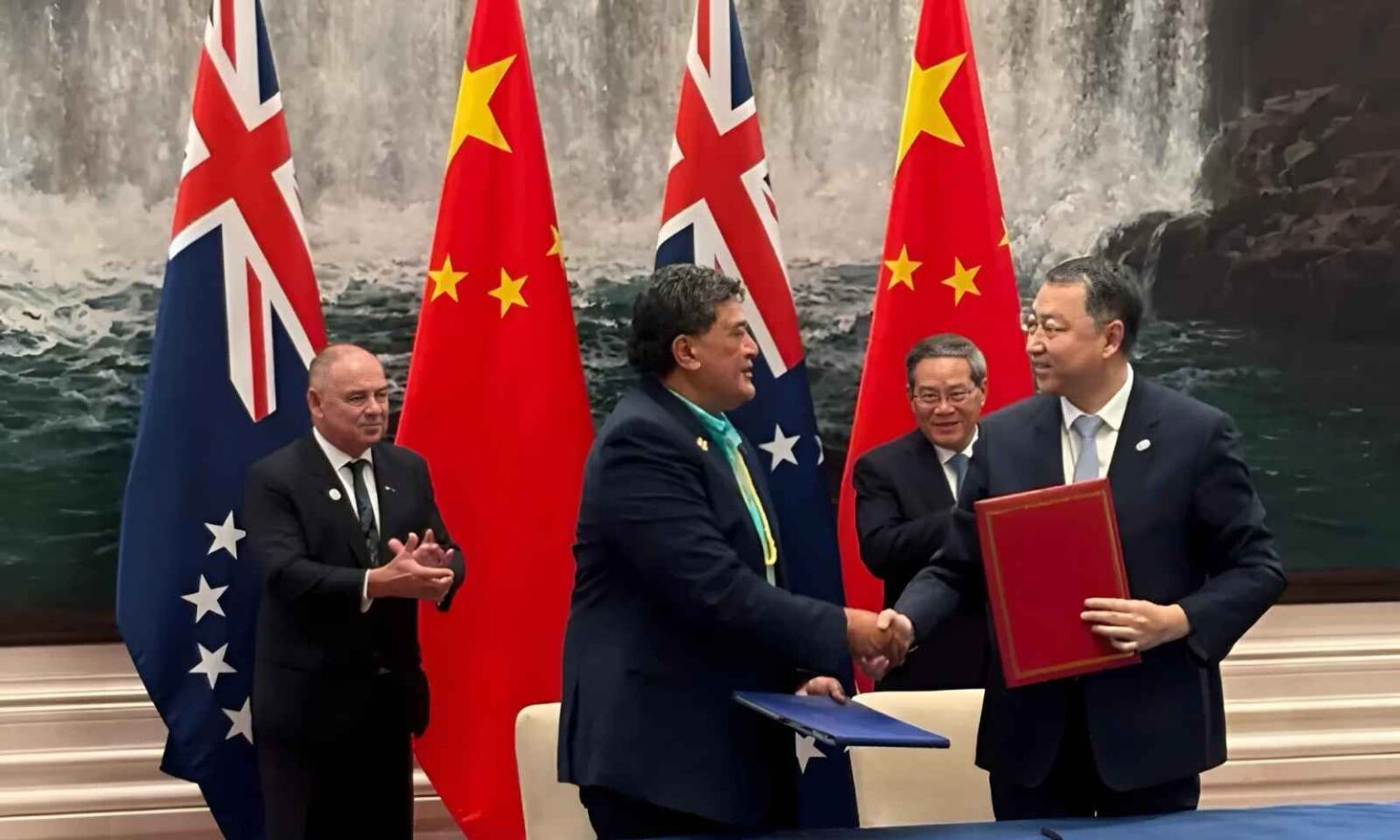
The Cook Islands Government has released details of an agreement it signed with China last week.
Analysts warn the pact, while long in ambition, is short on detail, which could leave room for geopolitical maneuvering and reshaping the region.
Massey University’s Pacific defence and security expert, Associate Professor Anna Powles says the significance of the agreement’s provisions are on multilateral engagement. Speaking on Pacific Mornings, she notes China is positioning itself as a more dominant player in regional governance.
“China is seeking seabed minerals and rare earth minerals and that is certainly not new,” Powles says.
“That is something the Cook Islands can offer in abundance and has suggested a strong willingness to do so.
“So, it’s access to resources, both seabed as well as fisheries, too, that is mentioned in the agreement.

“But this is also about China’s broader ambitions and strategies within the Pacific Islands region to effectively shape the region in a way which is more favorable for their engagement.
“We see this in the action plan, where there is specific reference to China and the Cook Islands engaging in advanced discussions prior to the Cook Islands hosting of regional meetings that China normally attends, such as the Pacific Islands Forum meetings, leaders’ meetings and others to identify ways in which the two countries can support each other and advance their collective interests.
“We see a much closer alignment between Cook Islands and China within that multilateral space within the Pacific.
“And this very much fits into China’s efforts to shape the regional environment in a way that is favorable to their interests.”
The Cook Islands’ decision to formalise a Comprehensive Strategic Partnership with China has been a move which has sparked widespread controversy.
With an emphasis on significant economic opportunities for the Pacific island nation, the agreement focuses on trade expansion, infrastructure development, and environmental sustainability.
Watch Powles’ full interview on Pacific Mornings here
Geopolitical competition
New Zealand officials have expressed concern over the lack of consultation, with some arguing the agreement undermines traditional diplomatic protocols.
Speaking on Pacific Mornings, law academic Al Gillespie, notes the secrecy surrounding the negotiations have already caused diplomatic friction.
“It’s a low-level agreement, but the relationship between the Cooks and New Zealand requires not only an obligation to consult, but in international law, that obligation to consult must be carried out in good faith,” Gillespie says.
“That means the two countries can rely on each other and build confidence and relationship with the Cooks.
“It goes back for such a long period, and it’s not just legal or political, it’s cultural as well.
“Much of that has been undermined by what’s happened in recent times.
“I think there’s always areas for cooperation with non-traditional partners in the region, but it should have been done in a much different way than what’s happening right now.
“People need to remember the politics of aid and assistance right now are very volatile globally.
“I think if the Cook Islands had tried to do this trick with America, they would have found that much of their assistance would have disappeared.”

Gillespie is currently the pro vice-chancellor for research and professor of law, specialising in international law related to war, the environment and civil liberties, at the University of Waikato. Photo/University of Waikato
Seabed mining and China’s resource interests
One of the most contentious aspects of the partnership is China’s potential role in the Cook Islands’ seabed mining industry, a sector that has drawn both regional and international scrutiny.
The deal references exploring areas for further cooperation in seabed minerals, sparking concerns Beijing could gain privileged access to the industry.
Powles says seabed mining is inherently geostrategic.
“So, there are long-term security implications for that.
“We know there is intensifying competition for seabed minerals and for rare earth minerals in general and can certainly foresee increased geostrategic competition in that space.
“There’s also concerns that the development of the marine infrastructure in the Northern Cooks could potentially have security implications.
“The Cook Islands Government has previously stated that China will assist in the development of a multi-use transport hub in the Northern Cook Islands.
“So that will obviously be of some concern.
“While there aren’t any specific short-term security implications like we’ve seen, for instance with China and the 2022 agreement between China and Solomon Islands, there are references to security cooperation on issues such as transnational crime and cybercrime.
“And of course, we know from over the past couple of weeks that the recent cyber attack in Palau was attributed to a Chinese state-backed hacker group.
“So there are certainly some security implications there.
However, transparency concerns persist, particularly since the full Memoranda of Understanding (MOU) signed in Beijing, has not been released.
New Zealand’s reaction
New Zealand has taken a cautious approach in its response, balancing its long-standing relationship with the Cook Islands while raising concerns about transparency and consultation.
Following the release of the details, New Zealand’s Foreign Affairs Minister Vaovasamanaia Winston Peters, has announced further proceedings are underway to assess the agreement’s contents and implications for New Zealanders, Cook Islanders, and the wider Realm.
“We note, from various public statements by the Governments of the Cook Islands and China, that they signed a number of agreements last week,” Peters says.
“We look forward to the release of all those agreements without delay so that the Cook Islands people and New Zealand can get clarity on the substance and scope of the intended cooperation between China and the Cooks.
“Consultation and transparency must lie at the heart of the New Zealand-Cook Islands relationship.”
Meanwhile, Prime Minister Christopher Luxon defends New Zealand’s position, rejecting claims of a double standard when compared to the Cook Islands’ growing ties with the United States.
“No, no. I mean, the issue here is, as we’ve said, we’ve got a good relationship with the Cook Islands and with the Cook Island people.
“That’s great, but we have a genuine difference here, because under free association, under our constitutional arrangements, we have clear rights and responsibilities, and we have a responsibility around defence, foreign affairs, and security,” says Luxon in response to questions about whether New Zealand is being hypocritical.
He emphasises New Zealand expects full transparency from the Cook Islands regarding international agreements, particularly those that may affect regional security.
“What we expect is transparency and upfrontness about what’s going on and what’s been proposed, because we do have obligations around defence and security we need to make sure are well managed,” Luxon adds.
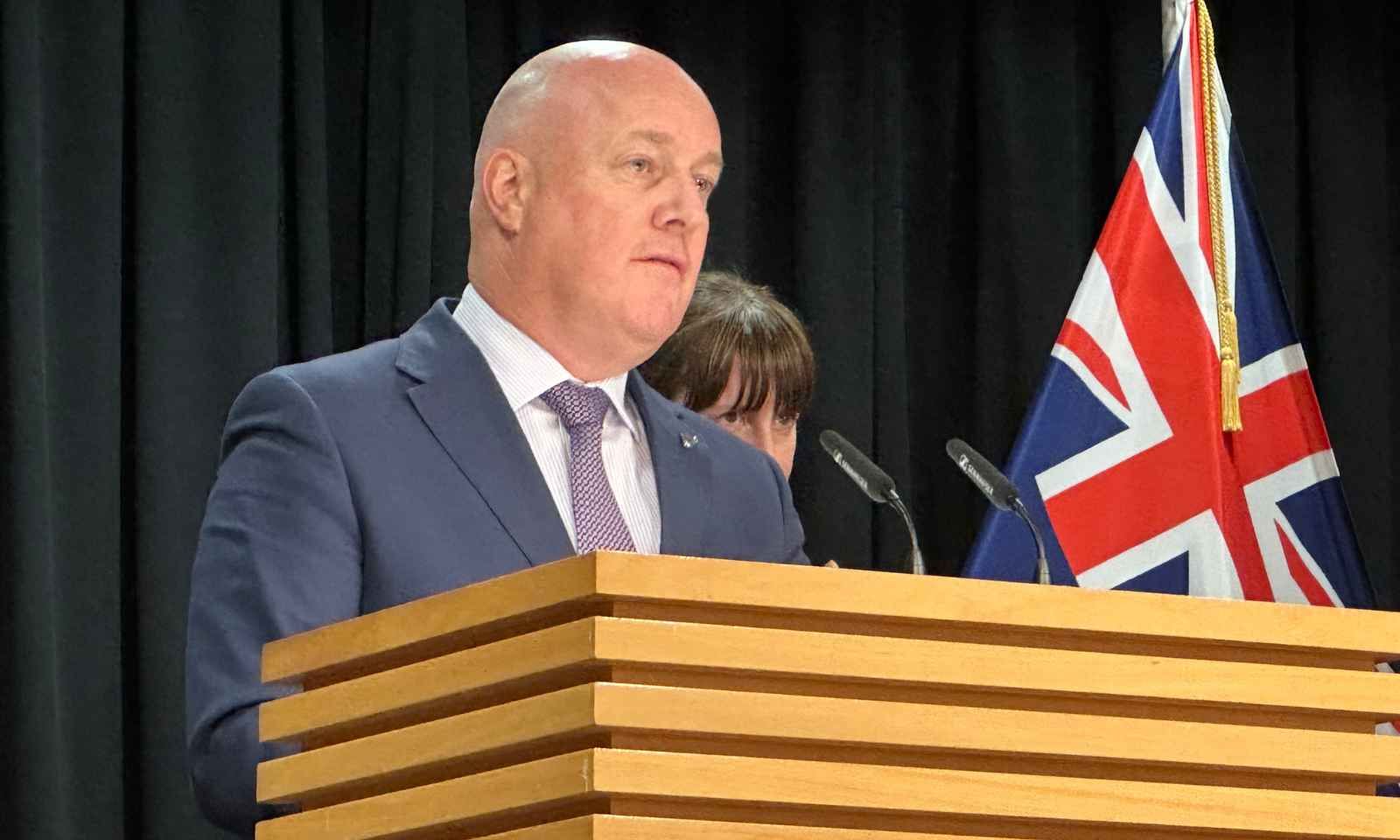
Luxon spoke to media in a post-Cabinet press conference earlier this week. Photo/Ala Vailala
OIA revelations and US recognition of the Cook Islands
Documents released under the Official Information Act (OIA) shed light on New Zealand’s response to the Cook Islands’ growing international engagements, particularly its recognition by the United States.
According to the documents, New Zealand welcomes the US decision and is hailed as a significant diplomatic win for the Cook Islands.
When asked whether or not it is a double standard on New Zealand’s part, Powles addsit has been something many have pondered since the “diplomatic row”.
“A lot of this comes back to the interpretation of the 2001 Joint Declaration between New Zealand and Cook Islands, which calls for consultation on issues which may be of national interest to either party,” Powles says. “While the 2001 Joint Declaration does recognise that the Cook Islands, in its foreign relations, acts as a sovereign and independent country, that call, that emphasis on consultation still very much is there.
“It’s not surprising, given those geopolitical concerns of New Zealand about China in the region, that there should be calls for consultation, in the respect of the Cook Islands’ engagement with China.
“Is it a double standard? I know there were certainly frustrations around the time of the United States, stating that it recognised Cook Islands as an independent country in order to elevate its access, to be able to access USAID funds.
“And so there were certainly some frustrations around the way in which that was conducted.
“But what it does reflect is the fact this is a different strategic environment than it was back in 2001.
“Helen Clark referred to it back then as a benign environment.”

Cook Islands Prime Minister Mark Brown. Photo/Google Earth/Mark Brown Facebook
Powles says she does not think many leaders in the region would suggest it remains as such today, however.
“There are strong geopolitical concerns in the region, if only for the fact that geostrategic competition is increasingly disruptive, and increasingly undermining the existing regional architecture where Pacific leaders have sought to establish over the past 40 odd years.”