
A personal love of trees can never register as overstatement.
As a boy when life proved troublesome inside our overcrowded home in Winslow, Camden County, nearby forests offered peace.
Trees became part of an earth family that included streams, lakes, wind, and wildlife. In the dead of winter, small beds of pine needles absorbed sunlight and heat on forest floors, creating a kind of natural heating blanket.
A person could stay warm and drown in amazing comfort by finding the perfect patch of sun rays puddling beneath a canopy of trees.
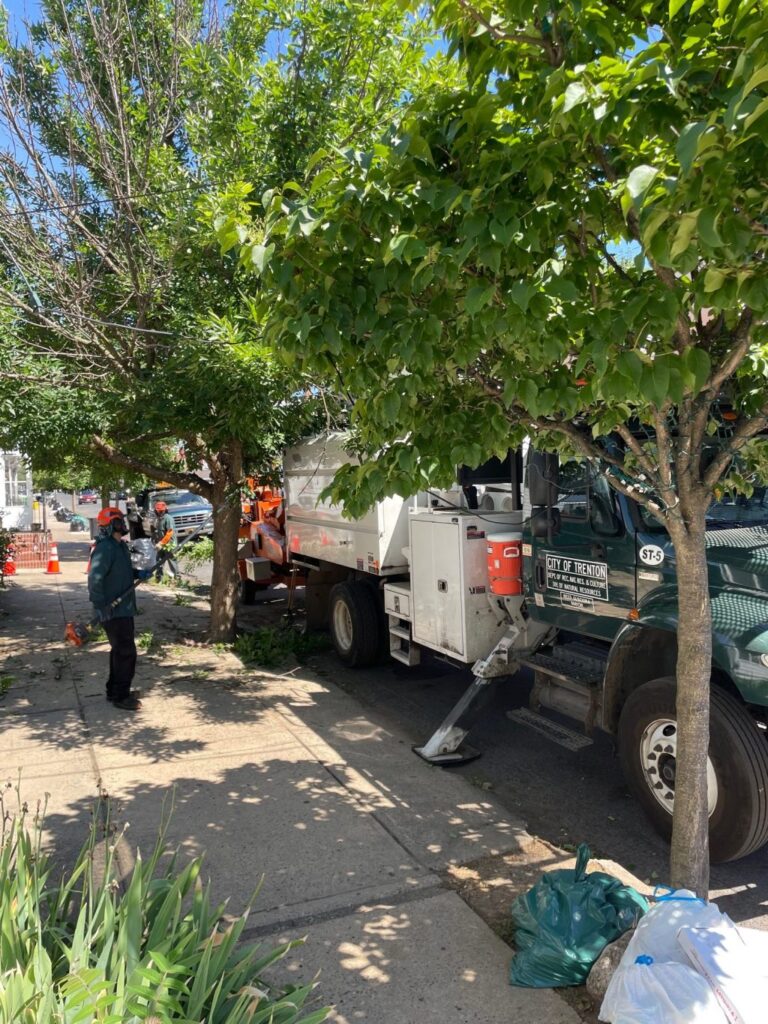
Conversely, trees deliver climate control coolness during summer days. A tree on city streets can reduce temperatures by as much as25 degrees. That discovery occurred last summer when employees from the Dept. of Recreation, Natural Resources, & Culture trimmed trees on the 100 Block Street of Franklin St.
One nearby tree received a trimming before a worker realized the better option involved removal. The tree had provided shade and induced cooler temperatures in several homes and on sidewalks. Well, things got hot. Porch temperatures skyrocketed in my residence and a living room that offered cool conditions needed a fan to offset porch heat.
“Urban trees are good for people and wildlife. They keep us healthy and make us happy.”
This message preceded a July 2024 article by Ellen Montgomery, director of Public Lands Campaign for the Environment America Research & Policy Center.
“Cities tend to have higher temperatures, more greenhouse gas emissions, worse air quality and more noise pollution than rural and wild areas. Planting trees in parks, along sidewalks, on corporate campuses or in private yards can help address these problems,” Montgomery wrote.
“Urban areas that are lacking trees often have less shade and evaporation, which can lead to heat islands. Trees can create a more habitable and enjoyable local climate with more moisture, cooler temperatures and buffered wind. This will be increasingly important as extreme heat becomes more common due to climate change.”
Environment America notes urban trees have many benefits including:
• Reducing heat: Trees can reduce surface temperatures by up to 40%. This can help reduce heat-related illnesses and deaths.
• Reducing flooding: Trees can absorb and filter stormwater runoff.
• Improving air quality: Trees absorb harmful gases like ozone and nitrogen dioxide.
• Reducing noise pollution: Trees can reduce noise pollution by up to 50%.
• Storing carbon: Trees absorb carbon dioxide and store it in their biomass.
• Providing oxygen: An acre of trees produces enough oxygen for 18 people each day.
Improving health and well-being: Studies have linked trees and time spent in nature to physical and mental health benefits.Creating jobs: Urban forestry programs create jobs for urban foresters, arborists, tree trimmers, and more.
Urban trees can also help to: Encourage outdoor recreation; Mitigate stormwater runoff; Reduce building energy use and power plant emissions; Cool waterways.
L.A. Parker is a Trentonian columnist. Find him on Twitter @LAParker6 or email him at LAParker@Trentonian.com.