
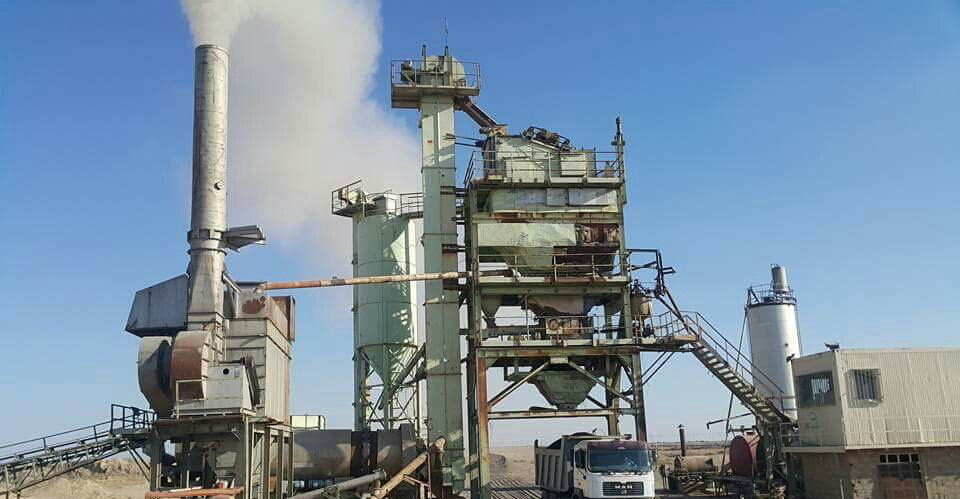
Shafaq News/ Dujail, an agricultural
district in Saladin province, is at the center of an escalating environmental
and public health crisis.
For years, residents have raised
concerns over pollution from nearby asphalt plants, citing toxic emissions as a
primary cause of deteriorating air quality. Medical professionals and local
activists have reported an alarming rise in cancer cases, and growing public
concern over industrial pollution has forced authorities to take action.
Hussein Abbas Qasim, a resident of
Dujail, described the situation as “distressing.” He explained that
the surge in cancer cases had fueled widespread protests, saying, “The
outrage among the people stems from the alarming increase in cancer cases.
According to medical analyses
conducted by locals, 500 confirmed cases have been reported, which is a
“terrifying number.” The primary culprit is air pollution caused by
the asphalt plants operating near the city,” he told Shafaq News.
Residents regularly observe thick
black smoke blanketing the city and claim that factory owners continue
production without adhering to environmental and health regulations, exposing
local communities to hazardous air contaminants. Environmental experts warn
that unchecked emissions from asphalt plants can release sulfur dioxide, carbon
particulates, and volatile organic compounds (VOCs), all of which contribute to
respiratory diseases and long-term carcinogenic risks.
Although no official air quality
data has been released for Dujail, environmental organizations and independent
monitors estimate that pollution levels may exceed safe limits, and some
reports indicate that sulfur concentration in the air is “dangerously
high,” raising concerns about long-term exposure effects on local
populations. In response to these fears, dozens of residents took to the
streets, staging protests and demanding immediate government intervention.
Government Response And Controversy
Despite the growing outcry, Saladin
Governor Badr Al-Fahal initially dismissed reports of the crisis, describing
some media coverage as “inaccurate,” and denied claims that the
asphalt plants were located within Dujail’s administrative borders.
“The plant is located in
Al-Nabaie, outside Dujail’s jurisdiction and closer to Baghdad’s provincial
boundary,” Al-Fahal told Shafaq News, arguing that the facilities
“did not directly threaten the city’s population.”
The statement did little to ease
public concerns. Residents countered that while the plants might technically be
outside official municipal borders, the wind still carries pollution into the
heart of Dujail, directly affecting its people, accusing authorities of using
bureaucratic technicalities to avoid accountability while industries continued
to operate without effective oversight.
As demonstrations gained momentum
and media attention intensified, the government was forced to reassess the
situation. Environmental activists and members of parliament applied political
pressure, questioning why the government had allowed industrial pollution to
persist for so long without intervention.
Why Did This Happen For So Long?
The asphalt industry plays a key
role in Iraq’s infrastructure and construction projects, making it a lucrative
business with strong financial backing. Many factory owners have contracts with
government agencies, supplying materials for road construction and urban
development. Shutting down these plants could disrupt infrastructure projects
and create economic pressures, leading local officials to turn a blind eye to
regulatory violations.
The political landscape further
complicates environmental enforcement. Many industrial businesses in Iraq,
including asphalt production, have ties to powerful figures within the
government, making regulatory crackdowns difficult. Corruption within the system
allows businesses to operate without fear of consequences, as financial and
political connections often shield polluters from accountability. Environmental
regulators, already underfunded and lacking authority, face obstacles when
attempting to enforce laws that could threaten the interests of politically
connected business owners.
Ahmed Al-Saadi, an Iraqi
environmental policy researcher, explains this issue, saying,
“Environmental enforcement in Iraq is often undermined by political and
economic pressures. Many industries, especially those tied to infrastructure
development, operate under the protection of influential figures. Local
authorities know that cracking down on violations can disrupt economic activity
and create a political backlash, which is why enforcement is often selective or
completely absent.”
Authorities And Society Intervention
Amid mounting public discontent,
Iraqi MP Mohammed Al-Baldawi announced that all asphalt plants in Dujail would
be shut down. The decision came swiftly, showing the power of parliamentary
intervention and grassroots activism in shaping policy outcomes. “The
decision was taken in response to the people’s demands,” Al-Baldawi
declared, emphasizing that he had personally coordinated with the Prime
Minister’s Office and the Deputy Minister of Environment to ensure the
“immediate enforcement of the closure order.”
The Saladin Environment Directorate
quickly followed suit, confirming the shutdown of the factories. “This
directive comes from Governor Badr Al-Fahal and the Technical Deputy Minister
of Environment,” said Mohammed Majid, head of the provincial environmental
department, explaining that a specialized task force was assembled in
cooperation with security forces and Dujail’s local administration to oversee
the closure process.
“Our objective is clear: to
protect public health and mitigate the environmental damage caused by these
factories,” Majid stated. However, some residents remain skeptical,
fearing that the closures may only be temporary, with factories potentially
resuming operations after media attention fades.
While government intervention was
necessary to address the Dujail crisis, civil society played a crucial role in
exposing the issue. Activists and local organizations conducted independent
research, collected testimonies, and organized protests. Journalists and
environmental watchdogs amplified public concerns, ensuring the issue remained
in the spotlight.
Iraq’s Environmental Policy Failures
While the shutdown of Dujail’s
asphalt plants is a short-term victory for public health, it exposes deeper
systemic failures in Iraq’s environmental policies and industrial regulation.
Weak enforcement of environmental laws continues to allow factories to operate
with minimal oversight. Many facilities lack proper air quality monitoring, and
regulatory agencies often struggle with bureaucratic inefficiencies that hinder
effective inspections. Corruption within Iraq’s administrative framework
further complicates the situation, as some factory owners may have political
connections that shield them from scrutiny.
A lack of industrial zoning policies
also exacerbates the problem. Many factories are established close to
residential areas without comprehensive environmental impact assessments,
placing thousands of people at risk of prolonged exposure to hazardous pollutants.
The Dujail crisis is not an isolated
case; similar pollution-related health concerns have been raised in Basra,
Kirkuk, and Baghdad, where oil refineries and industrial plants continue to
operate without stringent emissions controls. Unless broader reforms are
enacted, future crises will emerge in different regions, endangering more
communities.