
An Ethiopian wolf (Canis simensis) slurps nectar from an Ethiopian red hot poker flower (Kniphofia foliosa) in the Bale Mountains National Park in the country’s highlands. These endangered wolves dine mostly on rodents, but it appears they have a bit of a sweet tooth as well. They are the first large carnivorous predators known to feed on flowers. Since licking the flowers ends up depositing relatively large amounts of pollen on their muzzles, researchers reported, in a recent issue of the journal Ecology, that the wolves might be playing an additional, and rather unusual, role in this ecosystem — that of pollinators.
AROUND THE WORLD
Threat Multiplier
As the climate crisis deepens, so too does its reach. Nothing, it seems, is truly insulated from the impacts of rising temperatures. That includes disease.
Climate change is exacerbating the spread of infectious disease in multiple ways. It is expanding the range of disease-carrying animals like mosquitoes and birds, allowing them to move into new landscapes as temperatures increase; it’s contributing to landscape changes that bring disease-carrying wildlife into closer contact with humans; it’s aggravating extreme weather events like flooding, leading to direct contact with contaminated water; it’s improving pathogen growth and survival rates; and in at least one case, it has led to the release of a frozen pathogen from permafrost. Indeed, as a 2022 study in Nature Climate Change found, 58 percent of pathogenic diseases known to impact humanity have already been aggravated at one point by climatic events.
Here are just a handful of the places where the climate crisis is increasing the spread of infectious disease in humans.
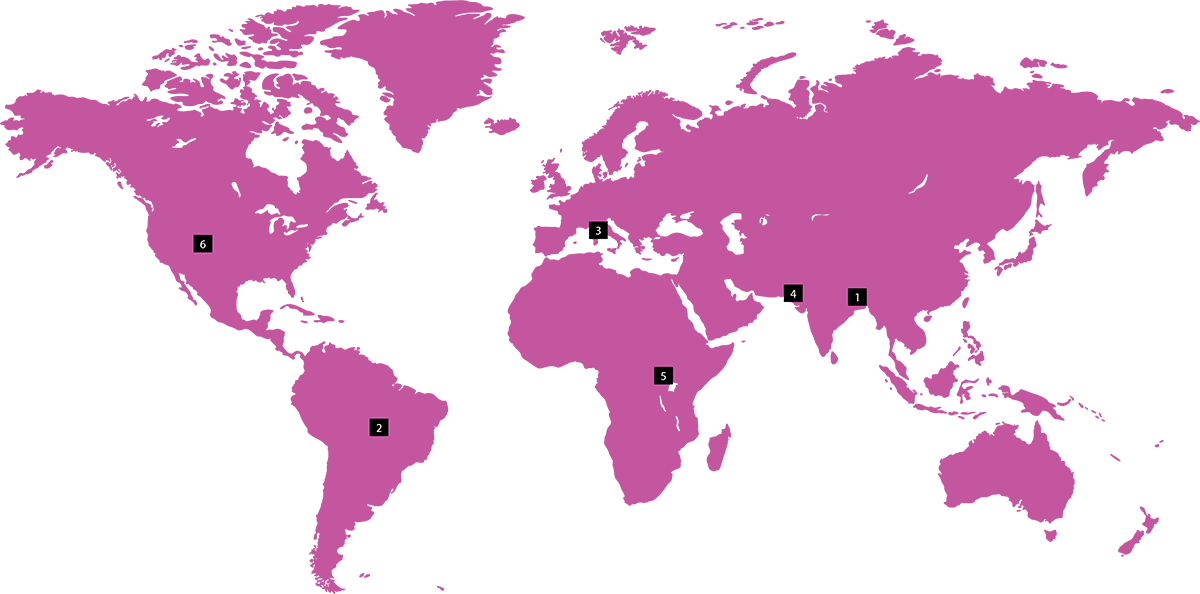
Sources: Grist, Cary Institute of Ecosystem Studies, VOA News, Carbon Brief, Yale360, Mongabay, Vox, World Health Organization, National Institutes of Health, National Institute for Public Health and the Environment, British Red Cross, One Health
1 Bangladesh
Climate change is spurring changes in Bangladesh’s monsoon season. Specifically, the monsoons have gotten longer and are more likely to involve sporadic rainstorms that leave behind standing water. The water attracts breeding mosquitos, including those carrying dengue, a viral infection that can be fatal in humans.
Researchers have tied these weather patterns to an increase in the number of dengue cases and deaths in Bangladesh, with 1,705 reported deaths in 2023, and 415 in 2024, well above the number in other recent years (for example, 26 in 2018 and 164 in 2019). Due to climate change, the disease, which used to be associated with the summer season, is becoming a year-round risk.
Other countries, too, are experiencing a surge in dengue. Globally, the number of cases reported to the World Health Organization (WHO) increased tenfold between 2000 and 2019, from half a million to 5.2 million. (Some of this increase stems from better reporting and other non-climate related factors.)
2 Brazil
Oropouche isn’t very well known, but the virus is causing mounting concern in South America, particularly in Brazil, where the number of cases increased from 832 in 2023 to more than 9,000 in 2024. Traditionally confined to the Amazon Basin, Oropouche has now spread far from the rainforest, and last spring was reported as far away as Cuba.
The disease typically causes mild symptoms like fever, headache, and body pains, but can also lead to brain inflammation and neurological problems. Spread to humans by midges and mosquitos, the recent surge in Oropouche may be due to a combination of climate change and deforestation. Deforestation makes the insects more prone to biting humans when other animals are displaced by habitat loss, while higher temperatures and increased flooding facilitate midge maturation and reproduction respectively.
3 Italy
The first documented case of West Nile in Italy dates back to 1998, when it appeared in horses. The first human case came in 2008, and Italy has been a European hotspot for the disease since.
West Nile virus, which generally brings mild symptoms like fever and headache but can also cause serious conditions like encephalitis or meningitis, is carried from Africa to Europe by migratory birds. These birds pass the virus on to mosquitos, who pass it to humans. As temperatures warm in Italy, and across Europe, the mosquito breeding season is lengthening, which can boost mosquito populations, and as a result, infection rates. Researchers point to 2018 as an example: An unseasonably hot spring that year corresponded with record West Nile virus cases. Italy had 610 cases that year compared to 54 during the cooler 2019, and Europe as a whole saw 2,083 cases in 2018 compared to 463 the following year.
Warming temperatures are also facilitating the spread of the disease, which has become endemic to southern Europe, across the continent. The first locally transmitted case in the Netherlands, for example, was documented in 2020. By one estimate, Europe could see a five-fold increase in West Nile cases by 2040-2060 due to climate change.
4 Pakistan
In 2022, Pakistan suffered devastating floods, part of a pattern of extreme weather events there that are becoming more frequent with climate change. A third of the country was underwater at some point during the flooding, and at least 1,739 people died. Several hundred thousand cases of cholera — a bacterial disease spread through water or food, which can be fatal if left untreated — were later reported, the largest outbreak in the country in decades.
Unfortunately, Pakistan is part of a larger trend. Cholera is on the rise globally, and fatality rates are also increasing. While many factors are at play when it comes to the uptick — including conflict, displacement, and poverty — the WHO has pointed to climate disruption as a big one.
5 Uganda
Since the turn of the century, Central Africa has experienced 28 large Ebola outbreaks. Seven of these have been in Uganda. Ebola is just one of several zoonotic diseases — those that originate in other animals before infecting humans — on the rise in the region. Altogether, Central Africa saw a 63 percent increase in zoonotic disease outbreaks between 2012 and 2022.
Health officials are increasingly pointing to climate change as a factor. In particular, they say, increasingly frequent droughts are pushing disease-bearing animals like bats out of their traditional habitat and into closer contact with humans, increasing the chance that they pass on their pathogens. Research suggests the rate of Ebola epidemics will continue to increase in Africa as the climate warms and that a larger swath of the continent will become at risk.
6 United States
Lyme disease has, in the United States at least, become the poster child of climate change-aggravated disease. As winters have become milder in certain regions, Lyme-carrying black-legged ticks have taken full advantage.
In the Northeast, the blood-sucking arachnids have long spread the disease. But in recent years, they have begun emerging earlier in the spring and sticking around later into the fall and expanding their range into the Midwest and even Alaska, where they were previously unable to establish themselves. The number of cases of Lyme — which can cause a rash and flu-like symptoms, and a slew of sometimes-debilitating, later-stage symptoms if left untreated — doubled in the US between 1990 and 2020.
Other tick species, like Gulf Coast and lone star ticks, are also expanding their range northward. They are contributing to an increase in other tick-borne diseases like alpha-gal syndrome, which can cause a deadly allergic reaction to red meat, and Rickettsia parkeri infection, which causes spotted fever.
 Photo by Sandy Chuck Harris
CALL OF THE WILD
A Threatened Listing
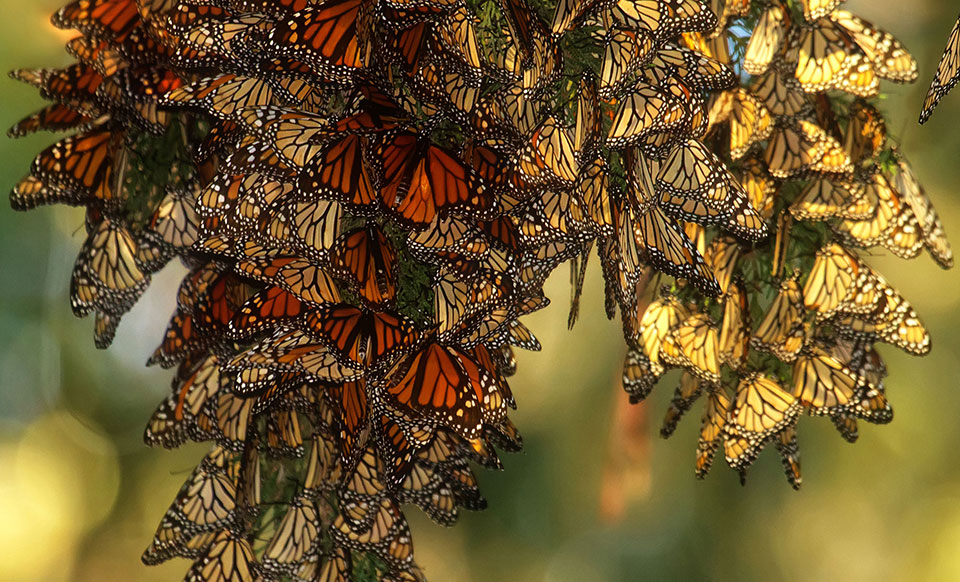
The US Fish and Wildlife Service plans to add monarch butterflies to the threatened species list by the end of 2025, following years of declining numbers amid climate change, habitat loss, and agricultural expansion. The announcement follows years of legal battles and a petition from conservation groups in 2014.