
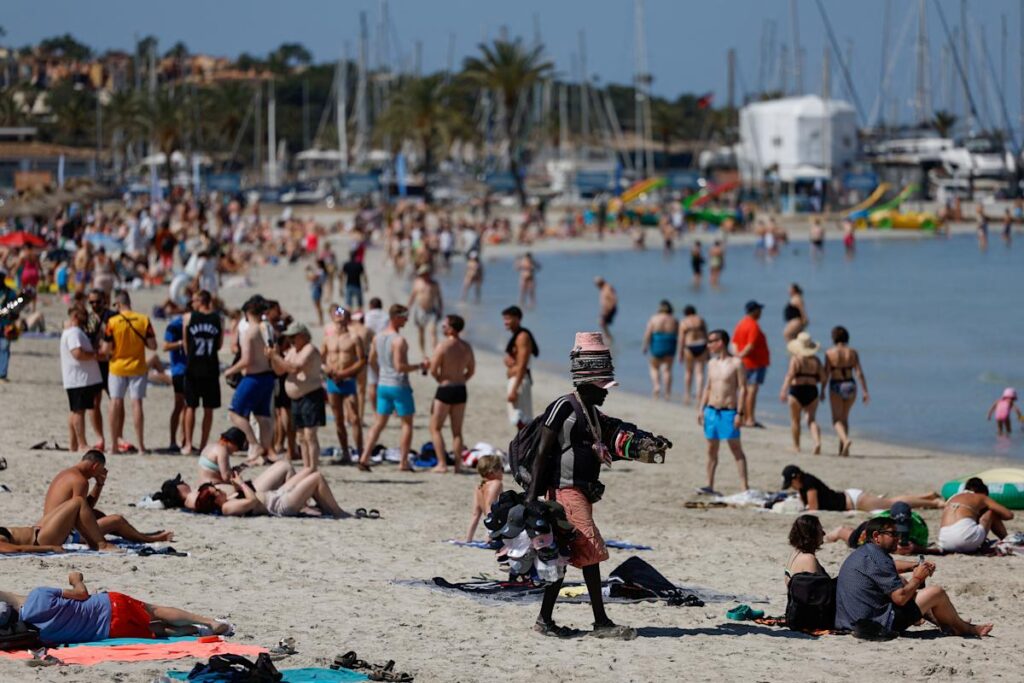
A popular Spanish holiday town has implemented a new low-emission zone that will see hire cars banned ahead of the busy tourist season.
Sóller, a picturesque town on the island of Majorca, has decided to introduce ‘La Zona de Bajas Emisiones’ (ZBE), which the local authority hopes will curb congestion in the busy town centre during the peak summer months.
The zone, which will become active in March 2025, will restrict traffic in the centre of the municipality, allowing only vehicles belonging to residents and services.
Visitors driving non-registered vehicles, such as hire cars, will be asked to park in newly-created parking spaces, on the edge of the historic town centre.
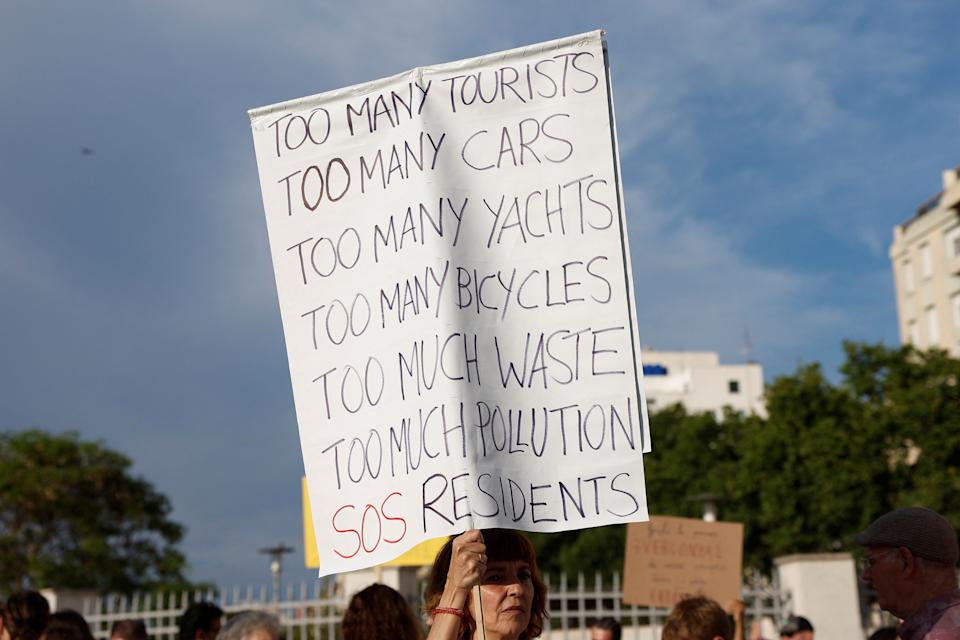
A demonstrator holds a sign during a protest against mass tourism and gentrification in Majorca. (Reuters)
The 70 hectare zone has been created following concerns by local residents, who had aired their views in a public consultation in October 2024.
Sóller City Council says that the measures acknowledge the “difficulties that citizens face with traffic in the municipality”.
The Balearic island’s administrative capital, Palma, had protests last year that saw locals expressing concerns about over-tourism on one of the Mediterranean’s busiest tourist hotspots.
Tourism generates roughly 45% of Majorca’s GDP, with 12.5 million tourists visiting the island, which has an estimated 1,232,014 residents.
Why are locals worried about overtourism?
Spain saw a wave of anti-tourism sentiment in 2024, with many local authorities taking measures to tackle over-tourism.
YouGov data released last year showed that in a poll of seven European countries, Spain’s residents felt most strongly about mass tourism, with 32 percent of respondents saying there were now too many foreign travellers in their area.
Sóller council’s new rules specifically target drivers, in what is a small town of just 13,860 people, hoping to improve the mobility of local residents and combat environmental damage caused by mass tourism.
But on the island and around Spain, locals have cited concerns over rising living costs and housing shortages from the influx of tourists, which has seen a rise in the cost of everyday goods and housing.

People take part in a protest against mass tourism in Spain. (Reuters)
Local frustration led to demonstrations last year in Palma, with protesters holding placards declaring “Your paradise, our nightmare” and “Tourism yes – but not this much”.
The protests were arranged by about 80 organisations concerned with mass tourism, with an estimated 20,000 demonstrators attending – many of them stating that housing on the island had become unaffordable.
In February this year, a defaced Osborne Bull, situated between Algaida and Montuïri, on Mallorca, appeared with the words ‘Rich foreign property buyers go to hell’ emblazoned on its torso.
Many Spaniards have accused the short-term holiday rentals sector of removing accommodation from the local residential market and inflating rents.
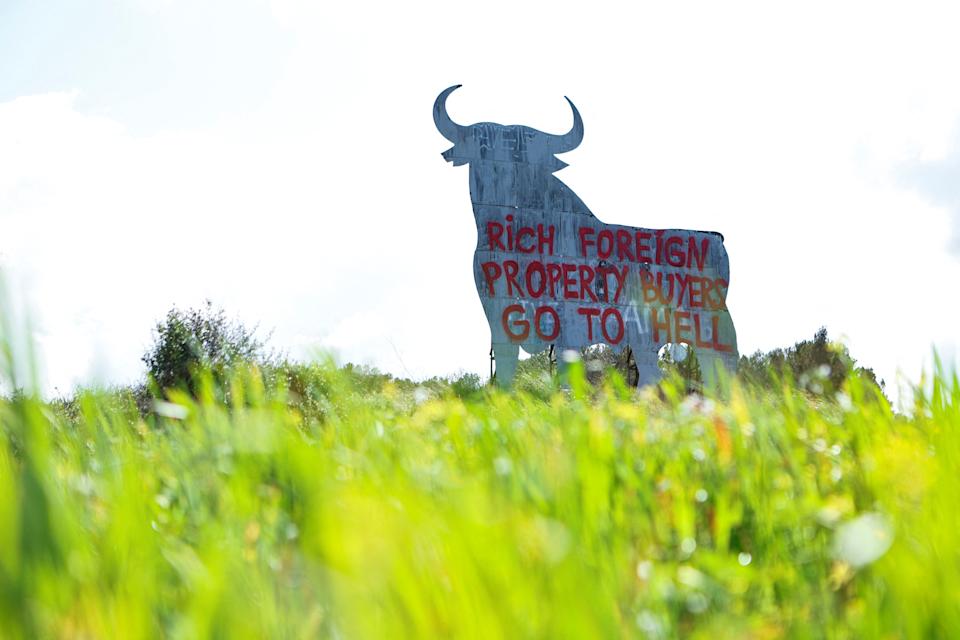
The phrase “Rich foreign property buyers go to hell” is painted on a billboard-sized figure of a bull, known as the “Osborne bull”, in Montuiri, in Majorca. (Getty)
Travelling to Spain in 2025?
As travellers prepare for their Spanish summer holidays, they have been warned to be prepared to meet new rules around entry into the country.
Travellers from the UK, the US and some other countries will be required to apply for Etias (European Travel Information and Authorisation System) before travelling to Spain or any other country in the Schengen zone, even for a short stay.
The rules, expected be implemented in the second half of 2025, will mean travellers visiting any of the 29 Schengen countries or Cyprus must apply online or via an app and pay up to €7 (£6).
The Etias travel authorisation will be valid for up to three years, unless your passport expires, and children under 18 and travellers over 70 will not be charged but will still have to apply.
The EU’s Entry and Exit System (EES) is also set to launch in 2025, which means visitors are likely to notice changes, and possible delays, on arrival and exit to Spain.

Brits travelling to Schengen countries will be required to apply for the new visa waiver system, Etias. (Getty)
The EES, which will be gradually implemented this year, will register visa-free and visa-required travellers entering Europe for a short stay. No action will be required from travellers ahead of their trip, as registration will be done at the external border.
Regionally, tourist taxes are set to rise in some popular Spanish destinations including Galicia, Tenerife, Alicante, and Seville will see an increase in the tax, with Catalonia doubling theirs.
A new registration system, implemented by the Spanish government, also requires hotels, travel agencies and car rental companies to collect up to 42 pieces of personal information per guest.
The new rules came into force in December 2024 and require hotels to gather extensive personal data from tourists, including family information, bank card details and addresses, which can be passed on to security services.
The rules, expected to be the most stringent in the EU, mean extra time and information may be required at check in times, with big penalties possible for hotels that do not comply.
Read more: