
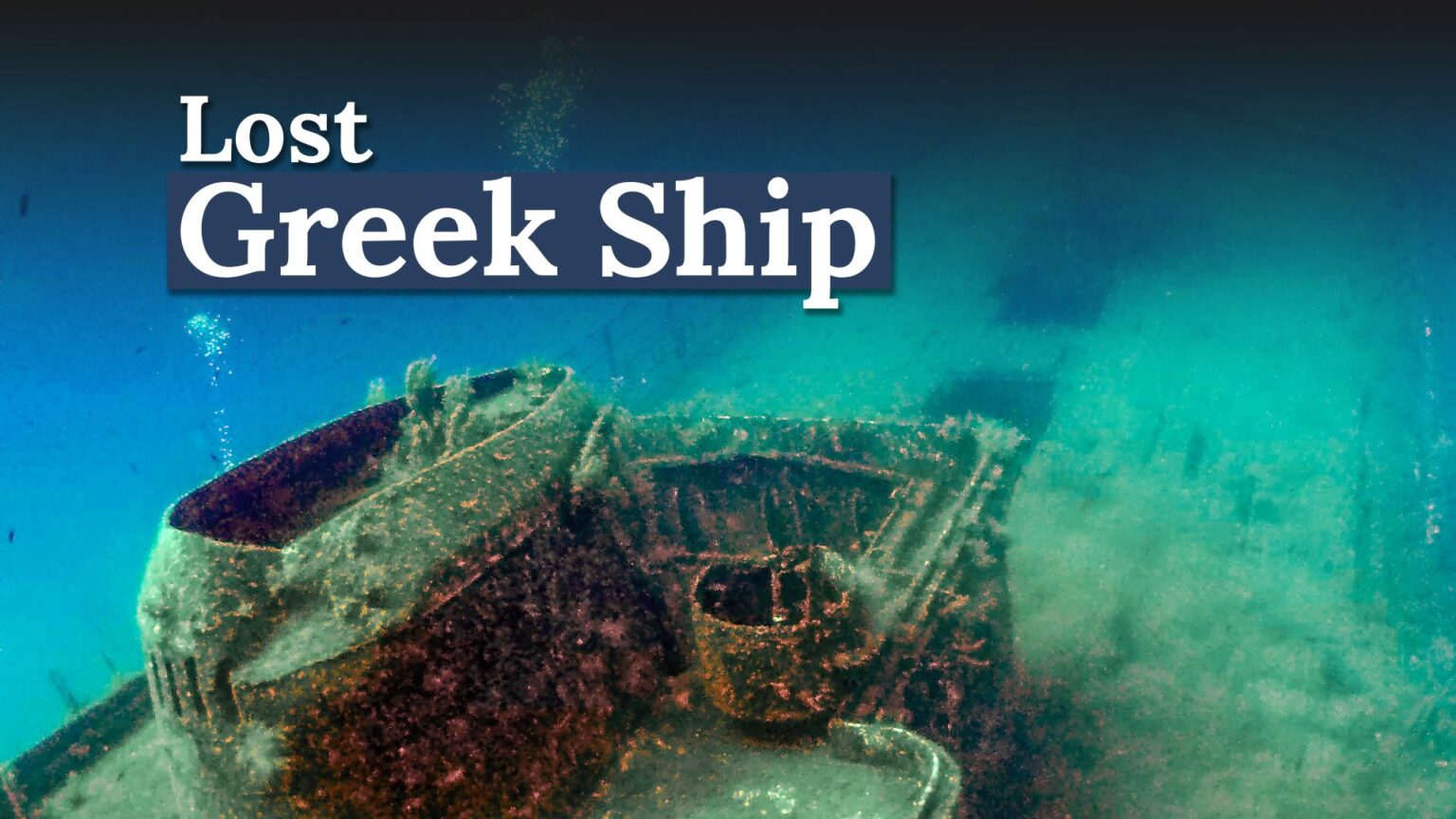
The tragic fate of the “Titanic of Greece” was proof that we can’t dodge accidents and nature’s wrath is very powerful. It was the worst and deadliest maritime catastrophe in Greece and shared the same disastrous reasons as the RMS Titanic’s demise in 1912—frigid waters and poor safety measures.
Shipwrecks have their own unique story. The horrors of these shipwrecks are still haunting the seas and even the rare finds that divers found beneath the surface are both chilling and mysterious, such as the strange things found in the Titanic wreck.
Many divers and researchers have discovered the mysteries of the world’s most ancient shipwrecks, and you can even see some spine-chilling and strange underwater images of sunken ships.
Just like any other shipwreck, the SS Heimara, often referred to as the “Titanic of Greece,” rekindles the maritime disasters of the past—and she has revealed a rare discovery almost 80 years after sinking in the South Euboean Gulf.
Related
Which Titanic Museum Is The Best? Here’s What To Know
With so many Titanic museums to choose from both at home and abroad, here’s what to know about each one.
The SS Heimara Reveals A Rare Discovery
These rare finds are now on display at a museum in Rafina, Greece
The SS Heimara tragically sank in the South Euboean Gulf in the Aegean Sea on January 19, 1947, after hitting a reef in the middle of harsh conditions with thick fog and rough seas—killing around 400 people. It was yet the deadliest in Greek maritime history.
While there are many spots where the secrets of the past are waiting to be uncovered in ancient shipwrecks, the finds in the “Titanic of Greece” were rare and depressing at the same time.
According to a report, new research revealed the terrifying moments of the SS Heimara when she sank in 1947 with many artifacts discovered by researchers, including paper items—something that’s very rare to survive for almost eight decades in the seabed’s harsh environment.
Diver and researcher Kostas Thoctarides found paper artifacts and many of them can still be read even after so many years on the seafloor of the Euboean Sea.
During the dive, we found newspapers, books, and correspondence buried in the muddy bottom of the Euboean Sea since 1947. These were Greek, Cypriot, and French newspapers. There were telegrams, French books, and stamps of the time that were not completely destroyed, although they had been lying on the seabed for dozens of years.
— Kostas Thoctarides, diver & researcher
Thoctarides added that these paper items are “a particularly rare occurrence” since there are very few documents that have survived the kind of environment that the “papers” have had to deal with in the last eight decades.
Among the items discovered were the personal belongings of the dead, including an officer’s sword, combs, life jackets, women’s stockings and shoes, boots, and children’s shoes, which Thoctarides described as the “most emotional” thing they found in the wreckage.
Vessel:
SS Heimara
Date Sank:
January 19, 1947
Location:
South Euboean Gulf, Aegean Sea
The shipwreck lies at a depth of 108 feet near the Megalo Verdougi islet between Crete’s Agia Marina and Nea Styra on Euboea Island.

Related
Why Skeletons Have Never Been Found On The Titanic
As a result of the chemical makeup of the ocean, skeletons have not been able to survive at the depths the Titanic sank.
The Tragedy Of The “Titanic Of Greece”
Her tragic fate in 1947 was comparable to the RMS Titanic
Like the famed ocean liner, the RMS Titanic, which revealed a massive decay during the research dive in July 2024, the SS Heimara’s tragedy was mostly a human error. The RMS Titanic hit a massive iceberg, while the SS Heimara collided with a reef or an islet, resulting in the same tragic fate.
As Thoctarides described, the “Titanic of Greece” is the “greatest maritime tragedy of Greek shipping”—losing almost 400 people. The RMS Titanic, on the other hand, is also one of the deadliest ship sinkings in the world.
It is the greatest maritime tragedy of Greek shipping, in which about 400 people were lost. Moreover, as in the Titanic shipwreck, the collision was due to human error. Panic prevailed during the ship’s abandonment, and most of the victims died of hypothermia.
— Kostas Thoctarides, diver & researcher
The SS Heimara sailed between the Piraeus and Thessaloniki route from 1946 until its tragedy in 1947. She was en route to Piraeus from Thessaloniki carrying around 550 passengers, who were mostly military people, women, children, political prisoners, and gendarmerie escorts, as well as 86 other crew members.
Greece was in the middle of the Civil War at that time and the only passage was by sea from Thessaloniki to Athens, since the country’s roads were in weak conditions.
The collision with the rocky islets in Verdougia or Verdougi in the wee hours of the morning of January 19, 1947, was reportedly due to dense fog, or possibly because she crashed on a sea mine, or it was sabotaged that there could have been an explosive device placed in the engine room, according to the ship’s captain, Spiridon Mpilinis or Spyros Bilinis.
The captain’s reason, however, wasn’t accepted by the Inquiry committee of Maritime Accident Control and Minister Theodoros Kizanis, who, after the hearing, ruled out a suspension order for the captains and engineers of the SS Heimara due to serious negligence in their duties.
The collision damaged the ship’s rudder and radio—both would be great lifelines for communication and possibly aground her to the shallows. Water had also started to flow into her interior.
Thoctarides and his team of researchers also found that the SS Heimara crew failed to close the watertight doors of the ship and there was no abandonment drill.
Thoctarides also said that the captain tried to “maintain order” while he gave out life jackets to passengers and loaded them into the lifeboats. But the captain failed because many of his crew had left the steamer to save themselves.
She took 1.5 hours to sink and was only about one mile away from the Kavalliani islet. Of more than 600 passengers and crew, around 383 of them perished.
Number of Passengers Died:
383
Cause of Wreck:
Possible collision with a reef or a sea mine due to dense fog
Route at the Time of Accident:
From Thessaloniki to Piraeus

Related
353 Passengers Perished On The Titanic Of The West
The Princess Sophia had some similarities to the Titanic, the biggest similarity being the loss of life that occurred in frigid waters.
The SS Heimara’s Humble Beginnings
She was a war reparation
Unlike the most easily accessible shipwrecks in the world for divers, the SS Heimara remains off-limits as it’s still not on the list of recreational diving in Greece. Therefore, only diver-researchers are allowed to dive into the wreckage as they have permission from local authorities for research purposes.
Her humble beginnings were impressive, and she was a tough vessel to have met such a tragic accident, losing almost 400 people aboard.
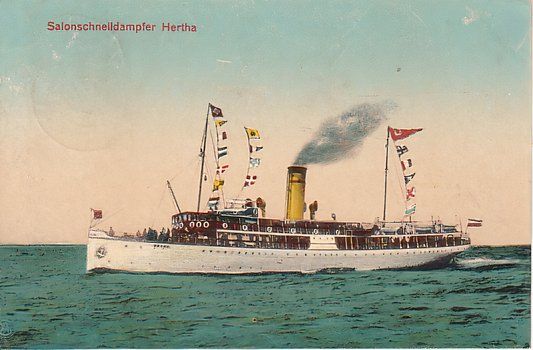
Originally named SS Hertha, she was built in 1905 at Stettin, German Pomerania by Stettiner Oderwerke, a German shipbuilding company. She initially couriered mail and later became the Imperial Navy’s hospital ship and a minelayer in 1914.
She was moved to Greece in 1946 as a war reparation after the Second World War and was renamed SS Heimara (Himara or Chimara) for a small town in Albania called Himarë, which is Himara in Greek.
She sailed in Greece for a year until her unfortunate accident in January 1947.
Year Built:
1905
Builder:
Stettiner Oderwerke
Type:
Passenger steamer
Length:
249 feet
Tonnage:
1,221 GRT (Gross Registered Tonnage)
Related
Did An Ancient Egyptian Curse Sink The Titanic?
A slew of eerie stories about the Titanic’s sinking all pointed to one cursed Egyptian artifact as the culprit.
The SS Heimara’s tragic fate remains haunting in Greece and her rare discovery after almost 80 years after sinking has people fascinated with how amazing life is underwater to have the paper items survive even after many decades.
She may not be as legendary as the RMS Titanic, which left the world a lasting legacy, but the ‘Titanic of Greece” also ensures that her story is never forgotten through the rare finds recently discovered.