
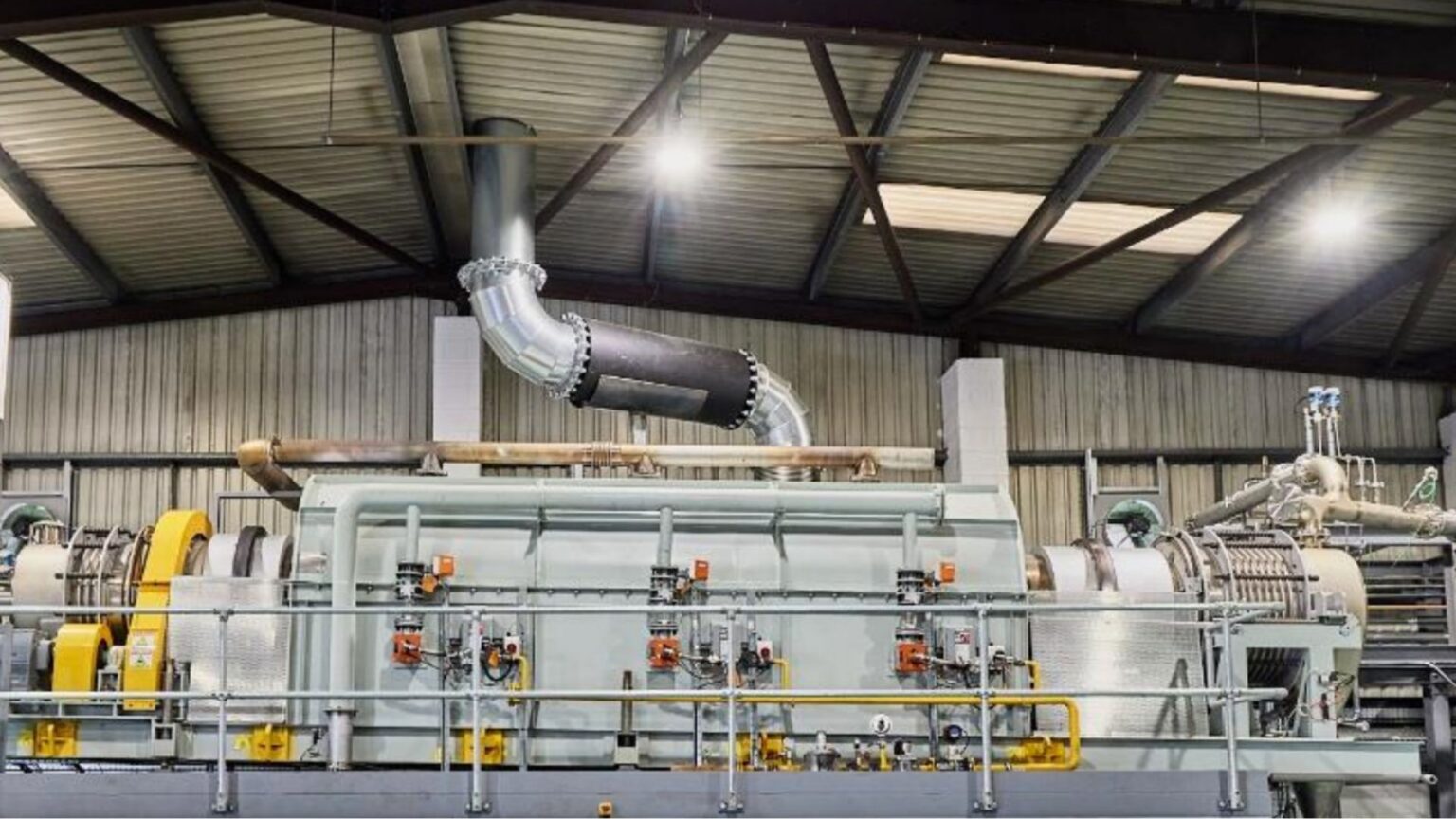
A UK-based firm, Powerhouse Energy Group, has initiated operation of its Feedstock Testing Unit (FTU), which can convert waste plastics into hydrogen.
The company recently showcased the FTU to 50 investors during a private event. The unit, located at the company’s Technology Centre in Bridgend, Wales, is a scaled-down representation of the company’s Distributed Modular Generation (DMG) technology.
“Powerhouse is aware of the problems that have dogged using pyrolysis and gasification on waste, and hence, to date, we have focused our efforts on research and development, culminating in this FTU,” said Paul Emmitt, CEO of Powerhouse Energy Group.
Replicating core processes in controlled environment
The FTU processes 2.5 tons of waste plastic per day. While this is smaller than the anticipated 35 tons per day capacity of a future commercial unit, the FTU replicates the core processes and parameters in a controlled environment.
“The site has already proved the technology with several days of continuous running with good results, although as a demonstrator the project is not necessarily expected to run flat out all the time,” said a report.
“The unit also allows the company to develop the technology and to increase the efficiency of future commercial units.”
Processing various waste feedstocks
FTU provides a platform for evaluating the viability of processing various waste plastic feedstocks.
It operates using a pyrolysis process within a rotary kiln, which breaks down the plastic materials into their constituent chemical components. Pyrolysis is a thermochemical decomposition process that occurs in the absence of oxygen.
The primary product generated by this thermochemical process is syngas. Syngas is a mixture of gases, predominantly hydrogen, methane, and carbon monoxide.
The Powerhouse system is specifically engineered to maximize the proportion of hydrogen within the syngas mixture, as hydrogen is the most desirable and valuable output.
Before this syngas can be utilized, it undergoes a crucial cleaning and cooling stage. This purification process removes any unwanted acidic compounds or other impurities, resulting in a clean syngas stream ready for various applications.
This cleaned syngas can then be directly used for energy production (e.g., in a gas turbine), or it can be further processed to create other valuable products, including pure hydrogen fuel.
Process modification capability
The system, however, incorporates the capability for process modification. It will allow for the introduction of steam or oxygen, which enables gasification processes.
The unit facilitates the ability to test different waste plastic types, and to adjust process parameters, in order to optimize the hydrogen production.
This flexibility allows Powerhouse to explore the potential of its DMG technology across different waste streams and assess its suitability for handling various types of plastic waste.
“A variety of feedstock samples have been successfully put through the process. The process ideally handles plastics especially those that cannot easily be treated or recycled by other technologies,” concluded the report.
Several research activities have been looking to generate hydrogen fuel from waste products.
A team of scientists from Singapore’s Nanyang Technological University (NTU) recently turned sewage sludge into green hydrogen.