
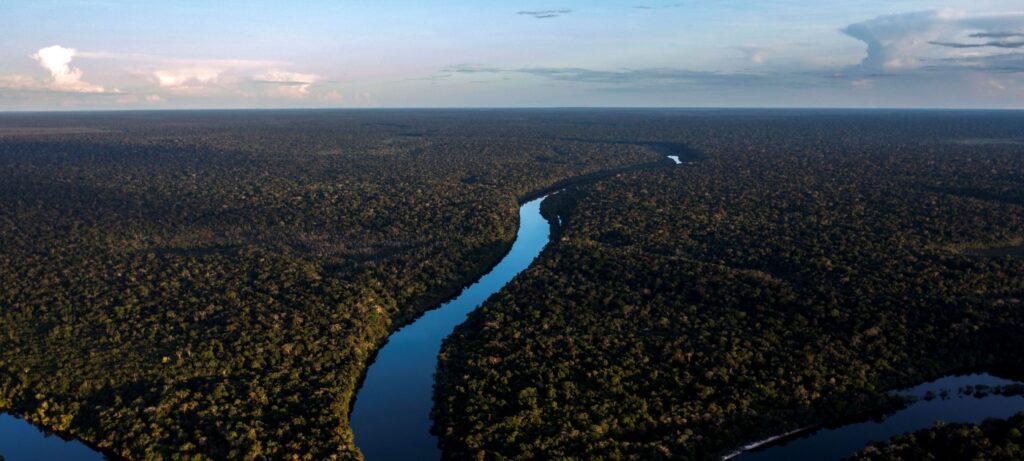
According to a report from UN-REDD, the world’s top 20 tropical countries with the highest rates of deforestation lack sufficient climate commitments in their national climate plans, known as Nationally Determined Contributions (NDCs). In the next round of NDCs, which are due for submission this year, countries have the chance to correct that and raise their ambition to halt and reduce deforestation by 2030. If not, the consequences could be dire. The Amazon is reaching a tipping point, transforming from a carbon sink into a carbon source, a switch that would accelerate a global climate breakdown, says Labbate.
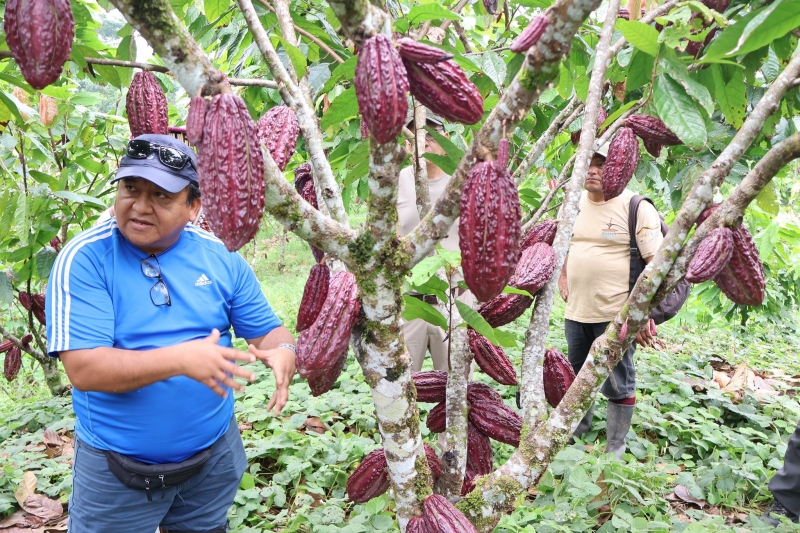
In the Amarakaeri Communal Reserve, farmers have planted cacao trees without cutting down other tree species, helping to preserve the rainforest. Patricia da Matta, Nature 4 Climate, 2024
Observers say the United Nations Climate Change Conference (COP30), taking place in Belém, Brazil this coming November, could be a turning point, offering world leaders a chance to strengthen forest protection and transform promises into real action.
“At COP30, world leaders must commit to stronger forest action and ensure that climate finance reaches Indigenous guardians of the forest,” says Labbate. “Now is the time to simplify requirements for a complex issue so that ambition, finance and action for forests can be scaled up.”
UNEP is at the forefront of supporting the Paris Agreement goal of keeping global temperature rise well below 2°C, and aiming for 1.5°C, compared to pre-industrial levels. To do this, UNEP has developed the Sectoral Solution, a roadmap to reducing emissions across sectors in line with the Paris Agreement commitments and in pursuit of climate stability. The six sectors identified are: energy; industry; agriculture and food; forests and land use; transport; and buildings and cities.