
Andrew writes:
Dear Sajeev,
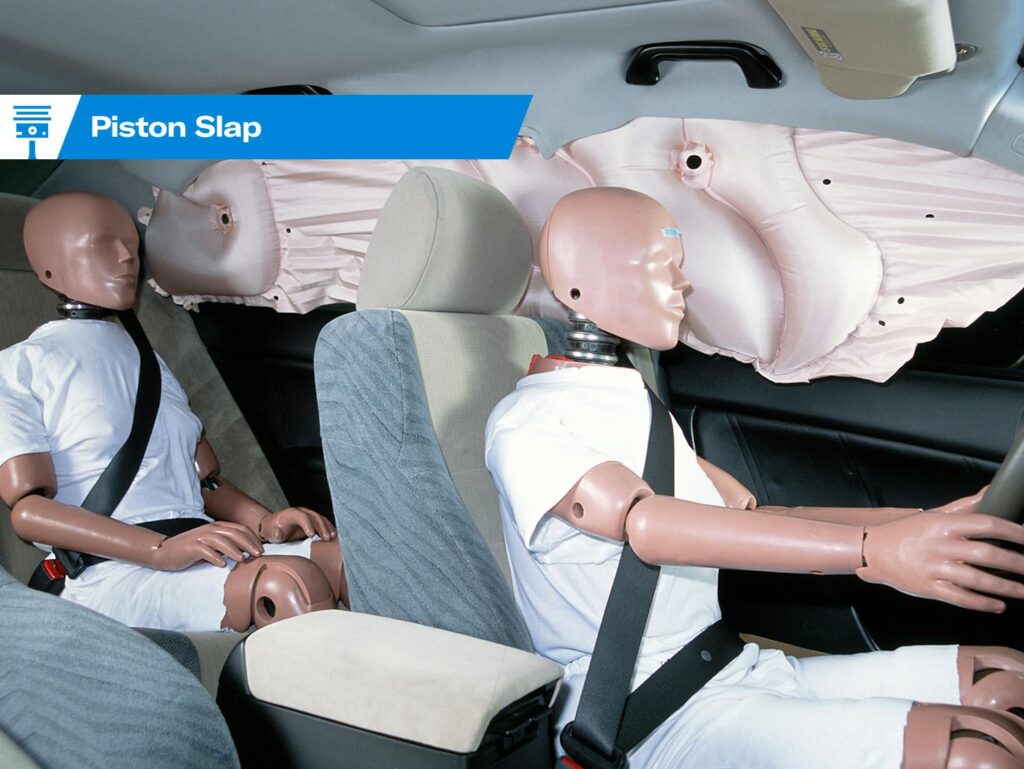
I have always admired the Buick LeSabre and Park Avenue models with the 3800, though I have never owned one. Until recently, I was a devoted follower of the principle that keeping a good older car on the road was smarter than buying a new one—until my data-driven Millennial son pointed out the safety revolution ushered in by side and side-curtain (head) airbags.
All VWs got them in mid-2001, and they morphed from options to standard equipment in other cars over the next thirteen years. While front airbags reduce the risk of dying in a crash by 29%, adding side and side-curtain airbags reduces the risk by 37% in cars and by 52% in SUVs.
We all know that people now walk away from serious crashes in newer cars, even economy models, that would have killed them in an older car. I pulled people out of crashed cars as a firefighter in the 1990s and the ones whose cars had no airbags were hurt much worse than the ones in newer cars.
My family have more or less cajoled me into not buying or driving cars without “all the airbags”—so my new fun car is a 2006 Mini Cooper S. And I have to admit that I like driving it better than any of my previous collector cars (1963 Valiant convertible, 1963 Studebaker Lark, 1966 Buick Wildcat, 1972 MGB GT, 1976 Triumph Spitfire, 1980 Lincoln Continental Mark VI sedan, 1986 Mazda RX-7). Plus I am much safer in it.
I have come to think that cars without a full suite of airbags should now be treated like Model T Fords—good for Sunday ice cream runs, or leisurely summer weekend drives on back roads, but certainly not for daily driving in a world of F350s, Expeditions, and Escalades, with legal highway speeds now higher than ever. I love older cars, so this has been hard to wrap my head around.
Can you persuade me otherwise using data and facts, not just economic, aesthetic, or nostalgic arguments?
Sajeev answers:
Ugh, not letting me concentrate on economic, aesthetic, or nostalgic arguments is really taking the wind out of my sails. You’re really gonna make me work for this Piston Slap paycheck, aren’t ya?
Sit down for this ride, ’cause it is gonna be a wild one.
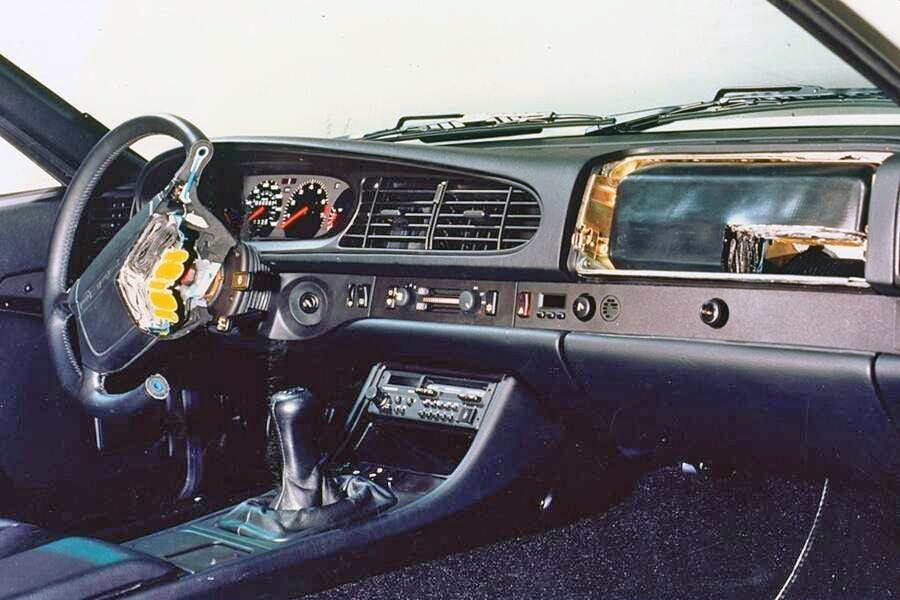 Dual airbags were standard on the 1987 Porsche 944.Porsche
What you bring up is important, because the dual airbags (as standard equipment) first put into production by Porsche in 1987 are only able to help in a head-on collision. Those are the worst type of collisions, and the airbags work no matter how much time passes. Good stuff, but perhaps comedian Bill Burr said it best:
As much as I loved writing about the 3.8-liter Buick LeSabre referenced in the first sentence of your question, we need to be pragmatic about how much safer cars are these days. Pragmatism would also be nice in your need for specific data about the efficacy of a suite of automotive airbags, because a weekly column like Piston Slap can only go so far.
I will throw the work back on the reader, because what I’m referencing in the aggregate can be downloaded here for granular detail. From 1968 to 2019, the National Highway Traffic Safety Administration (NHTSA) calculated $17.3 trillion worth of societal benefits (using 2019 dollars) attributed to implementing vehicle safety standards. That first year (1968) was the rollout of certain mandated safety features we might remember, including: dual-circuit master brake cylinders, energy-absorbing steering columns, three-point seatbelts, and side-marker lights.
 Like a pillow?Ford
NHTSA notes these 50+ years of safety advancements set us back roughly $1 trillion, or 6% of the societal benefit. While it is worth a closer look to see how a suite of cabin airbags played their role in the benefit, that’s about as detailed as we can get.
But we ain’t done, by a long shot. Please consider two more factors in your selection of a safer daily driver for the classic car enthusiast.
Energy Management Advances: While Lee Iacocca noted in 1990 that airbags were “the most important safety advancement since four-wheel brakes,” a Mercedes-Benz advertisement shortly afterwards asked the readers if their “airbags actually came with a car.” (If anyone can help me find a copy of that advertisement, I’d greatly appreciate it!)
A Mercedes with a driver’s side airbag is probably safer than a Plymouth Sundance with the same technology, but I can’t find any specifics on how energy management evolved over time. Instead, let’s consider the improvements found in Micro Saint v2.0 software from the late 1990s. From what little I can find, it’s a safe bet that software technology like this was used in crash test simulations by the early 2000s.
The suite of airbags in your Mini Cooper is great, but also remember that there’s a brilliantly engineered “energy dissipation machine” that BMW wrapped around them. That said, real estate is king, because while a Smart car’s airbags and stiff skeleton is safe for its size, a Mercedes-Benz E-class has a lot more space to manage the energy generated from an impact (in harmony with airbag deployment).
 CarSized
Size, Height, and the Laws of Physics: I know you requested a data-driven discussion, but this image from CarSized should be a foundation for the reality check we all need as car enthusiasts in our modern motoring society. Full-sized trucks and SUVs are commonplace in my densifying city (Houston) and I reckon I am not the only person feeling the squeeze when I drive my “unsafe” old car at any intersection.
I am not considering data when modern vehicles are towering over me, except for that one time I did the math on the weight discrepancy between a GMC Hummer and a Ford EXP. Factoring in what we know about your safety-packed Mini relative to this featherweight Ford, one word comes to mind: Oof.
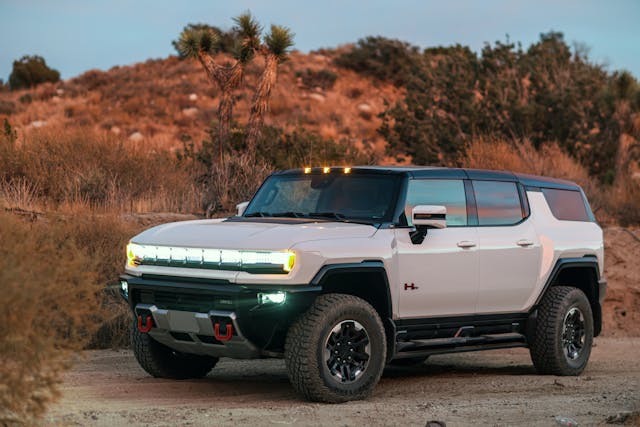
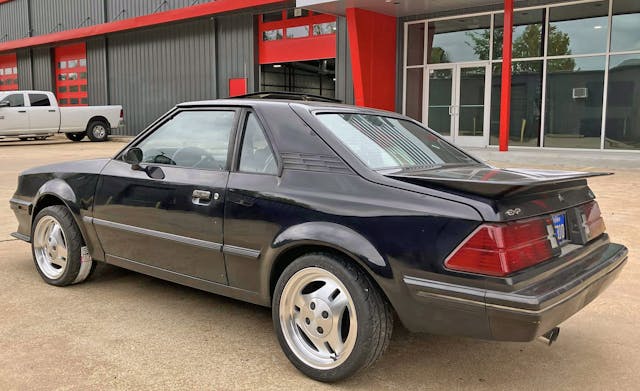
The Laws of Physics have already been proven, and vehicle height is easy to see. If you haven’t seen a photo of a new truck/SUV running over a car in a collision to prove the point, I am sure a Google Image search can find plenty of evidence from local news outlets across the country. Perhaps we can distill this meandering subject into a few questions we enthusiasts must discuss in the comments:
- Are we safer with airbags? Yes, other things being equal.
- Are we safer in modern vehicles with superior energy management than a 1990s car with dual airbags? Yes, other things being equal.
- Are we safer in larger vehicles from the modern era? Unequivocally, yes.
- How much safety do we need to feel comfortable on the road? 😬😬😬
In case you didn’t know, that last answer is the grimacing emoji. I clench teeth and make a hissing noise when I try to answer that fourth question, because I’m not the last word on that subject.
Off to you, dear reader of Hagerty Media.
Have a question you’d like answered on Piston Slap? Send your queries to pistonslap@hagerty.com—give us as much detail as possible so we can help! Keep in mind this is a weekly column, so if you need an expedited answer, please tell me in your email.