
The European Commission’s Readiness 2030 defense initiative, designed to strengthen the military capabilities of EU member states, has ushered in a new strategic dimension to Greece’s armament planning.
Brussels’ decision to enhance Europe’s defense readiness expands Greece’s options, offering its political and military leadership an opportunity to reassess procurement strategies.
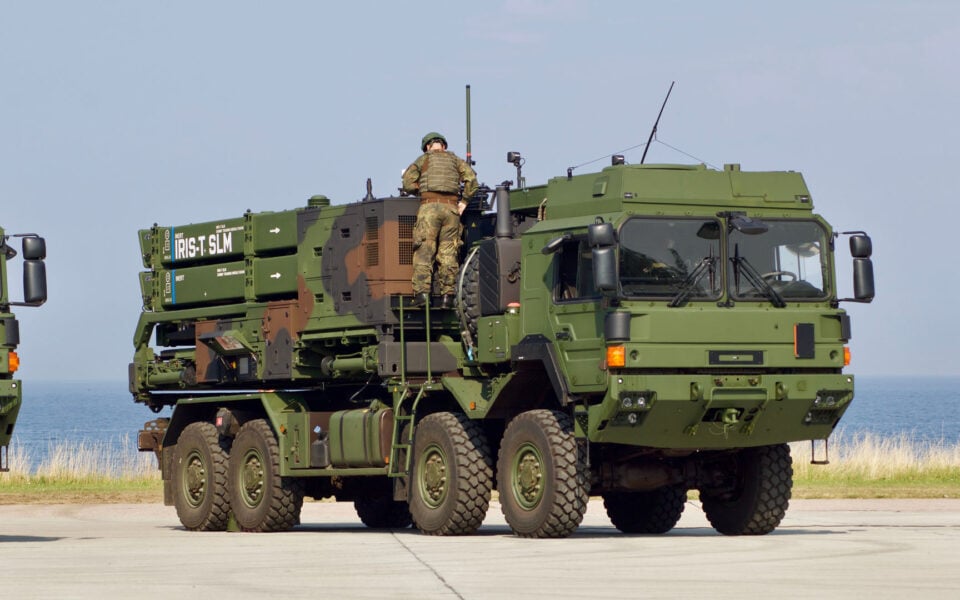
Until recently, Greece was expected to rely solely on the Israeli market for its multilayered air defense system, known as the Achilles Shield. However, a source contacted by Kathimerini has revealed that a European proposal involving IRIS-T missiles is now under serious consideration to replace the Russian-made SHORADS OSA and TOR-M1 short-range anti-aircraft systems.
The IRIS-T system is being developed by a consortium led by German defense firm Diehl, which is currently in discussions with Greece’s armed forces headquarters. Notably, Greece itself holds a stake in the program’s corporate structure, securing a share of production.
The European Commission’s new funding mechanisms, such as SAFE, are expected to boost European armament projects, making the IRIS-T an increasingly attractive option. Nevertheless, sources emphasized to Kathimerini that no final decisions have been made.
Regarding the replacement of Greece’s HAWK and S-300 air defense systems, the path appears more straightforward. Reports indicate that Athens is leaning toward the Israeli-made Barak air defense system, specifically a version similar to the Barak MX system recently acquired by Cyprus.
Despite these developments, Greece’s 12-year Long-Term Defense Equipment Plan, set to be unveiled by Prime Minister Kyriakos Mitsotakis and Defense Minister Nikos Dendias in early April, is expected to stay on course.
However, certain program timelines may be adjusted to account for emerging opportunities within the European defense industry and supplier landscape.