
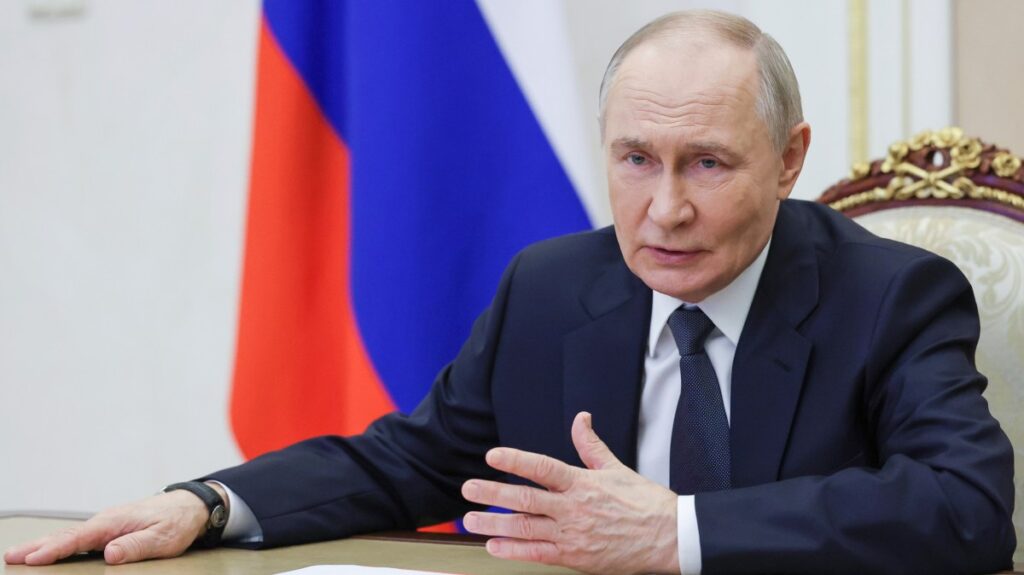
Russia is on a collision course with President Trump after declaring that it cannot accept the White House’s plans for peace in Ukraine.
The Russian statement came shortly after Trump threatened to impose secondary tariffs on oil imports unless President Putin agreed to a full ceasefire in Ukraine. The decision could affect Moscow’s ability to fund its war machine.
Sergei Ryabkov, a Russian deputy foreign minister, said: “We take the models and solutions proposed by the Americans very seriously, but we can’t accept this all in the current form. [But] as far as we can see, there is no place in them today for our main demand; namely to resolve the problems related to the root causes of this conflict.”
The term “root causes” is Kremlin shorthand for President Zelensky’s pro-western government in Ukraine. Putin has already rejected Trump’s proposal for a full 30-day ceasefire and Moscow’s latest comments have the potential to anger the notoriously impulsive US president.
• How Trump’s angry threats are being received by Russia
Trump said on Sunday that he was “pissed off” with Putin’s refusal to order a halt to the fighting in Ukraine and said that he could retaliate by imposing tariffs of up to 50 per cent on imports to the United States from countries that buy oil from Moscow.
The measure would affect China and India, the two main buyers of Russian oil since the Kremlin launched its all-out invasion of Ukraine in 2022.
The Indian state companies Bharat Petroleum and Hindustan Petroleum are looking for alternatives to Russian oil because of possible secondary sanctions, Bloomberg reported. Oil prices climbed by about 2 per cent to a five-week high after Trump’s threats, boosting Russia’s revenues.
Shortly before Ryabkov’s comments, Wang Yi, the Chinese foreign minister, said during a visit to Russia that Moscow and Beijing were “friends for ever, never enemies”. He made no mention of Trump’s threats to sanction Russian oil.
• Putin’s winning strategy? He knows exactly how to tempt Trump
Wang also said that China welcomed Washington’s attempts to end the war and that Beijing was also ready to play a “constructive role” in peace talks. China has not condemned Russia’s invasion of Ukraine, which it says was provoked by Nato.
“The step towards peace, although not that big, is constructive — it’s worth building on it,” he said before a meeting in Moscow with Sergey Lavrov, the Russian foreign minister. “With peace, it is no pain, no gain. You need to work hard to achieve it.”

Putin welcoming Wang Yi to Moscow
GRIGORY SYSOYEV/REUTERS

The Chinese foreign minister met his Russian counterpart, Sergey Lavrov
PAVEL BEDNYAKOV/EPA
The American and Russian presidents have had two official discussions about the war in Ukraine and US and Russian negotiators have held two rounds of talks in Saudi Arabia.
A Black Sea ceasefire that was announced by the White House after Putin and Trump spoke last month has yet to go into effect, a Ukrainian navy spokesman said.
Dmytro Pletenchuk said: “In order to adhere to the terms of any agreement, it must first be formalised. Considering that a formal document … does not yet exist, it is difficult to talk about compliance with any agreements.”
The Kremlin has put forward a set of demands on lifting sanctions against Russian companies and one of its biggest banks that it says must be met before any truce can go into force.