
There’s a theory of cancer causation that I’ve been thinking about recently called the two-hit hypothesis. It proposes that cancer begins with two mutations: one that can be inherited and one that is influenced by environmental or other factors.
Public health seems to be in the midst of experiencing two hits. The result could be deadly.
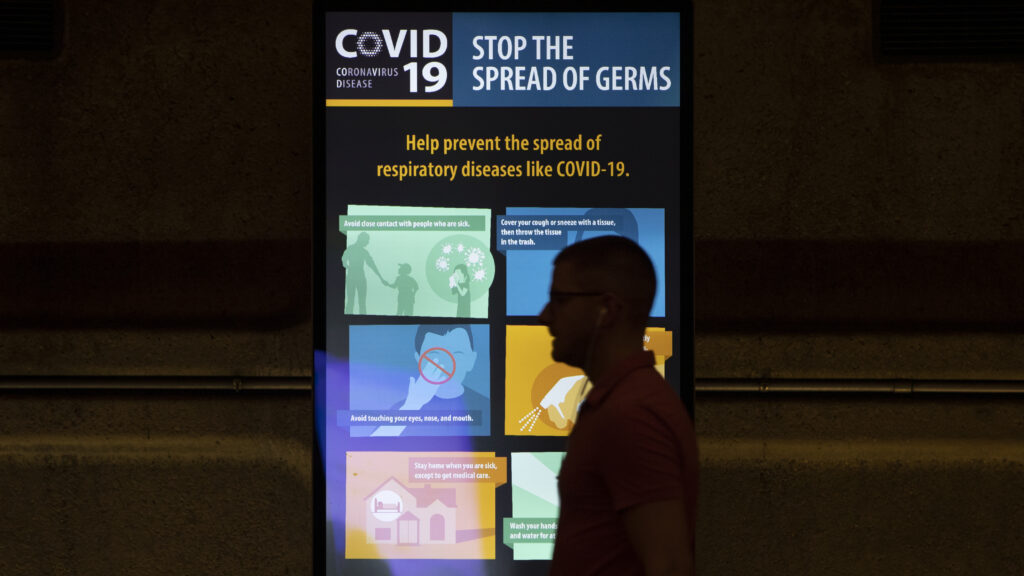
Over the past week, cuts to federal programs that have long-standing roles in public protection have been layered on top of massive funding reductions to state and local health departments. Public health and population protection are thus now at the most vulnerable levels in decades, with clear potential consequences.
According to the 10th Amendment, the authority for public health largely rests with the states. However, since the Franklin D. Roosevelt administration, the federal government, through Title 42, has played a role in controlling infectious outbreaks. For instance, Centers for Disease Control and Prevention programs prevent and respond to vaccine-preventable illnesses, including the Vaccines for Children program, which has saved millions of lives. The CDC has also collaborated with global health agencies, including the World Health Organization, as infectious outbreaks know no borders and can spread rapidly, as seen with Covid-19.
Public health, however, is more than infection control and outbreak management. Public health involves identifying needs and implementing programs to prevent and address potential community health problems. Thus, the CDC also focuses on air and water quality, accidental traumatic deaths, firearm safety, smoking cessation, birth defect prevention, work-related illnesses, mental health, and chronic diseases, among other areas.
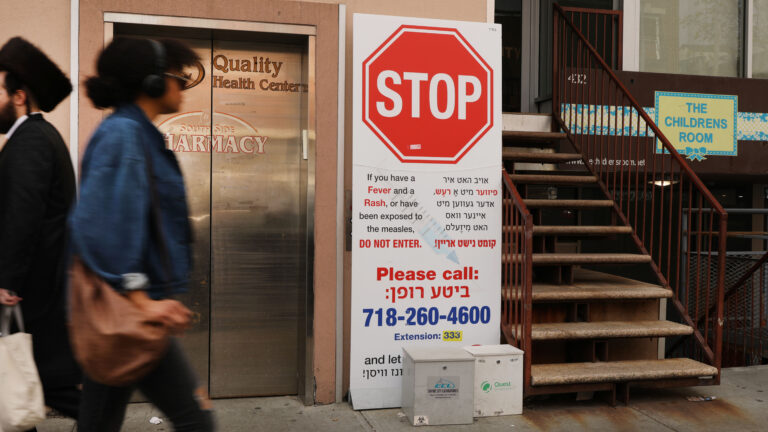
New York City’s health department just lost $100 million in federal funds. That has consequences
When the Trump administration announced that it would nominate Robert F. Kennedy Jr. for secretary of Health and Human Services, it seemed clear that the role of the federal government in public health would be diminished. I predicted that state and local health departments, academic institutions, and other groups would need to step in to fill the void.
In some ways, this has happened. Because the CDC is no longer interacting with the World Health Organization or providing updates on infectious outbreaks worldwide, state departments of health, academic institutions, and the media have stepped in to give reports on contagious events in the U.S. Health departments have restructured their operations to devote more resources to outbreak control than in the past. That includes dealing with the current and expanding measles outbreak that originated in Northwest Texas and has now spread to other states. More information about measles is coming from states and academic institutions than from the CDC. We also see states issuing calls for vaccination, while Kennedy has made half-hearted recommendations.
Historically, the CDC has provided significant funding to state health departments through the Epidemiology and Laboratory Capacity (ELC) funding program. These programs support surveillance, infectious disease investigation, and laboratory testing. During the pandemic, ELC funding rose significantly due to the heightened need for such programs and the requirement for modernization in many health system departments and laboratories.
In the years since, these funds have been used to address basic capabilities and infrastructure and other infection control programs in long-underfunded departments of health. But no more.
Earlier this week, in the first hit to the body of public health, the Trump administration announced $11 billion in cuts to funding for local health departments. The Trump administration stated that these funds are no longer needed, as the pandemic is over.
These severe cuts come at a time when many states have projected budget shortfalls, as Covid-19 funding that had previously been allocated to state coffers is now depleted. In some situations, these budget cuts total hundreds of millions of dollars and account for a substantial portion of department of health budgets.
Then came the second hit. On top of state and local department of health budget cuts, on April 1, massive cuts to federal HHS programs were announced. These cuts eviscerated many CDC programs, including those focused on tuberculosis control, HIV prevention and treatment, occupational health, and more than 10 other foundational CDC programs. Many of these programs provided national leadership to coordinate collective state strategies and responses. In their absence, our national ability to respond to and control current and future outbreaks is gone.


State and local health departments grapple with flurry of cuts from D.C.
Before the $11 billion in state and local health department budget cuts, states could potentially, albeit not as effectively, address these voids. But their ability to do so now is slim. Universities and schools of public health are in compromised positions to help, as many are having research grants, including those related to infection control, sliced. Medical foundations play a crucial role in supporting public health. However, such support is a fraction of that previously seen from the federal government.
We will see the impact of the two hits on public health in different waves, but at a much faster pace than we see with cancer.
The first wave will be evident in illnesses that spread rapidly and require large-scale public health responses, such as measles. We will see increasing impacts of the tripledemic respiratory pathogens: Covid-19, flu, and RSV. We will see the gradual creep of new cases of HIV, syphilis, and other sexually transmitted diseases. We will see cases of tuberculosis rise, including those that are treatment-resistant. Along with these outbreaks will be impacts on education, as children miss school due to vaccine-preventable illness and an effect on the business community.
But the subsequent waves will be more subtle and slower-moving. As community health promotion programs slip away and programs to address mental health are shuttered, rates of chronic disease — the very thing Make America Healthy Again was supposed to fight — will rise.
And when America calls for help, many of the dedicated and talented public health workforce at the federal and state levels will not be there to answer, another insidious penalty of the two brutal hits to our country’s once thriving public health structure.
Scott A. Rivkees, M.D., is professor of practice at the Brown School of Public Health. He is a pediatrician and the former state surgeon general and secretary of health of Florida.