
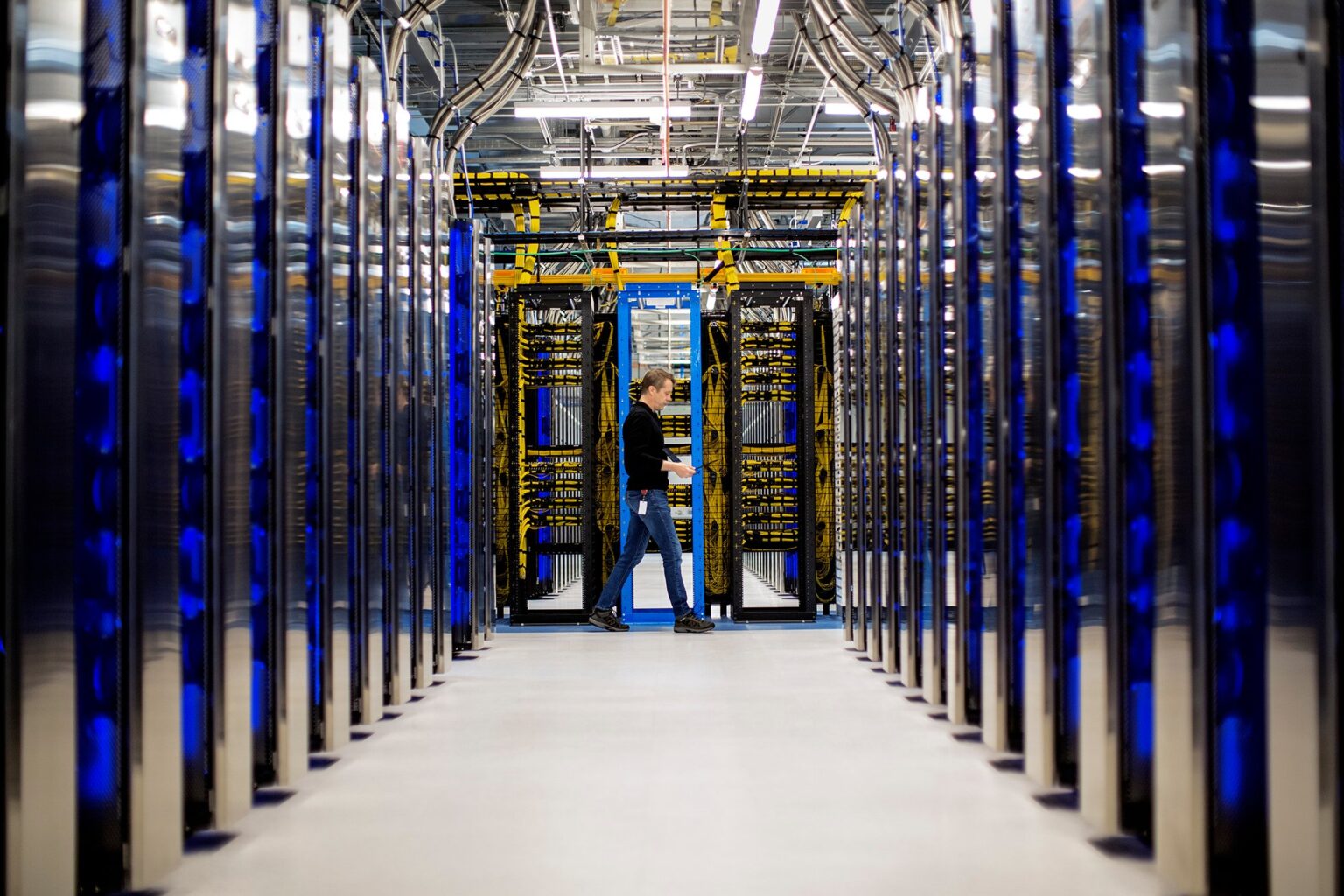
 Data Center photo. Courtesy Microsoft.
Electricity demand in the U.S. is projected to increase 50% over the next 25 years, according to a new study conducted by PA Consulting and released by the National Electrical Manufacturers Association (NEMA).
The study, A Reliable Grid for an Electric Future, found that “record” growth in data center demand and electrified transportation have driven this projection. The authors argue that new policies and regulatory certainty will be needed to maintain a flexible and resilient grid, and there is an “urgent” need to invest in technologies to meet coming demand via an “all-of-the-above” energy ecosystem.
Electricity consumption is projected to grow in “unprecedented” ways, the study found, including a 300% projected growth in data center energy consumption over the next 10 years, and 9000% projected growth in E-mobility (electrified transportation) through 2050. Additionally, electricity is projected to grow from 21% of final energy use to around 32% by 2050.
GO DEEPER: Access to power has become the key driver of AI and data center growth, prompting the need for new solutions among utilities, developers and other stakeholders. This demand growth will test grid reliability, requiring new ways of collaboration and policy structures.
DTECH Data Centers and AI, taking place May 27-29 in San Jose, California, lives at this intersection of energy and digital infrastructure, exploring the strategies necessary to navigate power constraints, project delays, and the increasing demand for sustainable, flexible solutions.
These changes won’t necessarily be felt across the board – much of the projected growth will likely be contained in specific areas. The Mid-Atlantic and Texas are projected to see the largest data center electricity demand through 2035, while the Northeast and West will experience the largest electricity demand growth from electric vehicles (EVs) through 2050, the study predicts. Additionally, storage, wind, and solar generation are expected to increase by 300%; and renewables as a whole will exceed 50% of generation capacity in the Western U.S., New York, and Southeast.
How will we meet the demand?
First, the study argues that more reliable baseload generation is needed, including building a greater share of intermittent capacity to meet demand and total grid capacity. Additionally, the authors suggest that grid operators could improve transmission efficiency and reduce power losses by upgrading existing power lines: reconductoring could unlock 110 GW of grid capacity, dynamic line ratings could unlock 80 GW, smart grid tech could unlock 25 GW, and storing excess energy for use during peak demand could unlock 75 GW of transmission capacity.
Additionally, the study recommends deploying energy saving and peak shifting technologies, in addition to leveraging pre-cooling, storage, and microgrids to reduce data center grid impact, improve reliability, and reduce costs. EVs can also be used as mobile energy assets to balance supply and demand, including via smart charging and demand shifting.
Finally, the study includes policy recommendations meant to help solidify and support the country’s energy system. These include:
- Streamline permitting and siting for generation, distribution, and critical minerals;
- Encourage adoption of grid-enhancing technologies (GETs);
- Harness energy tax incentives to invest in essential grid technologies and grow domestic manufacturing of critical grid infrastructure;
- Deploy tax credits and incentives that enable utilities to make significant smart grid, distributed energy, and resiliency investments;
- Advance “all-of-the-above” energy policies that encourage diverse energy generation from natural gas, small modular reactors, and geothermal;
- Encourage “transparent and consistent” tariff policies;
- Expand the 45X production tax credit to include distribution transformers