
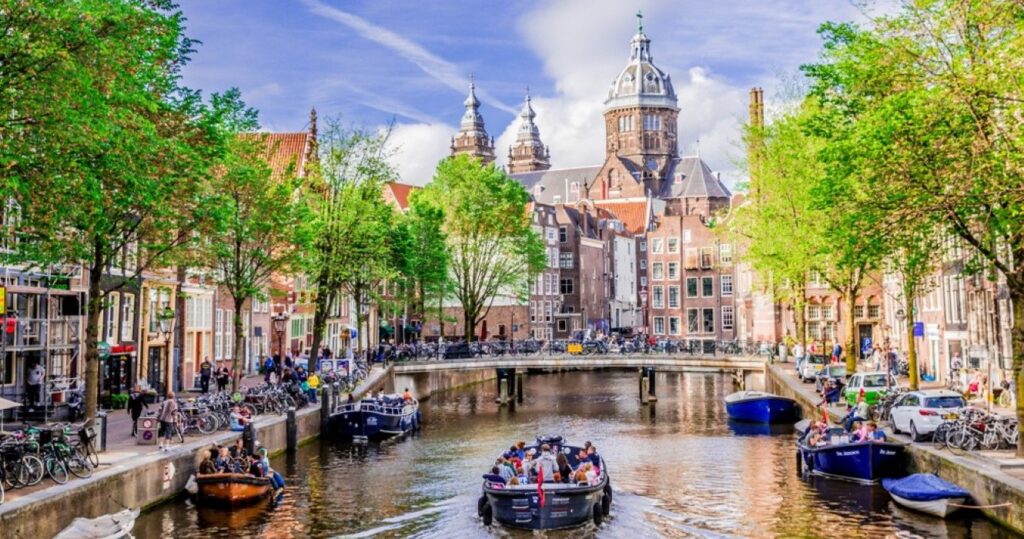
The Netherlands is known for many things—for cities laced with canals, its charming abundance of Dutch windmills, and more recently for the viral “fish doorbell” in Utrecht. A lesser-considered fact, however, may be that the Dutch have also been a world leader in climate change initiatives and environmental policy since the 1970s.
The government has made consistent commitments to reducing greenhouse gas emissions, with a lofty goal set to lower them nationwide by 95% by the year 2050. To that end, a number of initiatives have been adopted, from having the national train fleet run entirely on wind energy to requiring taxis and rental cars to run emission-free by 2025.
Furthermore, in Amsterdam, the vibrant Dutch capital city, a new law is in place as of April 1st: certain types of boats passing through the city center’s trademark canals will also be required to be emission-free. Amsterdam’s famous canal rides are a popular tourist activity, which means big changes are here for this iconic type of excursion in the city.

Related
This Small Town Is The “Little Holland Of America”
Visitors can enjoy this European-style town nestled in the heart of the Midwest that looks just like a little locale in the Netherlands.
The Dutch Have A Long History Of Environmental Consciousness
The Netherlands has been at the forefront of climate change adjustments for a while now, and the recent move to emission-free canal boats stem from this
The Dutch have a reputation for being practical, direct, and thrifty. Such traits seem to lend themselves handily to enacting environmentally friendly measures, and indeed, the Netherlands has been a pioneer in the field.
Windmills are, of course, not only an emblem of the country but one of the earliest methods of harnessing nature’s energy. While today, they’re more likely to be towering carbon-steel monoliths than picturesque wooden structures, they’re still a big part of the Dutch clean energy plan. When traveling through or to the Netherlands, you’re very likely to see both on and offshore windmill farms.
Bicycles came to the Netherlands in the late 19th century, and it wasn’t long before the Dutch passion for cycling became a very real thing. Cars came along much later, and while they did quickly outstrip bicycles in popularity, the brakes were applied just as fast when problems arose.
In the 1970s, the global oil crisis, budding awareness of pollution, and a frighteningly large number of children killed by cars all led to a rapid shift back to encouraging widespread bicycle use. The foundations of city planning were overhauled to include consistent, safer infrastructure for bicycle traffic. Getting people out of their cars and back onto their bicycles ended up being a boon for lower gas usage and improved air quality.
Free and easy access to recycling is also common in the Netherlands. Many city shopping centers have an area with clearly labeled bins for packaging, paper, glass, and occasionally textiles. This makes it easy for everyone to practice good individual responsibility for their recyclables.
Then, of course, there are the canal boats, perhaps the most famous Dutch symbol, next to windmills, tulips, and wooden clogs. Most major cities were built with more canals than roads out of an abundance of practicality in terms of transport, defense, and water management.
The fact that boating was largely more environmentally friendly than any other method was a nice bonus.

Related
Keep the wilderness clean and safe for wildlife while hiking or camping with these useful, sustainable items.
A Rundown Of Dutch Canal Boats
There are multiple categories of boats sailing Amsterdam’s canal system
The expansive network of picturesque canals in Amsterdam and other western Dutch cities such as Utrecht or Delft provides a number of opportunities for sailing on their waters. You’ll see a number of different types of boats on any city’s canals.
Canal Boats in the Netherlands
Tour Boats
These boats seat a dozen or more passengers and are often open-air. They’re used by guides to conduct tours of the city’s canals, often with meals and drinks or other special perks. Typically, they hold 12 or more passengers.
Houseboats
As the name indicates, these are residential boats, though some do fall under the pleasure boat umbrella. They have permanent moorings in a canal and very rarely move. Some residents offer these boats for short-term rentals for tourists, some simply live there, and a few, like cat rescue De Poezenboot, have very special purposes (or should we say purr-poses?).
Ferryboats
Transportation company GVB operates a number of boats designed to carry passengers across the IJ River that runs through the center of Amsterdam. Each ferry holds about 300 passengers each, is accessible to bicycle riders and mobility aid users, and is free for use.
Pleasure Boats
This is a fairly broad category. These are sailboats, motorboats, and even small rowing boats; as mentioned above, this category also includes some houseboats. The maximum number of passengers allowed on these boats is 12.
The boats affected by the new laws are in the pleasure boat category: small craft, houseboats, sail boats, and so on. Essentially—and logically—if you’re boating for fun, not business, your boat is a pleasure boat. Tour boats, most of which are already operating emission-free, are not targeted by this new regulation.

Related
Beyond Pyramids: Imagine Floating Down A Hand-Built Mayan Canal
The Maya built more than pyramids and cities. Float and kayak down the canals they hand-dug in the Yucatan Peninsula.
Amsterdam Is Cracking Down: Diesel Out, Hydrogen In
The new regulations aim to improve Amsterdam’s air quality
A Polluted Area Near Amsterdam, the Netherlands
It’s been cited by the GGD, the Dutch agency that advocates for public health and safety, that air quality in the country contributes considerably to increased risks for significant health ailments, including asthma and lung cancer. In Amsterdam, the air quality in the city center is among the worst in the entire nation.
Measures taken to improve air quality have included reducing where people can smoke cigarettes or vape, as well as limiting where tobacco and vape products can be obtained. Amsterdam has also introduced zero-emission zones for delivery vehicles and scooters and is planning a policy to address safer wood burning.
All these measures aim to reduce the number of harmful airborne particulates, which, over time, should vastly improve the quality of the air in central Amsterdam.
“One in six strokes would not have occurred if we had clean air.” – Marieke Dijkema, GGD.
The decision to eliminate fossil-fuel-powered boats in the city center is in line with these previous policies. The boats, as with land vehicles, should be powered by manpower, hydrogen, or electricity rather than diesel. This isn’t an unusual change in the Netherlands; the picturesque car-free village of Giethoorn has been using electric “whisper boats” for years, which are not only emission-free but virtually silent.

Related
These States Have The Best Air Quality
Scoring high marks when it comes to air quality, these US states really are a breath of fresh air…
Exceptions To The New Boat Regulations In Amsterdam
Some boaters will not experience enforcement of the new policies—for a while, at least
As with any new laws, there will be windows of allowance for some non-compliant boats to allow time for the owners to come into line before fines and other penalties are assessed.
Boats that are registered with the FVEN—the Federation of Heritage Sailing, which monitors the preservation of historical maritime crafts—are allowed to continue sailing with their current engines until January 1st, 2030. As long as they can present their FVEN registration, they’ll be in the clear.
Diesel boats with an existing transit or port vignette—these are the permits issued for sailing and docking in the canals—that predates the April 1st deadline will also be allowed to continue sailing. Transit vignettes are granted a transition extension until January 1st, 2028; port vignettes until January 1st, 2026.
Related
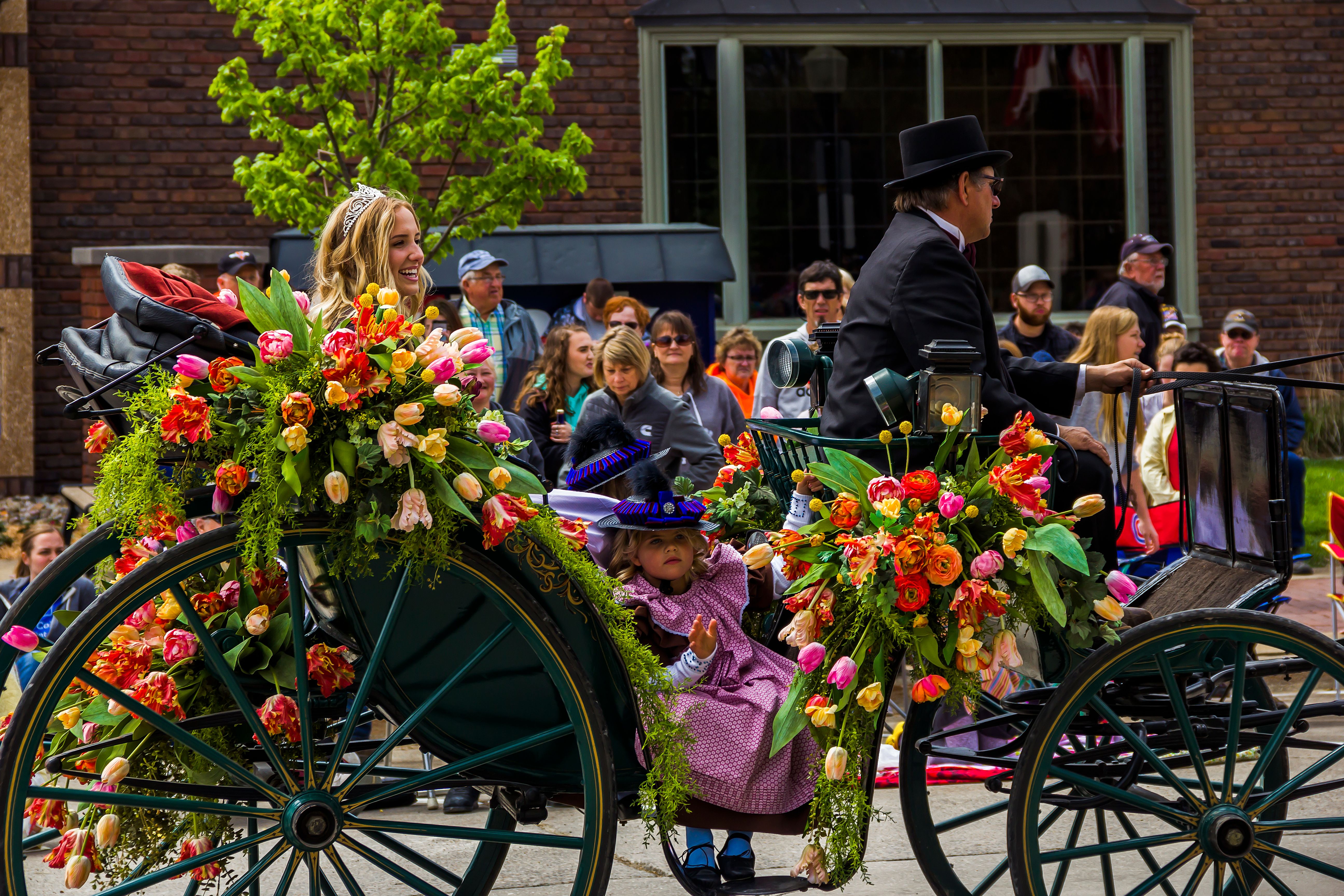
Visit The “Netherlands” Of Iowa In May For This Unique Reason
There is a charming town in Iowa that is a must-visit in May, thanks to its stunning Tulip festival that gives true Netherlands vibes
In a world where climate change progress and national health seem to be a bit of a roller coaster at times, there’s something reassuring about countries that consistently continue to move steadily forward with new initiatives. While no country is a Utopia, and climate change is affecting travel plans globally, nations like the Netherlands, which attempt to prioritize the well-being of their people as well as the planet, can be looked upon in some ways as beacons of progress.
Laws such as the ones regulating the emissions of Amsterdam’s canal boats are just one small stone in the ongoing pathway to a clean-air future for us all and, hopefully, may help many places already affected by climate change to recover in the long run.