
By Olivier Acuña Barba •
Published: 20 Apr 2025 • 21:39
• 4 minutes read
As all countries and cultures, there are habits and customs that as foreigners surprise us, some even shock us, but at the end of the day, that is one of the reasons we travel.
Perhaps one of the most surprising and sometimes shocking is restaurant opening hours. Don’t you just get bothered by not finding a place to have a drink or eat a warm snack? Does it not surprise you when you actually do find some place open and they tell you, “Our kitchen is closed.”
How about two toilets in the bathrooms? We know. They are called bidets and have a totally different purpose than toilets. But still, it’s a bit surprising when you first see them. The famous siesta is another thing that may surprise us, but not shock us, and you may find yourself adopting this one pretty easily, right?
Most Read on Euro Weekly News
And how about those blinds that shed total darkness into rooms, making it seem it’s nighttime. These are like siestas: we may find it easy to adapt to them because they make sleeping so much easier. Don’t forget to set your alarm clock, though, because the first few times you might think it is still nighttime, but it is not.
Spain has many, many unique and special traditions that differentiate this country from the rest. Yes, we know each country has their very own typical traditions.
6 habits and traditions that surprise foreigners
Here is Euro Weekly News’ list of some of the most unique habits, traditions, and customs that form part of Spain’s rich culture, which might surprise foreigners.
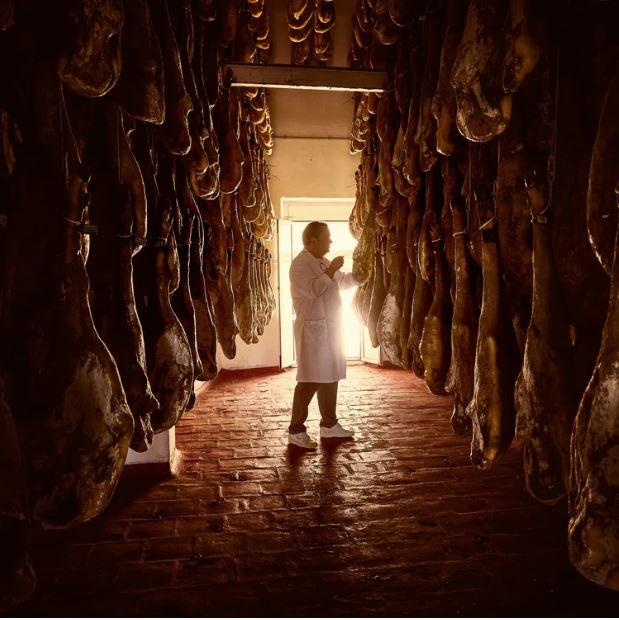
- Pork Leg. Some foreigners find it shocking to see a whole pork leg in a Spanish person’s or family’s kitchen. But in Spain, this is very common. This type of ham is delicious, and once you get used to it, it’s hard not to have enough of it at home for snacks, lunches, entrees, and when you have people over for dinner or just drinks. Pork legs can cost as little as 40 euros and as much as 800 euros or more for the famous Iberico ham 100 per cent de bellota. There is one pork leg that costs nearly 5,000 euros. It is the Iberian ham made from the Manchado de Jabugo, a strain of Iberian pig listed as endangered. According to Iberi Comio, there are only about 30 females and seven males in Spain. These luxurious and sumptuous pork legs weigh between seven and nine kilos. They are bred in Dehesa. The ham is cured for at least two years. However, there are other bellota acorn-fed 100% Iberian hams worth 560 euros for 8 kg.
- Bill and tipping. These are two habits that may surprise and please as well. While in the United States, for example, servers drop the bill on your table as soon as they believe you finished eating and drinking, and expect a tip, and not just any tip, here in Spain, the bill is not served until you ask for it, and tips are not expected. Servers sometimes even get surprised when someone does leave them a gratuity.
- Eating schedules. One aspect of daily life that is particularly notable is mealtimes, which in Spain are usually later than in the rest of European countries. In Portugal, for example, lunch is typically at 1 pm and dinner is around 8 pm. In France, people normally eat between 12 pm and 2 pm, and dinner is usually served after 8:30 pm. In Spain, however, it is common to eat lunch at 3 pm. The fact that they eat breakfast at around 7 am, which is commonly just coffee, juice, and toast, and then they have a sort of lunch at 10 to 11 am, could justify waiting till after 3 pm for lunch. Dinner is after 10 pm, which in other countries would be considered too late. In the UK, for comparison, most families eat dinner around 6 pm, which is four hours earlier than in Spain.
- National anthem with no lyrics. This fact often surprises people from other countries, particularly because there are only three other countries in the world that do not have lyrics either: Kosovo, Bosnia and Herzegovina, and San Marino. This anthem has its origins in the Grenadier March, which accompanied military parades and events attended by the royal family in the 18th century. Although there have been several attempts to add lyrics, the lack of agreement has meant that it has remained unchanged for three centuries.
- Tapas and Pintxos: One of the main ways to socialise in Spain is going out for tapas. Spaniards go out for these snacks and drinks almost any day of the year. It is a great way to enjoy two of the things Spaniards love most: food and spending time with friends and family. Tapas also includes pintxos, which are more typical in the Basque Country, Navarre, and La Rioja. They say tapas date back to the days of King Alfonso XIII and his visits to Cádiz, when he ordered a glass of sherry, and the waiter placed a slice of ham as a lid on the glass to keep out sand, as it was very windy that day. The story goes that the king liked the idea so much that he ordered his subsequent glasses with the lid, which, obviously, he devoured.
- Two-kiss greeting. Foreigners get lost with this one too frequently. What? You ask when you see them going for the other cheek. In many countries, it is not common practice to even say greet women you’ve never met before with a kiss, let alone two. And when you get into the habit and go back home, people stare in awe, trying to understand what it is you’re trying to do. Of course, Greece and Italy also greet with two kisses, and in the Netherlands, they go for the third.