
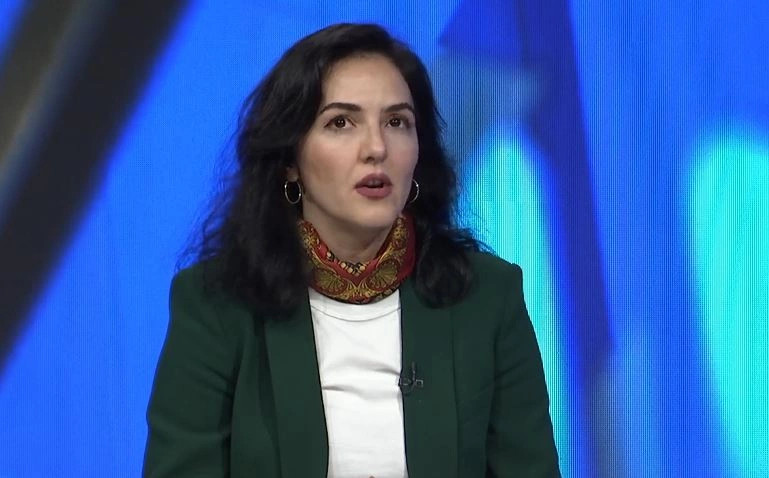
Religious extremism in Kosovo has transformed and is manifesting differently than in previous years, stated Adelina Hasani, researcher at the Kosovo Center for Security Studies.
In a discussion on Tuesday at “Konfront” about the murder of police officer Muhamed Lika in Kaçanik on April 1, Hasani emphasized that today religious extremism no longer appears openly, but operates in private life, which makes it more difficult to identify by security institutions.
“Today, certain groups with extremist ideas operate more covertly and are not directly linked to official religious institutions, such as BIK. There are groups such as the Takfiri, which have been linked to ISIS groups and which refuse to cooperate with Kosovo’s institutions, not recognizing them,” Hasani stressed.
She added that such actions are not random and cited as an example the attack on the Court in Kaçanik, which she described as a clear expression of the rejection of state order and the intention to build parallel structures.
According to Hasani, institutions should be better prepared to understand how this phenomenon has transformed and focus on prevention and effective integration of communities.
Bajraktari: A crime always has to happen for institutions to be alerted
Lawyer Ardian Bajraktari said that the Police are primarily responsible when it comes to the failure of institutions in the case of the murder of police sergeant Muhamet Lika, as the main suspect in the crime also had an arrest warrant for which the Police should have acted.
He added in “Konfront” that local institutions are only becoming alarmed after serious crimes are occurring, such as the case of the murder of the sergeant.
“He was told that there was an arrest warrant, which means that the measure was on paper and he was not executing the measure, because the measure has two categories – a measure in a correctional institution or in a special institution. In this specific case, the Police is responsible for executing the arrest warrant, which is why the IPK has begun taking investigative actions. It is regrettable because a serious event always has to happen for the institutions to be alerted and begin taking action,” he said.
Muriqi: The state must change its approach towards those convicted of extremism
Alban Muriqi, director of the Institute for Correctional Policy Advocacy, has emphasized the need for a more comprehensive and humane approach to those convicted of extremism in Kosovo.
According to him, these people have not repeated their crimes after their sentence and this should be an incentive to work more with them.
“In the end, they are people. They are people who can improve. If 100 have been convicted, it is worth investing in them. The state should be closer,” Muriqi said on “Konfront.”
He emphasized that, although Kosovo has taken steps through legislation and followed international standards, confronting the phenomenon of extremism remains difficult and not always effective.
“Even though we have the institutions, cases are happening within our own home with serious consequences,” warned Muriqi, emphasizing the importance of a broad institutional approach to preventing extremism.
According to him, schools, communities, prisons and social work centers must cooperate to build a functional prevention system.
“Without a multi-institutional approach, there is no effect,” he concluded.
Kabashi: Police officers are being investigated for omissions in the investigation into the burning of the courthouse in Kaçanik
Flamur Kabashi, legal monitor at the Kosovo Justice Institute, said that police officers are being investigated for omissions made during the investigation into the Kaçanik courthouse fire.
He emphasized that this is a good example of how to act when there are omissions by police officers.
“The part of the juveniles in Ferizaj who were being tried has been returned for retrial, with the appeal of the Special Prosecution Office. The superiors of the Kosovo Police have been notified of the omissions they have made and that occurred during the investigation of the case. This is how you should act, when there are omissions during the investigation.”