
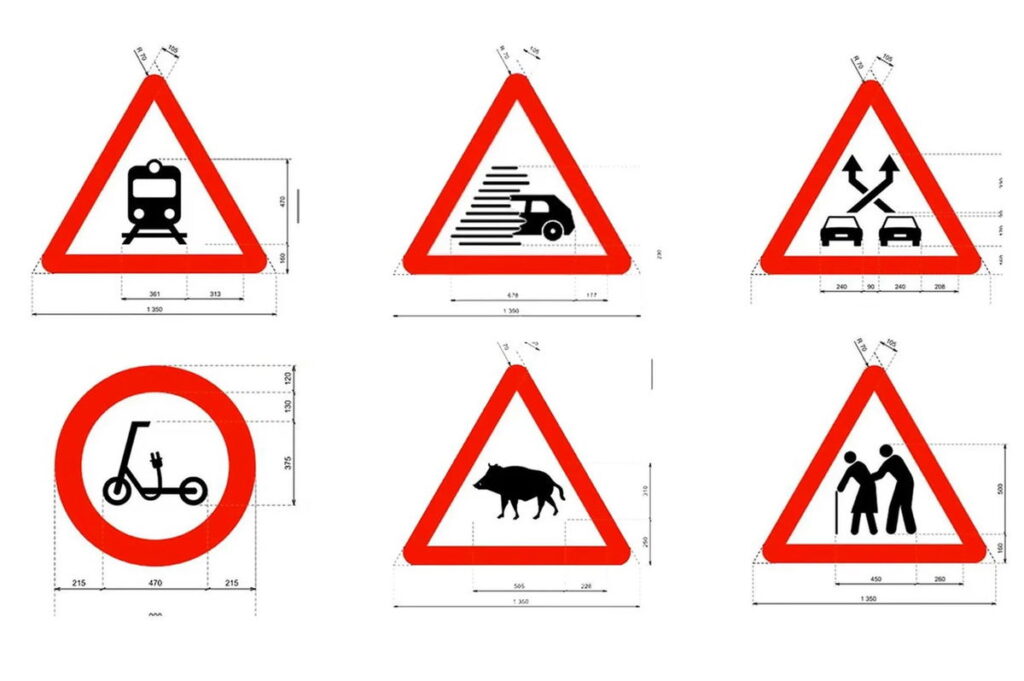
New signs will be rolled out during the summer on Spanish roads. Credits: coches.net
For the first time in 20 years, the DGT, Spain’s governing traffic department, will update road signs. Here’s what you need to know.
From changing the iconic stop sign to introducing brand new symbols, Spain’s road signage is about to change. While Spanish roads have evolved over the last two decades, the design of traffic signs has remained largely unchanged, aside from minor technical corrections. Now, the DGT is almost ready to modernise the country’s traffic signs and update them so they reflect the current times.
Some of these new signs have already been installed by local councils. These include informative signs banning access to low-emission zones and restrictive ones limiting access to electric scooters and other vehicles in densely populated urban areas. Also present on more rural, secondary roads is a brand new sign that warns drivers of the presence of wild boars, the cause of over 40 per cent of traffic accidents involving wild animals.
Most Read on Euro Weekly News
Nearly 100 new signs are being introduced, while a further 30 will be updated or redesigned. Reasons for these updates include visibility issues, outdated concepts – such as the use of a steam-powered train symbol – and gender inclusivity. Some other signs will see their designs updated for more trivial reasons: the octagonal “STOP” sign has a new font, with enlarged letters to make it more visible to drivers.
The previous road sign catalogue was approved in 2003, at a time when scooters were not conceived as vehicles. This modernising aspect of the DGT’s plan also includes signs banning hoverboards and Segways – signs that will probably be spotted in tourist areas.
This new catalogue will be designed and presented by the Ministries of the Interior and Transport and will be rolled out on Spanish roads during the summer.