
DUNNING — The National Italian American Sports Hall of Fame, which has been celebrating sports history for nearly 50 years, has found a new home on the Far Northwest Side.
The Hall of Fame spent much of the past two decades on Taylor Street in Little Italy, but when the museum’s building was sold in 2019, all of its memorabilia went into storage as the hunt for a new location began. Ron Onesti, Hall of Fame president, said the organization bought its new location, a former wedding dress shop in Dunning, about four years ago.
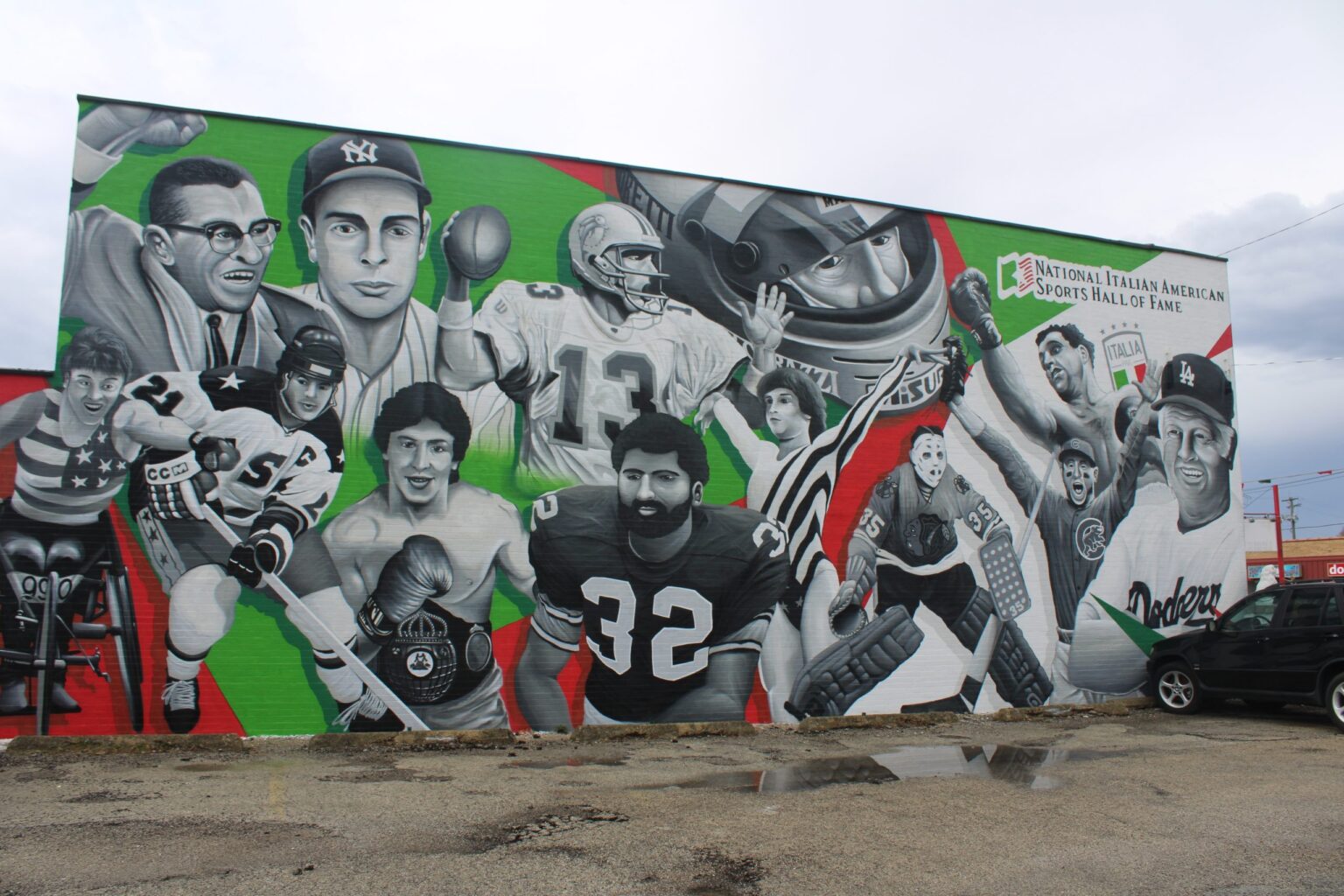
Part of what sold Onesti on the two-story building at 3417 N. Harlem Ave. was its spacious, north-facing outer wall. This summer, artist Laurynas Buzinskas used the blank wall as a canvas for a vibrant mural featuring 13 Italian American sports icons.
The mural features greats such as Dodgers manager Tommy Lasorda, former Cubs player Anthony Rizzo, Olympic gold medal gymnast Mary Lou Retton and four-time Superbowl champion Franco Harris. Onesti said the mural has room to grow, and the Hall of Fame plans to add basketball star Caitlin Clark and Olympic swimmer Matt Biondi.
“It was important to me to get something done on the outside first to show people what’s coming,” Onesti said.
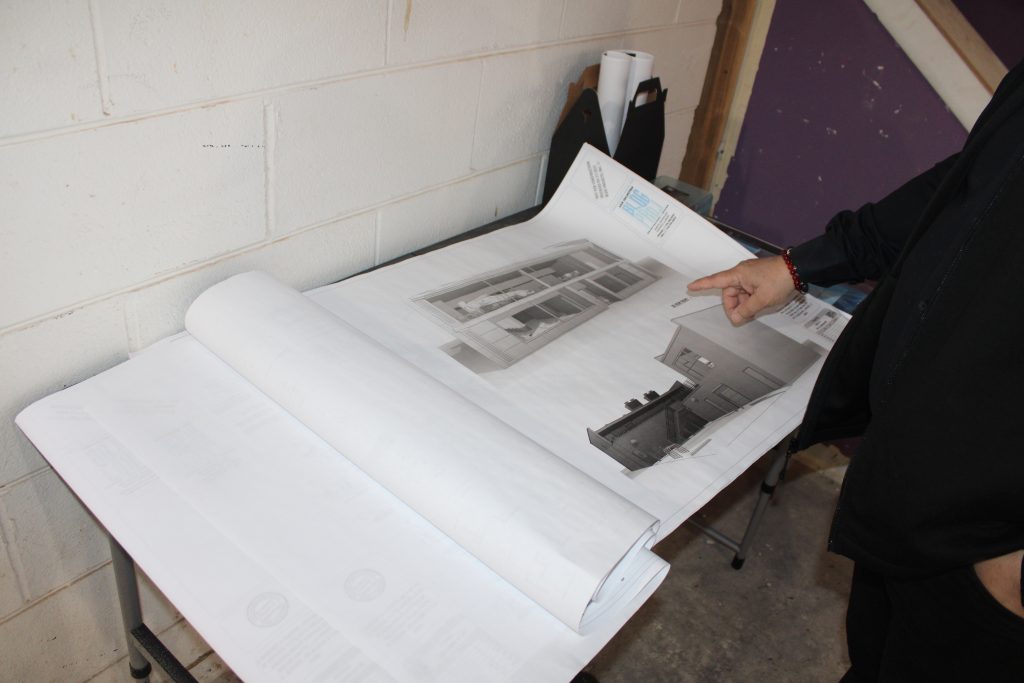 Ron Onesti displays the plans for the National Italian American Sports Hall of Fame. Credit: Molly DeVore/ Block Club Chicago
The COVID-19 pandemic delayed the start of the project. Onesti said construction on the Hall of Fame started about a year ago and should be done this fall. He hopes to have all of its exhibits ready by spring 2026.
Once completed, the museum will feature a wall of honor with the Hall of Fame’s more than 300 inductees, a gift shop, event space, offices and a small kitchen. The Hall of Fame’s marquee items include Mario Andretti’s Indy 500 racecar, Matt Biondi’s 13 olympic gold medals, the last coat Vince Lombardi wore as coach of the Green Bay Packers, Joe Amato’s dragster and an iconic Joe DiMaggio statue.
Onesti said the new Hall of Fame location will be more dynamic than the last. He wants to use technology and videos to keep exhibits fresh. He also plans to host more programs at the museum and wants to have inductees return to share their stories.
“That’s the challenge: How do you keep it contemporary? How do you foster the history? And how do you make it exciting and interesting and ever-changing?” he said.
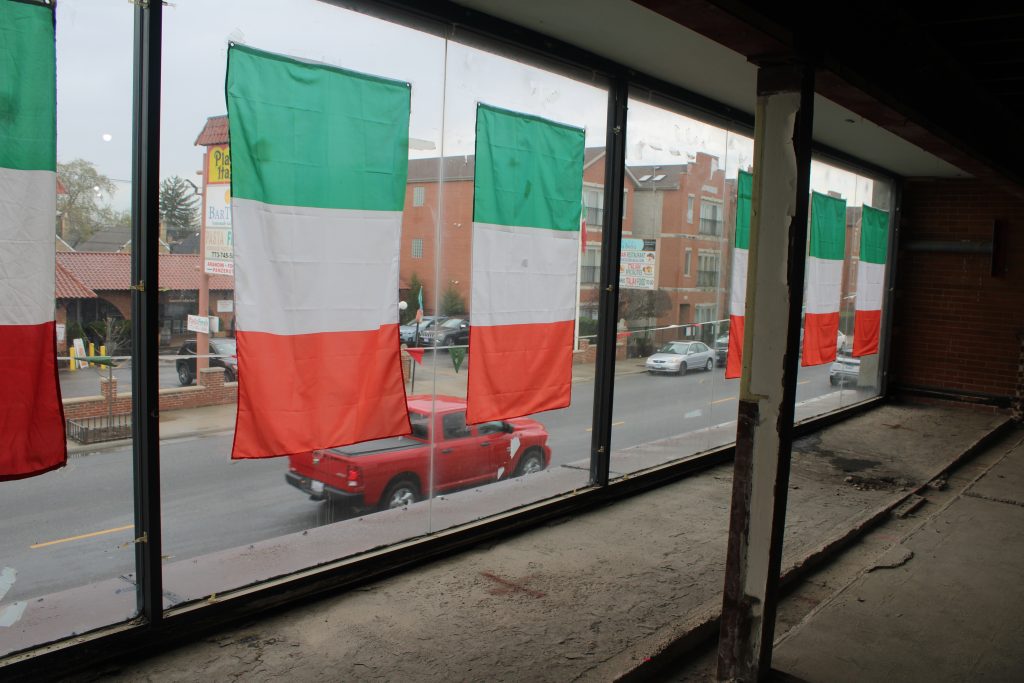 The interior of the building that will soon be home to the National Italian American Sports Hall of Fame as seen on April 23, 2025. Credit: Molly DeVore/ Block Club ChicagoChicago’s Other Little Italy
Dunning will be the Hall of Fame’s fourth home.
The museum was founded as the Italian American Boxing Hall of Fame in Elmwood Park in 1977 by George Randazzo, who died in 2019.
In a 2018 interview with SEE Chicago, Randazzo said his uncle had a gas station where he would hang up photos of Italian American boxers. Randazzo began collecting the photos and became a bit of a boxing historian.
Onesti said Randazzo started putting the Hall of Fame together in the late 1960s and got to know a lot of Italian American athletes. The first item added to the museum’s collection was Rocky Marciano’s 1952 championship belt, Randazzo said during the 2018 interview.
Shortly after the museum opened, supporters began asking about expanding it to other sports. A year later, the National Italian American Sports Hall of Fame was founded as a nonprofit.
The museum relocated to Arlington Heights in the 1980s and then moved to Taylor Street in the early 2000s.
While Taylor Street has long been known as Chicago’s Little Italy, the area has changed a lot in the past few decades.
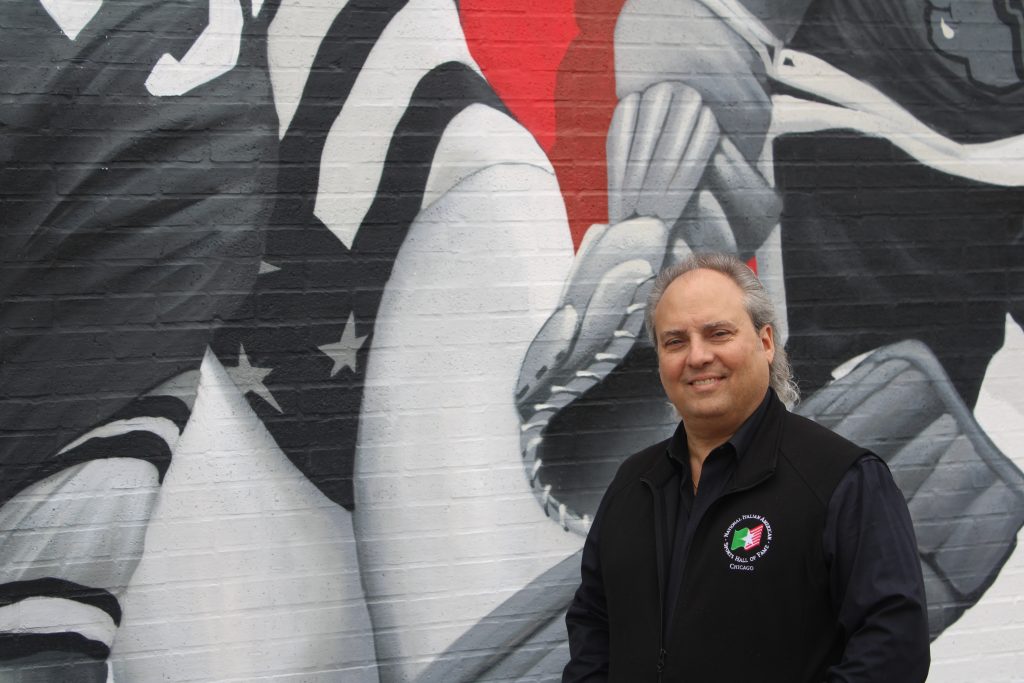 National Italian American Sports Hall of Fame President Ron Onesti poses for a photo on April 23, 2025. Credit: Molly DeVore/ Block Club Chicago
When Onesti was growing up on Taylor Street in the ’60s, Italian culture surrounded him. Neighbors would host communal meals outside, make wine in their basement and bake loaves of fresh bread to share, he said.
“Growing up, it’s not like we knew anything different,” Onesti said. “They brought all their culture and traditions to America and they kept them going.”
Onesti’s mother was born in Florence, and his father grew up on Taylor Street. His parents met when his father, whose family was from Campania, served in Italy during World War II.
Onesti said he didn’t truly appreciate the Italian culture he was raised in until he grew older and was no longer immersed in it.
In the early ’80s, Mayor Jane Byrne launched the Festivals in the Parks initiative, bringing ethnic festivals to parks throughout the city. Onesti said the Italian fest was held at Riis Park and had Tony Bennett as a headliner.
Onesti’s aunt worked next door to the group that organized the festival, the Joint Civic Committee of Italian Americans, so he was able to work the event selling frozen bananas.
When Onesti showed up and saw all the Italian flags blowing in the wind, it hit him.
“All these people felt a sense of pride and community. It reminded me of growing up,” he said. “You don’t realize you’re proud of who you are until you come back later.”
Onesti got involved in the Joint Civic Committee and is now the organization’s president. Through the committee, he also became involved in the Sports Hall of Fame, a group he’s been a part of for more than three decades.
Onesti said Chicago’s Italian American community began to move west in the ’50s and ’60s after the Eisenhower Expressway and the University of Chicago were built. Many families were displaced through eminent domain during the projects, relocating to the western suburbs and to Dunning.
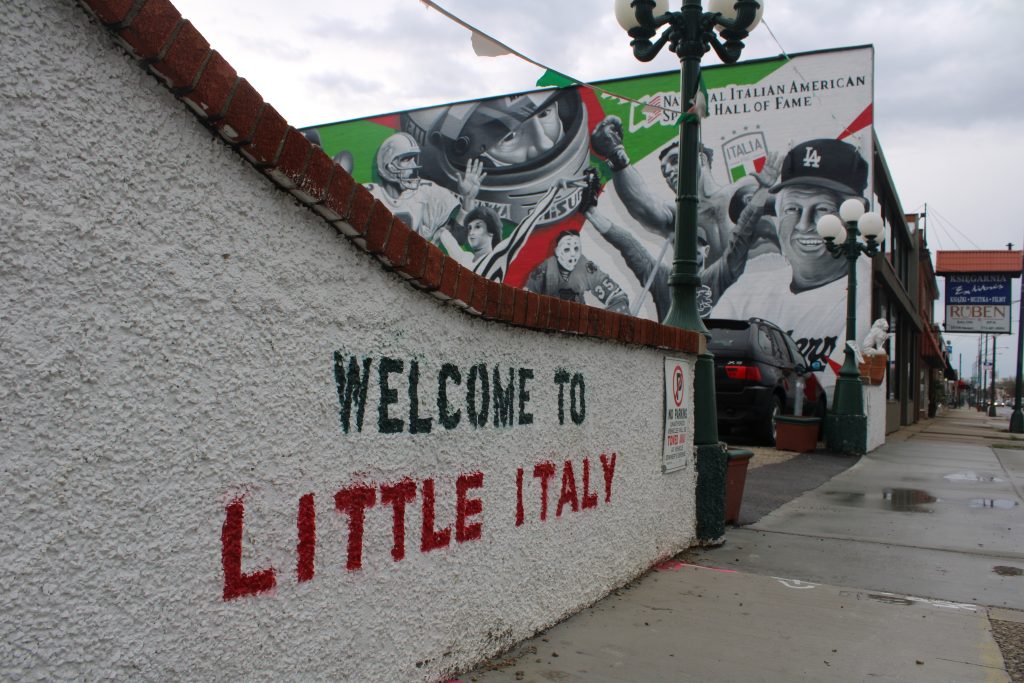 The National Italian American Sports Hall of Fame as seen on April 23, 2025. Credit: Molly DeVore/ Block Club Chicago
In more recent years, Italian American business owners along Harlem Avenue have been trying to promote the area as a second Little Italy. The city passed a Harlem Avenue Visioning study last year. The study lays out how to create a cohesive brand focused on Italian American heritage for the area.
Onesti said he hopes the Hall of Fame can be an “anchor” for the Northwest Side’s burgeoning Little Italy.
“San Diego and Boston both have beautiful Little Italys. Chicago is second or third in the country for Italian Americans, and we don’t have that here,” Onesti said. “That’s something we’re trying to begin.”
Listen to the Block Club Chicago podcast: