A version of this article first appeared in the CNBC Sport newsletter with Alex Sherman, which brings you the biggest news and exclusive interviews from the worlds of sports business and media. Sign up to receive future editions, straight to your inbox. Every so often, the world of politics collides with the world of sports. One of those moments is on deck next week – Tuesday, May 6 at 10 a.m. ET. That’s when the Senate Committee on Commerce, Science and Transportation will convene a full committee hearing on the future of sports broadcasting. The committee, chaired by Sen. Ted Cruz , R-Texas, will hear testimony from top executives at three of the biggest U.S. sports leagues — Bill Koenig , the National Basketball Association’s President of Global Content and Media Distribution; David Proper , the National Hockey League’s Senior Executive Vice President of Media and International Strategy; and Kenny Gersh , Major League Baseball’s Executive Vice President of Media and Business Development. The hearing “will examine the policy questions raised by the changing ways Americans are watching live professional sports on television, particularly how traditional over-the-air broadcasts are increasingly supplemented—or even replaced—by digital platforms, subscription services, and exclusive streaming arrangements,” according to a committee press release. Many rules surrounding sports broadcasting are arguably woefully antiquated. Live sporting events are often still blacked out in certain regions due to contractual broadcast rights either at the local or national level. This can be infuriating to fans, who can be trapped in areas of the country where they simply can’t watch certain games, despite technology allowing easy access to all other entertainment at any time, in any place, on any device. Streaming services – the clear future of media distribution – have given fans some relief by offering games in certain leagues (such as Major League Soccer) without blackouts. Any subscriber to Apple TV+’s MLS Season Pass gets every game in every market for $14.99 per month. But regional sports networks for MLB, NBA and NHL still own the local rights for most teams, which forces fans to pay for either cable or a litany of streaming services to watch most games. One issue that’s certain to come up at the hearing is the increasing proliferation of these streaming services. As leagues carve up their rights into smaller bundles, the onus falls on consumers to pay for more and more services – Apple TV+, Amazon Prime Video, WBD’s Max and Disney’s ESPN all own different packages of MLB games, for example. Senators (the elected U.S. officials, not to be confused with the NHL team from Ottawa) are likely to question league executives on their plans to bundle these streaming services to ensure that costs don’t continue to balloon. “Catching your favorite team on TV shouldn’t feel like solving a puzzle,” Cruz said in a statement this week. “Games that used to be free or easy to find are now scattered across pricey apps and exclusive deals. This hearing will explore how leagues intend to keep sports accessible and affordable for the fans who make it all possible.” Another issue likely to surface next week: There is some fear that the National Football League, in particular, may be getting too aggressive with its growing streaming strategy to offer games on new nights. Traditionally, the NFL hasn’t broadcast on Friday and Saturday nights. This has protected high school and college football audiences, both in person and on TV. This isn’t an accident. It’s actually law. In 1961, a U.S. District Court ruled the NFL’s proposed method of pooling media rights among all the teams as an exclusive contract with broadcaster CBS violated antitrust law. As a settlement, the NFL worked with Congress to pass the Sports Broadcasting Act (yup, that’s a real thing), which created an exception to the Sherman Act allowing for sports leagues to make TV deals directly with networks on behalf of all of their teams. As part of that law, the NFL agreed not to broadcast on Friday and Saturday nights after 6 p.m. from the second Friday in September until the second Saturday in December. Obviously in 1961, streaming didn’t exist. I’m told Congress (and the courts) may consider extending that provision to account for streaming as further protection for high school and college football. “The way Americans watch live sports, including the NFL, has changed dramatically in recent years,” Cruz wrote in an open letter to NFL Commissioner Roger Goodell on April 17. “Many sporting events, once broadly available for free or through basic cable packages, are now distributed through subscription services and other fragmented models that have left some fans confused about where and how to watch their favorite teams. These shifts and existing, potentially outdated rules raise questions about accessibility, affordability, market competition, and the long-term implications for fan engagement.” Cruz asked the NFL to testify alongside the other three sports leagues, but the league declined, citing timing conflicts, according to people familiar with the matter. The NFL did offer to send the committee information and communicate outside the hearing. (The NFL has a Washington, D.C., office.) The league’s absence from the hearing – especially when executives from the other three leagues will be there – may make for a prime punching bag opportunity for Cruz and others. There are 15 Republicans and 13 Democrats on the committee. There’s little doubt the NFL has been aggressive in carving out new packages with different streaming services to maximize revenue and potentially groom new media partners to buy the rights to more games down the road. This year, the NFL has three different games on Christmas – two on Netflix and one on Amazon. Christmas falls on a Thursday this year and on Friday next year. I’m told some members of the committee are fearful the NFL could eventually try to take over more territory by using streaming services as a platform to move games to Fridays and Saturdays earlier in the season if proper protections aren’t installed. I’m also told from league sources that this idea has never really come up before internally. So, the whole notion of the NFL moving in on high school and college football may be more grandstanding than anything based in substance. Having watched Senate hearings before, let’s just say this wouldn’t shock me. An NFL spokesperson declined to comment. If you’re interested in watching the hearing, the committee will be taking advantage of the wonders of modern technology and streaming it live on its website. On the record With NBC Sports President Rick Cordella … The past few weeks have been unusually strong for televised sports. The Masters delivered its highest ratings since 2018. The NFL Draft had its second-highest ratings in history. NBA playoff ratings are soaring . And this week, NBC Sports broadcasts the Kentucky Derby. You may not think horse racing carries the same cache as it once did, but the 2024 Derby actually delivered its highest ratings since 1989. This week, I spoke with NBC Sports President Rick Cordella , and I asked him, how do TV ratings keep increasing when fewer and fewer people are watching traditional linear TV? Cordella’s answer is that almost all non-sports viewing has become on-demand, leaving traditional TV for live events. “It feels like, hey, that show, while I love it, I can watch it later,” Cordella said. “It’s not just sports, by the way. The Thanksgiving Day Parade had its highest rating of all time too. Live matters to broadcast TV. You turn it on to see what’s happening in the moment with news or sports, and you’re taking a greater congregation of viewership around that across the board.” This is the NBC Sports strategy – leaning on its broadcast network to convince marquee sports leagues that it still has an advantage over streaming services like Netflix and Amazon Prime Video because of its TV reach. Cordella said he thinks there’s a 20% to 30% gap in reach between what NBC plus its streaming service, Peacock, can offer versus what a streaming-only service can deliver. As evidence, Cordella pointed to Netflix’s Christmas Day NFL ratings, which were strong but not quite up to par with what linear TV has previously delivered. Cordella also spoke to me about what audiences can expect from the NBA on NBC, when it returns next season. His goal is to make the games feel like Sunday Night Football — like the game of the week. “Let’s get in and show the atmosphere – make this seem like a big game,” Cordella told me. “We’ll have our talent on site at the arenas on Sunday nights.” Discussions are ongoing to potentially add another Sunday night property – MLB – to NBC Sports’ rights mix, Cordella said. ESPN opted out of its deal for Sunday Night Baseball earlier this year. Cordella was less bullish on the idea of adding UFC or F1, two other sports whose media rights are up for renewal. “We’ll look at it. We talked to the TKO guys (who own UFC). Probably not a sort of top priority for us, but it’s something we’ll look at,” Cordella said of UFC rights, adding that F1 rights fell into a similar bucket. Watch the entire interview here. Or listen to it here and follow the CNBC Sport podcast if you prefer the audio version. CNBC Sport highlight reel The best of CNBC Sport from the past week: The NFL’s Washington Commanders are returning to the District of Columbia. They’ve been playing in Landover, Maryland, at Northwest Stadium (formerly FedEx Field) since 1997. The Commanders plan to invest $2.7 billion to refurbish the grounds of RFK Stadium, the team’s home field from 1961 to 1996. As part of the deal, the city government will contribute $500 million. I wonder if that topic may also come up at next week’s DC-based Senate hearing. (Hint: I was told it would.) Former Super Bowl winning quarterback Eli Manning is putting together a bid to buy a minority stake in the New York Giants, Bloomberg reported this week. If that sounds familiar, it’s because Manning first exclusively said this is something he wanted to do in a CNBC Sport interview earlier this year. You can watch that entire interview here. Wells Fargo has downgraded Nike to equal weight from overweight, citing new tariff headwinds. Shares have fallen more than 25% this year. Nike isn’t the only sports-related company struggling with tariffs – the golf-cart manufacturing industry sources parts from China, Taiwan, India, Malaysia and Turkey, reports CNBC’s Lori Ann LaRocco. The big number: $3.1 million That’s how much the winning horse of this weekend’s Kentucky Derby will earn for a victory. The total prize money for the race is $5 million. By the way, the current favorite for the race, as of Wednesday night, is a horse named Journalism. As everyone knows, there’s no better way to make money than Journalism. Quote of the week “It’s unfortunate that these private numbers are getting to the people making the prank calls.” — Superagent Drew Rosenhaus told ESPN’s Adam Schefter (who I spoke with earlier this month) that the NFL has a prank call problem on its hands. His client, Penn State defensive end Abdul Carter , received a prank call on Draft Night from someone claiming to be with the Jacksonville Jaguars. The voice on the phone told Carter he’d be the Jags’ selection at No. 2, Rosenhaus told Schefter. Carter actually went No. 3 to the New York Giants. Rosenhaus’s comments follow news that the 21-year-old son of Atlanta Falcons Defensive Coordinator Jeff Ulbrich prank-called University of Colorado quarterback Shedeur Sanders and impersonated New Orleans Saints General Manager Mickey Loomis , pretending as if the team was about to pick Sanders. The NFL came down hard on the Falcons and Ulbrich, fining the team $250,000 and Ulbrich $100,000 for the stunt. The Falcons said in a statement that the Ulbrich family would also participate in community service initiatives in relation to the matter. I have no idea what that means (victims of prank calls?), but needless to say, it’s probably not great for a son of an NFL employee to be calling up private numbers of draft prospects and pretending to be team GMs. Around the league In news I’ve confirmed, SNY, the New York Mets regional sports network, has hired Moelis to seek a potential sale. RSNs aren’t exactly growth assets these days, so we’ll see if this deal happens and for what price. The Wall Street Journal first reported the story. A pretty big get for Tennis Channel – Sinclair has named Jeff Blackburn as the new chairman and CEO of Tennis Channel. Blackburn was a top executive at Amazon for years, helping to start Prime Video and leading the company’s sports streaming ambitions. The William Morris sports agency (WME) plans to divest its baseball business to avoid a conflict of interest with its now closely held majority shareholder Silver Lake. The private equity firm recently closed a deal to acquire Endeavor, the parent company of WME. Silver Lake already owns Diamond Baseball Holdings, a holding company that owns 43 minor league baseball teams. Divesting the agency business will avoid a potential conflict of interest, Front Office Sports reports .
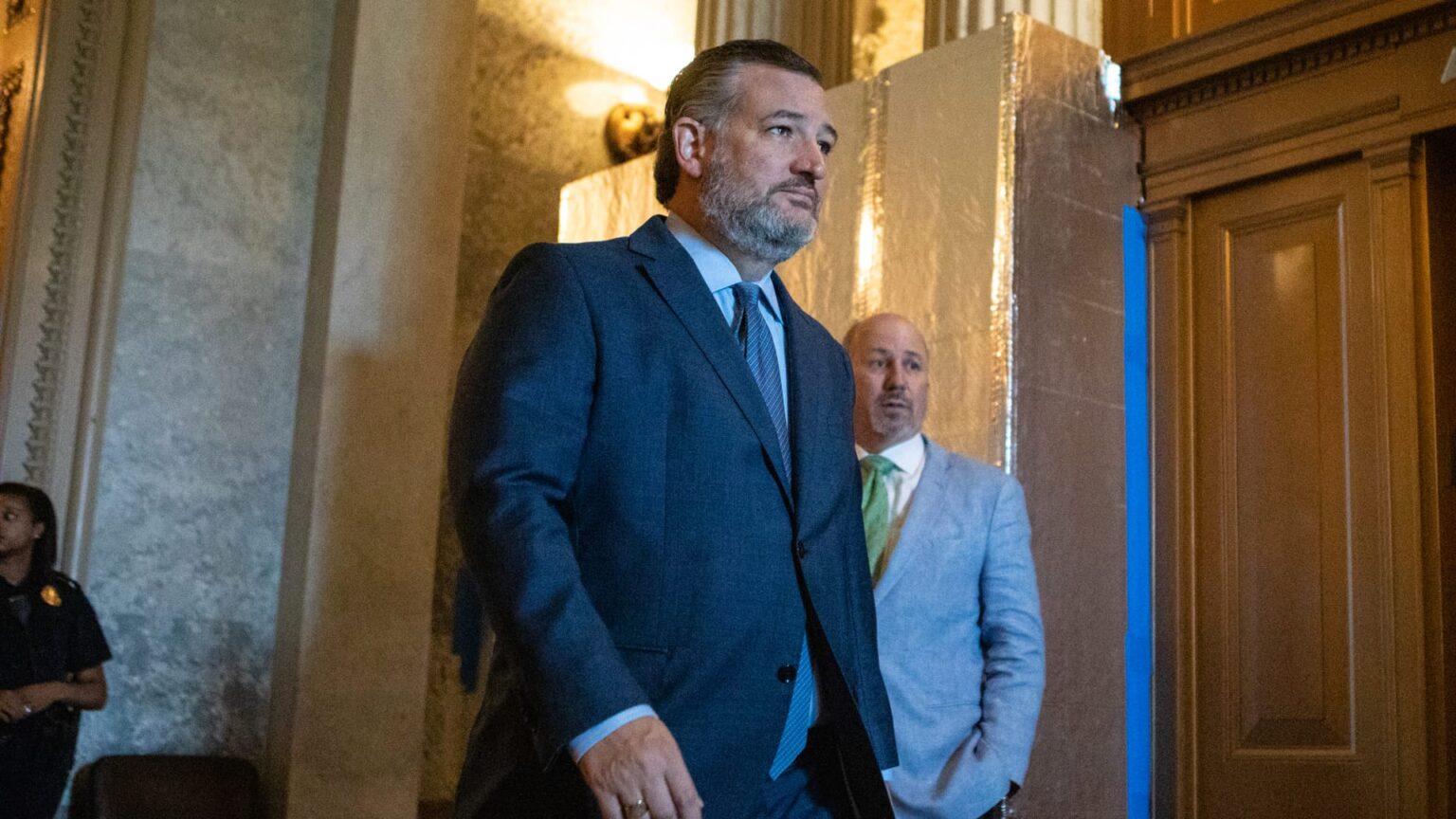
Sen. Ted Cruz, R-Texas.
Anna Rose Layden | Getty Images News | Getty Images
A version of this article first appeared in the CNBC Sport newsletter with Alex Sherman, which brings you the biggest news and exclusive interviews from the worlds of sports business and media. Sign up to receive future editions, straight to your inbox.
Every so often, the world of politics collides with the world of sports. One of those moments is on deck next week – Tuesday, May 6 at 10 a.m. ET.
That’s when the Senate Committee on Commerce, Science and Transportation will convene a full committee hearing on the future of sports broadcasting. The committee, chaired by Sen. Ted Cruz, R-Texas, will hear testimony from top executives at three of the biggest U.S. sports leagues — Bill Koenig, the National Basketball Association’s President of Global Content and Media Distribution; David Proper, the National Hockey League’s Senior Executive Vice President of Media and International Strategy; and Kenny Gersh, Major League Baseball’s Executive Vice President of Media and Business Development.
The hearing “will examine the policy questions raised by the changing ways Americans are watching live professional sports on television, particularly how traditional over-the-air broadcasts are increasingly supplemented—or even replaced—by digital platforms, subscription services, and exclusive streaming arrangements,” according to a committee press release.
Get CNBC Sport directly to your inbox
The CNBC Sport newsletter with Alex Sherman brings you the biggest news and exclusive interviews from the worlds of sports business and media, delivered weekly to your inbox.
Subscribe here to get access today.
Many rules surrounding sports broadcasting are arguably woefully antiquated. Live sporting events are often still blacked out in certain regions due to contractual broadcast rights either at the local or national level. This can be infuriating to fans, who can be trapped in areas of the country where they simply can’t watch certain games, despite technology allowing easy access to all other entertainment at any time, in any place, on any device.
Streaming services – the clear future of media distribution – have given fans some relief by offering games in certain leagues (such as Major League Soccer) without blackouts. Any subscriber to Apple TV+’s MLS Season Pass gets every game in every market for $14.99 per month. But regional sports networks for MLB, NBA and NHL still own the local rights for most teams, which forces fans to pay for either cable or a litany of streaming services to watch most games.
One issue that’s certain to come up at the hearing is the increasing proliferation of these streaming services. As leagues carve up their rights into smaller bundles, the onus falls on consumers to pay for more and more services – Apple TV+, Amazon Prime Video, WBD’s Max and Disney’s ESPN all own different packages of MLB games, for example. Senators (the elected U.S. officials, not to be confused with the NHL team from Ottawa) are likely to question league executives on their plans to bundle these streaming services to ensure that costs don’t continue to balloon.
“Catching your favorite team on TV shouldn’t feel like solving a puzzle,” Cruz said in a statement this week. “Games that used to be free or easy to find are now scattered across pricey apps and exclusive deals. This hearing will explore how leagues intend to keep sports accessible and affordable for the fans who make it all possible.”
Another issue likely to surface next week: There is some fear that the National Football League, in particular, may be getting too aggressive with its growing streaming strategy to offer games on new nights.
Traditionally, the NFL hasn’t broadcast on Friday and Saturday nights. This has protected high school and college football audiences, both in person and on TV.
This isn’t an accident. It’s actually law.
In 1961, a U.S. District Court ruled the NFL’s proposed method of pooling media rights among all the teams as an exclusive contract with broadcaster CBS violated antitrust law. As a settlement, the NFL worked with Congress to pass the Sports Broadcasting Act (yup, that’s a real thing), which created an exception to the Sherman Act allowing for sports leagues to make TV deals directly with networks on behalf of all of their teams.
As part of that law, the NFL agreed not to broadcast on Friday and Saturday nights after 6 p.m. from the second Friday in September until the second Saturday in December.
Obviously in 1961, streaming didn’t exist. I’m told Congress (and the courts) may consider extending that provision to account for streaming as further protection for high school and college football.
“The way Americans watch live sports, including the NFL, has changed dramatically in recent years,” Cruz wrote in an open letter to NFL Commissioner Roger Goodell on April 17. “Many sporting events, once broadly available for free or through basic cable packages, are now distributed through subscription services and other fragmented models that have left some fans confused about where and how to watch their favorite teams. These shifts and existing, potentially outdated rules raise questions about accessibility, affordability, market competition, and the long-term implications for fan engagement.”
Cruz asked the NFL to testify alongside the other three sports leagues, but the league declined, citing timing conflicts, according to people familiar with the matter. The NFL did offer to send the committee information and communicate outside the hearing. (The NFL has a Washington, D.C., office.)
The league’s absence from the hearing – especially when executives from the other three leagues will be there – may make for a prime punching bag opportunity for Cruz and others. There are 15 Republicans and 13 Democrats on the committee.
There’s little doubt the NFL has been aggressive in carving out new packages with different streaming services to maximize revenue and potentially groom new media partners to buy the rights to more games down the road. This year, the NFL has three different games on Christmas – two on Netflix and one on Amazon. Christmas falls on a Thursday this year and on Friday next year.
I’m told some members of the committee are fearful the NFL could eventually try to take over more territory by using streaming services as a platform to move games to Fridays and Saturdays earlier in the season if proper protections aren’t installed.
I’m also told from league sources that this idea has never really come up before internally. So, the whole notion of the NFL moving in on high school and college football may be more grandstanding than anything based in substance. Having watched Senate hearings before, let’s just say this wouldn’t shock me.
An NFL spokesperson declined to comment.
If you’re interested in watching the hearing, the committee will be taking advantage of the wonders of modern technology and streaming it live on its website.
On the record
With NBC Sports President Rick Cordella …