
In the icy hangars of Ørland Air Base, nestled along Norway’s rugged coastline, technicians bundle against the Arctic chill as they prepare F-35A Lightning II jets for missions over the vast, windswept skies of the High North.
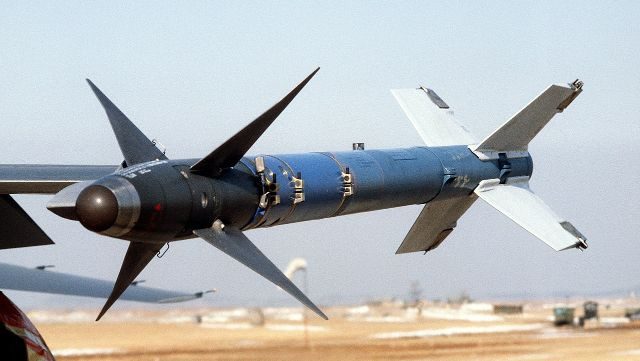 Photo by USAF Sgt. Perry Aston
These advanced stealth fighters, the backbone of Norway’s air force, are about to gain a sharper edge. On May 2, 2025, the U.S. Department of State approved a potential $370.9 million sale of 300 AIM-9X Block II Sidewinder missiles to Norway, a move that strengthens the Scandinavian nation’s air defense capabilities and deepens its integration with NATO allies.
The deal, announced by the Defense Security Cooperation Agency [DSCA], includes training missiles, guidance units, and support equipment, ensuring Norway’s forces remain agile and interoperable in an increasingly complex security landscape.
The acquisition marks a significant step in Norway’s ongoing military modernization, driven by the need to maintain robust defenses in a region where Arctic conditions and strategic interests converge. Norway, a NATO member sharing a border with Russia, has long prioritized air superiority and ground-based air defenses to protect its territory and contribute to alliance operations.
The AIM-9X Block II, a cutting-edge short-range air-to-air missile, will enhance the Royal Norwegian Air Force’s ability to engage threats with precision and agility.
According to the DSCA, the sale includes 300 tactical missiles, two special air training missiles, 24 captive air training missiles, and 40 guidance units, along with containers, software, spare parts, and U.S. technical support. The agency emphasized that Norway will have no difficulty integrating these weapons, building on its expertise with advanced systems.
Norway’s decision to procure the AIM-9X Block II reflects a practical approach to addressing modern aerial threats. The missile, developed by Raytheon [now part of RTX Corporation], is designed for close-in dogfights, where split-second decisions determine outcomes.
Its inclusion in Norway’s arsenal aligns with the country’s investment in platforms like the F-35A and the National Advanced Surface-to-Air Missile System [NASAMS], both of which will carry or launch the missile. The deal, valued at $370.9 million, underscores Norway’s commitment to maintaining a technologically advanced force capable of operating in the harsh Arctic environment, where subzero temperatures, heavy snow, and limited daylight pose unique challenges.
The AIM-9X Block II Sidewinder is an evolution of a storied missile family that traces its origins to the 1950s when the U.S. Navy introduced the original AIM-9 as a heat-seeking weapon for air-to-air combat. The Block II variant, operational since the early 2010s, represents a leap forward in performance.
With a range of approximately 20 miles and a speed exceeding Mach 2.5, the missile is designed to engage agile targets, from enemy fighters to drones. Its infrared focal-plane array seeker provides a 90-degree off-boresight capability, allowing pilots to lock onto targets without pointing the aircraft directly at them. This feature, paired with a helmet-mounted cueing system like the Joint Helmet Mounted Cueing System [JHMCS], enables pilots to guide the missile by simply looking at the target, a game-changer in high-stress engagements.
The missile’s thrust-vectoring control system, which adjusts the direction of its rocket exhaust, grants exceptional maneuverability, enabling it to pursue targets through tight turns and evasive maneuvers. The AIM-9X Block II also incorporates lock-on-after-launch [LOAL] capability, allowing it to be fired before the seeker acquires the target, a feature that enhances its flexibility in dynamic combat scenarios.
Its high-explosive blast-fragmentation warhead is designed to maximize damage, scattering shrapnel to disable enemy aircraft. Enhanced resistance to infrared countermeasures, such as flares, ensures the missile remains effective against sophisticated adversaries. The Block II’s redesigned fuze and digital ignition safety device improve both in-flight reliability and ground handling, reducing risks during transport and loading.
The deal’s training components highlight Norway’s focus on readiness. The two special air training missiles [NATMs] and 24 captive air training missiles [CATMs] allow pilots to simulate engagements without expending live rounds, preserving tactical missiles for operational use.
The 20 tactical and 20 CATM guidance units ensure the missiles’ seekers and electronics are fully functional, supporting both combat and training missions. These elements reflect the comprehensive nature of the package, which extends beyond hardware to include software, technical documentation, and U.S. contractor support. Raytheon, the principal contractor, will oversee the integration process, leveraging its decades of experience with the Sidewinder family.
Norway’s primary platform for the AIM-9X Block II will be its fleet of F-35A Lightning II jets, a cornerstone of its air force modernization. As of 2025, Norway operates around 40 F-35As, with plans to acquire a total of 52 by the end of the decade.
The F-35A, built by Lockheed Martin, is a fifth-generation stealth fighter renowned for its advanced sensors, data fusion, and network-centric warfare capabilities. The AIM-9X integrates seamlessly with the jet’s AN/APG-81 radar and electro-optical targeting system, enhancing its ability to engage threats in contested environments.
The missile can be carried externally on the F-35’s wings or, in certain configurations, internally to maintain stealth. The jet’s helmet-mounted display allows pilots to exploit the AIM-9X’s high off-boresight capability, locking onto targets with a glance.
The F-35A’s role in Norway’s defense strategy is amplified by the country’s unique geography. Operating from bases like Ørland and Evenes, these jets patrol the Arctic skies, where extreme weather and vast distances demand robust performance.
The aircraft’s ability to operate in subzero temperatures and low-visibility conditions makes it an ideal platform for the AIM-9X, which has been tested in similar environments.
In 2019, Norway demonstrated the missile’s versatility during a test at the Andøya Test Center, where an AIM-9X Block II was launched from a NASAMS launcher, successfully destroying a target. This trial underscored the missile’s adaptability, extending its utility beyond air-to-air roles to surface-to-air applications.
NASAMS, co-developed by Norway’s Kongsberg Defence & Aerospace and Raytheon, is a critical component of Norway’s air defense architecture. Deployed to protect key infrastructure, such as air bases and government facilities, NASAMS combines the AIM-9X with longer-range AMRAAM and AMRAAM-ER missiles, creating a layered defense system.
The AIM-9X adds a short-range intercept capability, ideal for engaging low-flying threats or targets that evade radar detection. Norway’s pioneering use of NASAMS, which has been adopted by countries like the United States and Australia, highlights its expertise in integrating advanced munitions. The system’s mobility and modularity allow it to be deployed rapidly, a vital asset in the Arctic, where terrain and weather complicate logistics.
Looking ahead, Norway is exploring the integration of the AIM-9X with its National Manoeuvre Air Defence System [NOMADS], a next-generation mobile air defense platform designed to counter evolving threats. While details on NOMADS remain limited, its potential to incorporate the AIM-9X reflects Norway’s forward-thinking approach to defense.
The missile’s compatibility with multiple platforms ensures its longevity in Norway’s arsenal, providing flexibility as new systems enter service. The DSCA noted that the sale includes U.S. engineering and logistical support, ensuring seamless integration and sustained operational readiness.
The acquisition comes at a time of heightened focus on Arctic security, where Norway plays a pivotal role as NATO’s northern flank. The country’s strategic position, with a 120-mile border with Russia, places it at the forefront of alliance efforts to monitor and deter potential threats.
Joint exercises like Trident Juncture, which involve NATO allies operating in Norway’s challenging terrain, underscore the importance of interoperability. The AIM-9X Block II, already in service with the U.S. and other NATO members, enhances Norway’s ability to contribute to these missions, ensuring its forces can operate alongside American F-22s or British Typhoons with shared tactics and equipment.
Historically, Norway has relied on a combination of air and ground-based defenses to secure its airspace. During the Cold War, its F-16 fleet, armed with earlier Sidewinder variants, patrolled the northern skies, deterring Soviet incursions. The transition to the F-35 and advanced systems like NASAMS reflects a shift toward multi-domain operations, where air, land, and sea assets work in concert.
The AIM-9X Block II builds on this legacy, offering a modern solution to threats ranging from manned aircraft to unmanned systems. Its versatility was demonstrated in 2016 when a U.S. Navy F/A-18 used an AIM-9X to shoot down a Syrian Su-22, marking one of the missile’s first confirmed combat kills.
Comparatively, the AIM-9X Block II stands out among short-range air-to-air missiles globally. Russia’s R-73 [AA-11 Archer], a rival system, offers similar high off-boresight capabilities but lacks the AIM-9X’s LOAL feature and advanced countermeasure resistance.
China’s PL-10, another competitor, boasts impressive maneuverability but is less proven in operational contexts. The AIM-9X’s widespread adoption by NATO and allied nations, including recent sales to the Netherlands and Romania, gives it an edge in interoperability, a critical factor for Norway’s alliance commitments.
The deal’s announcement has drawn attention on social media, with posts on X noting its significance for Norway’s air defenses. One user, @Forsvarsdep, highlighted the close defense partnership between Norway and the U.S., emphasizing the sale’s role in strengthening bilateral ties.
Another @Drecas_2000, detailed the package’s scope, underscoring its impact on Norway’s readiness. These sentiments reflect a broader recognition of the deal’s importance, though public discourse has largely avoided speculative narratives about regional tensions.
From a broader perspective, the sale reinforces the enduring U.S.-Norway defense relationship, which has grown through decades of cooperation. Norway’s participation in the F-35 program, its contributions to NATO missions, and its investment in systems like NASAMS demonstrate a commitment to collective security.
The AIM-9X deal, while not a dramatic shift in regional dynamics, is a pragmatic step toward ensuring Norway’s forces remain capable and credible. It also highlights the Pentagon’s role in supporting allies through the Foreign Military Sales program, which facilitates the transfer of advanced technology while fostering interoperability.
As Norway integrates the AIM-9X Block II into its arsenal, questions linger about the future of Arctic security. The region, rich in resources and strategic importance, is witnessing increased military activity, from NATO exercises to Russian patrols.
While the DSCA’s announcement avoids explicit references to adversaries, the sale’s timing suggests a focus on preparedness. Will Norway’s investment in advanced munitions like the AIM-9X deter potential aggressors, or will it contribute to an escalating arms race in the High North?
For now, the answer lies in the snowy hangars of Ørland, where Norway’s F-35s stand ready to meet whatever challenges the Arctic skies may bring.
***
Follow us everywhere and at any time. BulgarianMilitary.com has responsive design and you can open the page from any computer, mobile devices or web browsers. For more up-to-date news, follow our Google News, YouTube, Reddit, LinkedIn, and Twitter pages. Our standards: Manifesto & ethical principles.