
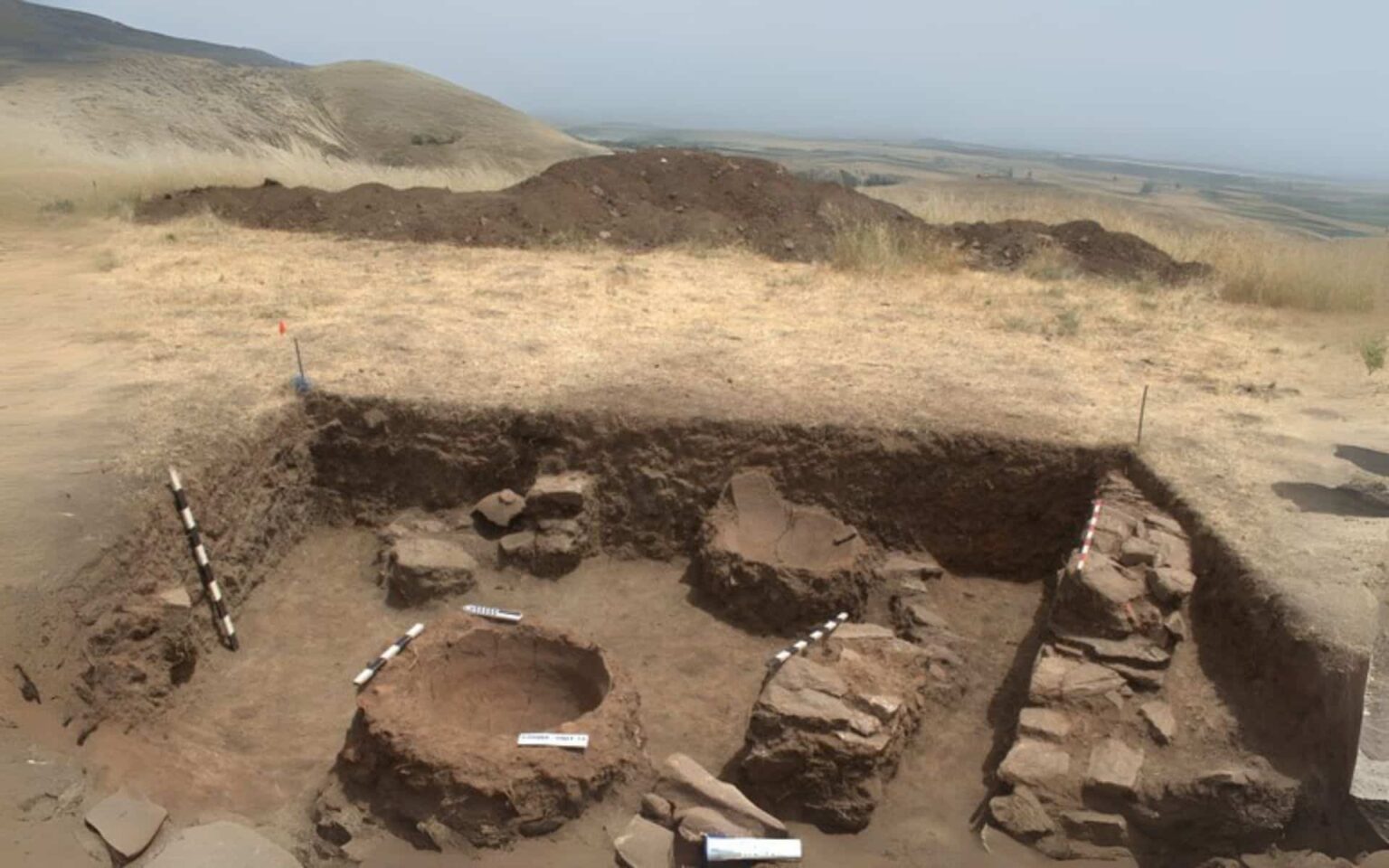
Archaeologists in North Macedonia have made a groundbreaking discovery of the Lost Capital of Ancient Civilization, which could reveal new insights into the life of Alexander the Great and his origins.
They may have uncovered the long-lost capital of an ancient civilization—the Kingdom of Lyncestis—a site that was once a thriving center of power long before the rise of the Macedonian Empire.
This find not only offers insights into the region’s historical roots, but it also could help pinpoint the birthplace of Eurydice I, the influential grandmother of Alexander the Great.
According to GB News, this discovery is considered one of the most significant in recent times, offering tantalizing clues about an ancient world that has long remained hidden.
Ancient Military Outpost Reclassified as Lost City
The discovery took place near the village of Crnobuki, where remains were first identified in 1966. Long dismissed as a mere military outpost, the site has been radically reinterpreted thanks to a lidar survey carried out in 2023 by researchers from Cal Poly Humboldt, in collaboration with Macedonia’s Institute and Museum in Bitola.
Using laser-equipped drones, the team mapped the site’s terrain through dense vegetation, uncovering an acropolis spanning more than seven acres.
Speaking to Fox News Digital, Nick Angeloff, an anthropology professor at Cal Poly Humboldt, said the evidence strongly suggests the site is indeed Lyncus, the capital of an ancient civilization that was conquered by King Philip II of Macedon in 358 B.C.
“Every indication is pointing toward this being the city of Lyncus, within Lyncestis,” Angeloff stated.
Surprising Artifacts Challenge the Timeline
The advanced survey revealed more than just terrain. Excavations brought to light a textile workshop, a possible theater, and a cache of cultural artifacts. Among the finds: pottery, coins, game pieces, and a rare clay theater ticket—clues pointing to a bustling, sophisticated urban center.
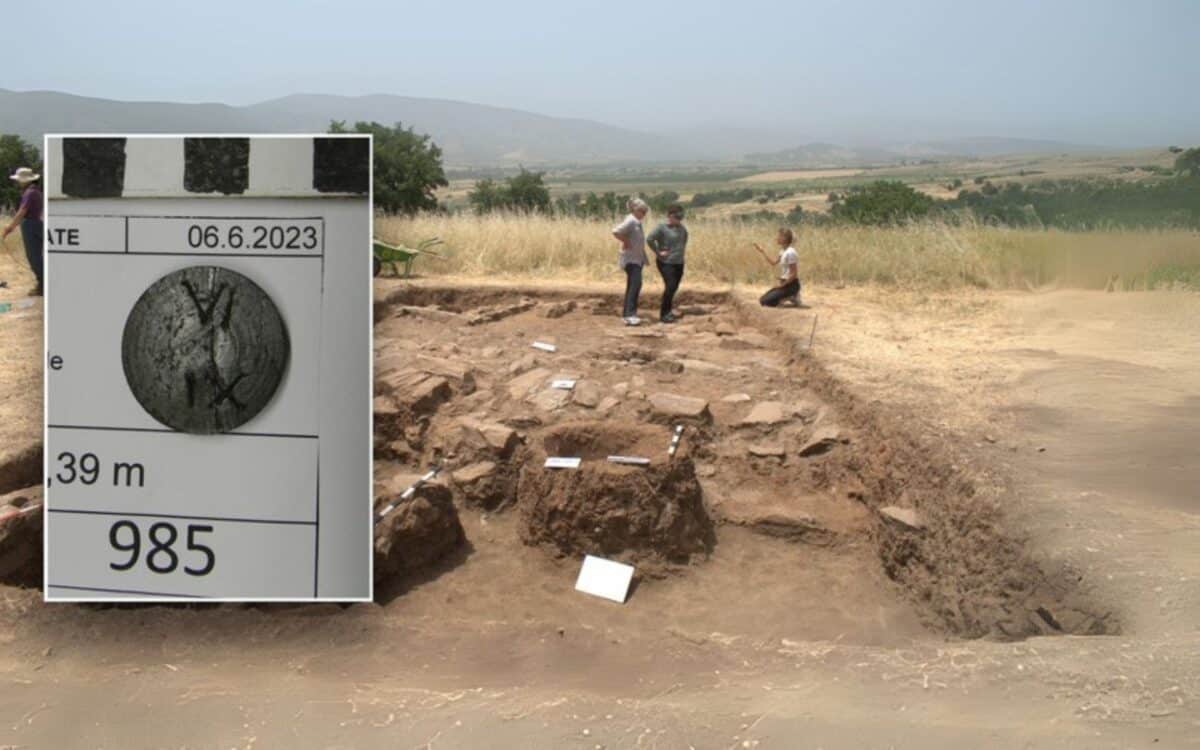 A theater token was found at the site, suggesting that a theater building may be found in the future. (Cal Poly Humboldt)
“The potential for archaeology across North Macedonia to inform our understanding of the classical [eras], as well as the Roman era, is highly significant,” said Angeloff.
Perhaps most intriguing was the discovery of a coin, minted between 325 and 323 B.C.—during Alexander the Great’s lifetime. This find upends earlier theories that dated the city’s foundation to the reign of Philip V (221–179 B.C.), long after Alexander’s death.
From Bronze Age Roots to Macedonian Power
Even earlier traces were found among the ruins. Archaeologists unearthed axes and ceramic shards dating back to the Bronze Age (3300–1200 B.C.), indicating the site’s long and layered history of human occupation.
“We were able to overlay and see what was underneath the ground. The acropolis that it sits on, which is basically a flat hilltop, has enough rooms and infrastructure to hold an entire city inside the fortress walls,” Angeloff remarked.
These layers build a compelling case for Lyncus being more than just a footnote in ancient geography—it may have been a vital part of Macedonian dynastic origins.
“Without Eurydice I, we don’t have Philip II, Alexander’s father, nor do we have Alexander the Great,” said Angeloff, stressing the potential historical significance of the site.
Rethinking Macedonian Influence
The ancient city of Lyncus was once the capital of Lyncestis, a small kingdom eventually absorbed by Philip II into his expanding empire. If the site’s identity is confirmed, it would not only place Eurydice I’s origins there, but also offer a glimpse into the foundational era of Alexander the Great’s lineage.
Angeloff added:
“This is the only appropriate location that we have determined may be the ancient city of Lyncus, where Alexander the Great’s grandmother was born and raised.”
Speaking on the broader implications, Engin Nasuh, curator at Macedonia’s National Institute and Bitola Museum, described the Macedonian civilization as one that “played a major role in today’s understanding of the world and the desire to connect different civilizations and cultures.”
While the findings are promising, further excavation and analysis are underway to confirm the site’s identity as Lyncus, the capital of an ancient civilization.
“We see the whole array of infrastructure required to hold a city inside fortress walls during an attack by Rome in particular,” Angeloff noted.
For now, each coin and fragment hints at a deeper story—one that may redefine what we know about Macedonian heritage and its ties to one of history’s most legendary figures.