
In the past eight years, Kosovo has lost over 756 million cubic meters of water. Last year alone, according to a report by the Statistics Agency, over 124 million cubic meters of water were lost, 12.22 percent more than in 2023. Among the main causes of this, experts in the field counted leaks in the old pipe network as well as illegal connections to the network.
From 2017 to 2024, Kosovo lost a total of 756.4 million cubic meters of water, a report published this year by the Statistics Agency showed.
According to this report, 124.75 million cubic meters of water were lost last year alone, a figure 12.22 percent higher than in 2023.
Agron Demi, director of the “Atlas” Institute, cited leaks in the old pipe network, as well as illegal connections in many urban areas in Pristina and other cities, as the main causes of losses.
“The loss of water is quite worrying, because the shortage is already great, but these losses also affect the quality of the water, because the water in those old pipes through which the water flows, until it reaches consumers, affects the quality of the water quite a lot,” said Demi.
And, the Water Regulatory Authority has announced that during 2023 alone, 61 percent of the water produced in Kosovo was not billed.
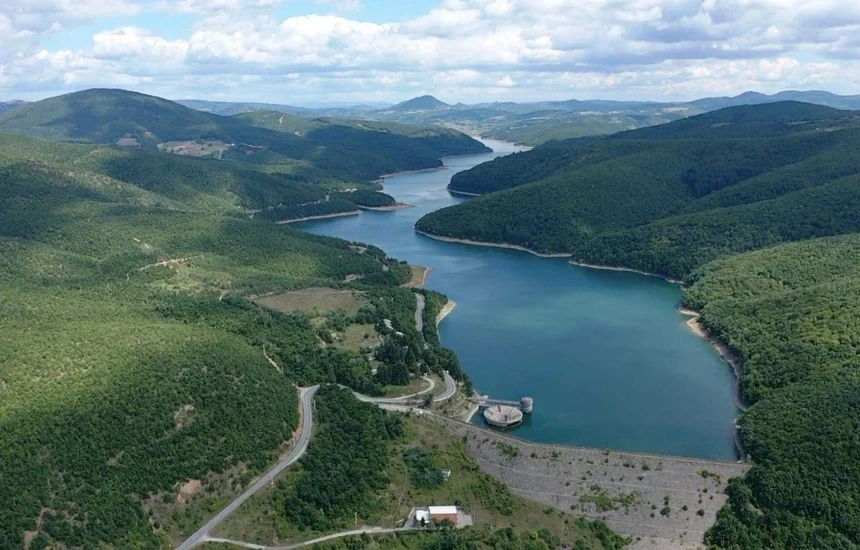
Demi emphasizes that the losses recorded can be equated to the entire capacity of Lake Radoniq.
“We have made a comparison. The water losses are equivalent to all the water that is collected in Lake Radoniqi, or twice as much as Batllava and twice as much as Badoci together, that much water is lost due to pipe leaks and illegal connections,” he said.
Shemsi Kelmendi, water project manager, agrees that one of the causes of losses is leakage in pipes, while adding that inadequate water management also has an impact on this.
“The bad thing is that even today, many years after taking control of the systems, we still do not have a proper system that properly manages the flow of water and water supply. Especially when we know how many investments have been made so far, both by our institutions and by various donors,” said Kelmendi.
KOHA has sent questions to the Ministry of Environment regarding measures taken against water losses, investments made in the water supply network, and data on illegal connections, but this agency has not responded for days.
The level of population coverage with public water supply services has increased significantly compared to pre-war times, but many areas still do not have access to the network. According to official data, currently about 79 percent of Kosovo’s population has access to public water supply systems.
Based on the State Water Strategy, losses remain among the main challenges, as they are large, and most of them are commercial losses.