
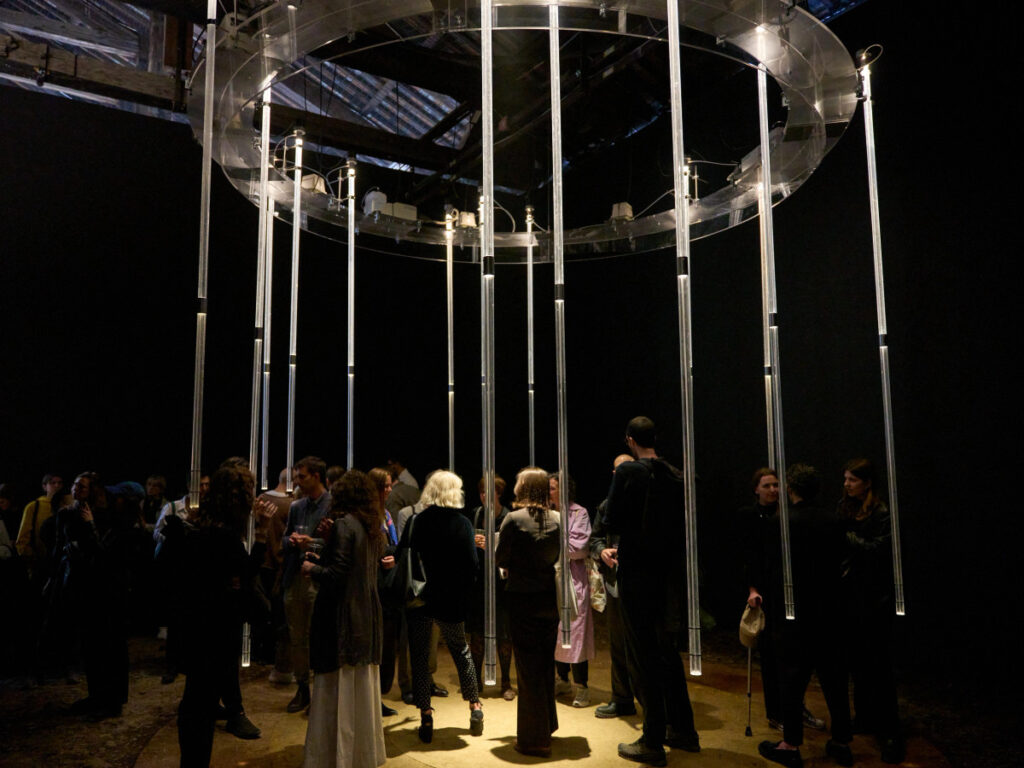
“The snowdrop no longer blooms,” which emerged from field research, is not simply a quote from a farmer in Kosovo. It is the language of the land. To that is added “Ensemble in the Surface” to emphasize the title of Erzë Dinarama’s installation in the Kosovo Pavilion at the 19th edition of the International Architecture Biennale in Venice, which was inaugurated on Thursday. The land of Kosovo is also displaced there, groaning in the face of the disorder of nature, when not even “the snowdrop no longer blooms.” “This simple sentence, spoken by a farmer during research work in Kosovo, captures the challenge of reading a landscape where environmental signs are no longer reliable, when spring comes too early, when the absence of snow in the mountains no longer guarantees the absence of late frost,” said Dinarama
It seems like a pretty intimate environment and the installation is visually minimal. It stems from deep research and addresses a weighty topic: climate change. They are not presented with statistical data and definitions, but by directly touching on the changes, through feelings.
The title is very direct. It comes as an alarm: “The Snowdrop No Longer Blooms. Assembly on the Surface”. It is about the extinction of a flower due to climate change in Kosovo. And this feeling awaits visitors to the International Architecture Biennale in Venice. Officially, the Kosovo Pavilion opened on Thursday afternoon in the Arsenale exhibition space. The youngest country in Europe, represented by architect Erzë Dinarama, in this year’s edition, the 19th in a row of the Architecture Biennale, has led the challenging relationship that man is creating with nature. The research is based on various visits to Kosovo and conversations with farmers. Dinarama delved into the relationship of farmers with the land and the changes described by them, which she visualized in “The Snowdrop No Longer Blooms. Assembly on the Surface”.
The alarm with “Snowdrops don’t bloom anymore”
On the dirt floor from different parts of Kosovo, there are pipes that emit a scent that completes the mosaic of the effects of climate change.
Architect Erzë Dinarama explained to those present at the opening ceremony that the project explores the disruption and reconfiguration of deeply rooted ecological relationships and embodied knowledge systems under climate pressure.
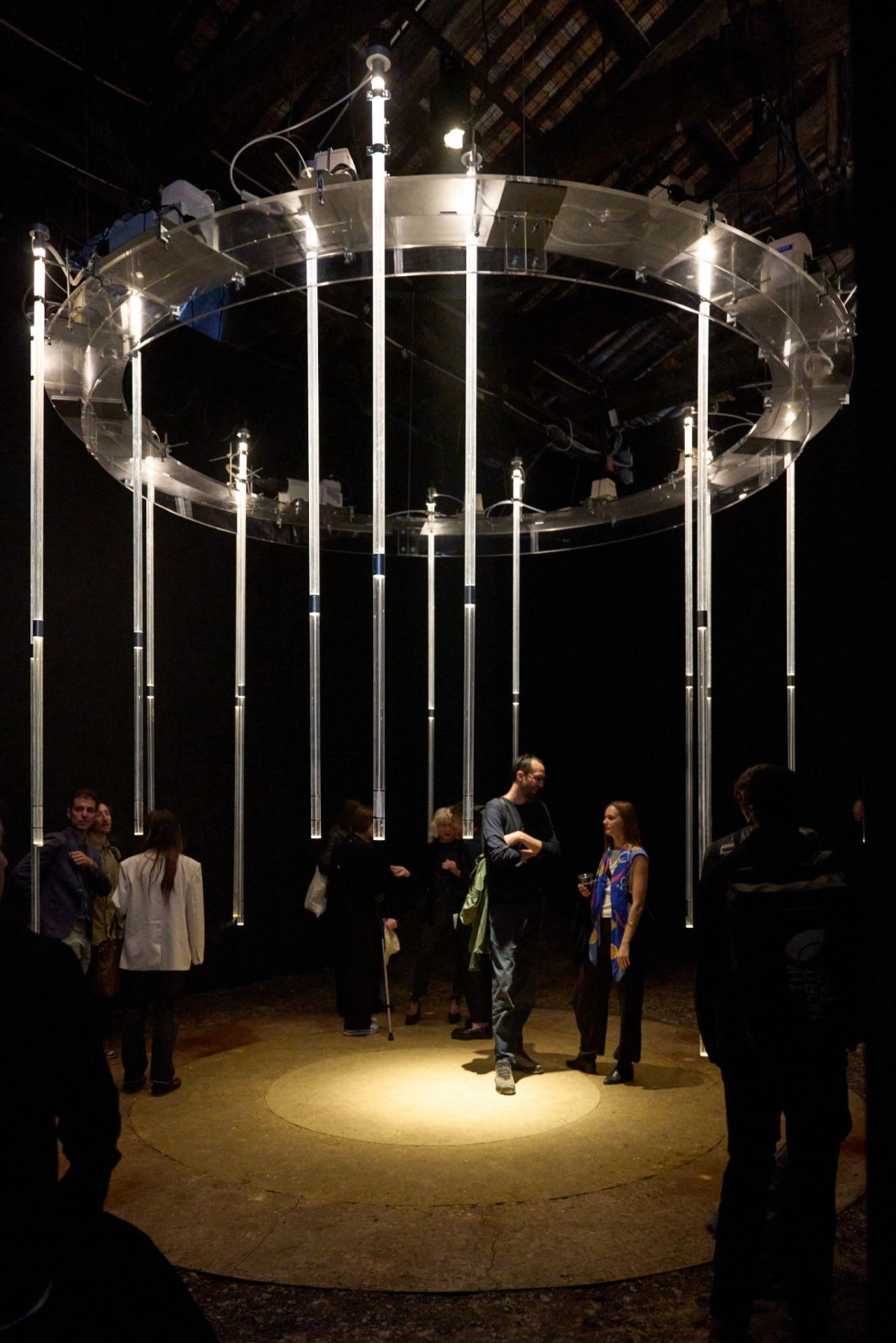 The research is based on visits to various locations in Kosovo and conversations with farmers. Dinarama delved into the relationship of farmers with the land and the changes they describe, which she visualized in “The Snowdrops No Longer Bloom. Assembly in Disguise” (Photo: Kosovo Pavilion at the Venice Biennale)
“Rooted in the field with Kosovo farmers — farmers working with crops that are increasingly perceived as unsuitable for Kosovo’s climate — the project emerges as a territory in transition,” she said. In this case, she added that as climate zones shift and seasons change, familiar environmental cues, including natural systematized cues, are becoming unclear and embodied forms of knowledge are at risk.
After mentioning the title of the pavilion, “The Snowdrop No Longer Blooms. Assembly in Disappearance,” he explained that it is a flower known as an indicator of spring.
“This simple sentence, uttered by a farmer during research work in Kosovo, captures the challenge of reading a landscape where environmental cues are no longer reliable, when spring comes too early, when the absence of snow in the mountains no longer guarantees the absence of late frost,” she said. This year Kosovo has proven this. The weather has warmed up much earlier, while April frosts in many regions of Kosovo have put an end to the fruiting of trees for this year.
“Even as the traditional signs through which farmers connect to the land are being disrupted by climate shifts, farmers continue to organize their lives through relational rather than fixed calendars — recalculating planting and harvesting with reflections on how ‘spring and autumn have shifted’, or ‘the old calendars are no longer valid,’” Dinarama said. According to her, over the past decade, peppers are planted earlier, chamomile blooms earlier, what is harvested is done faster, apples bloom twenty days earlier, and whitebirds migrate later or not at all.
Field research translated visually
This entire feeling is also offered through a calendar built on the basis of farmers’ stories. In the concept of Dinarama, the scents come from the farmer’s description of those moments as a way of ecological perception rooted in bodily proximity. The installation is one of those that gets attention. It requires a little depth to grasp its essence, but it elaborates on an existential theme: the relationship of the ecosystem that is changing day by day.
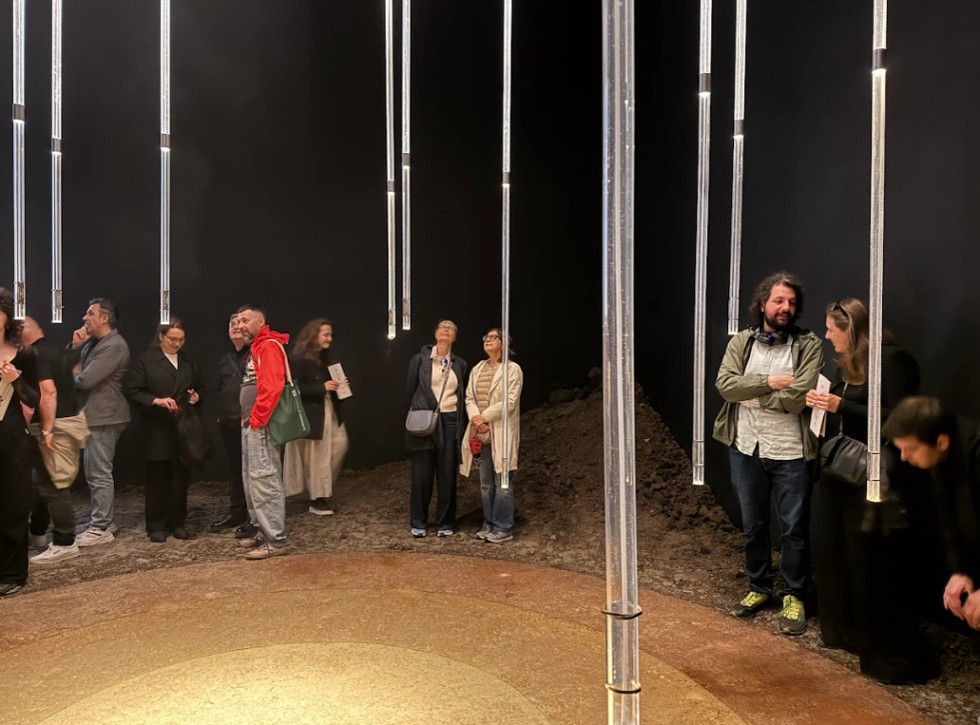 This year, the Kosovo Pavilion presents another relationship of Kosovars with their country: that with the land, flora and climate change that are determinants of a challenging future (Photo: Kosovo Pavilion at the Venice Biennale)
The curator of the National Gallery of Kosovo – the institution that commissioned the Kosovo Pavilion – Hana Halilaj said that the Pavilion in this edition comes as a result of deep research carried out with special sensitivity by the architect and curator, Erzë Dinarama.
“With a critical approach, the project addresses the impact of climate change on the country, an issue of global importance. The team’s findings during the research process have been translated in an excellent visual way, allowing visitors a full sensory experience of what Erza has conceived. A unique experience, on a theme essential for Kosovo and the world,” Halilaj told KOHĘN.
Architect Bekim Ramku, who was the commissioner of the Kosovo Pavilion in 2012 when Kosovo first participated in this event, said that the installation is minimal and beautiful.
“I really liked it visually, minimal and beautiful. The other parts of the Arsenale and the curator’s exhibition, interesting but very busy,” he said.
At the opening ceremony, Nita Shala, Ambassador of the Republic of Kosovo to Italy, said that it is an honor to be present at the event where the Kosovo Pavilion is opened in one of the most respected platforms in the world for cultural and intellectual dialogue.
“This moment has a special meaning for us – not only as a celebration of artistic vision, but also as a reflection of who we are and what we are becoming,” she said.
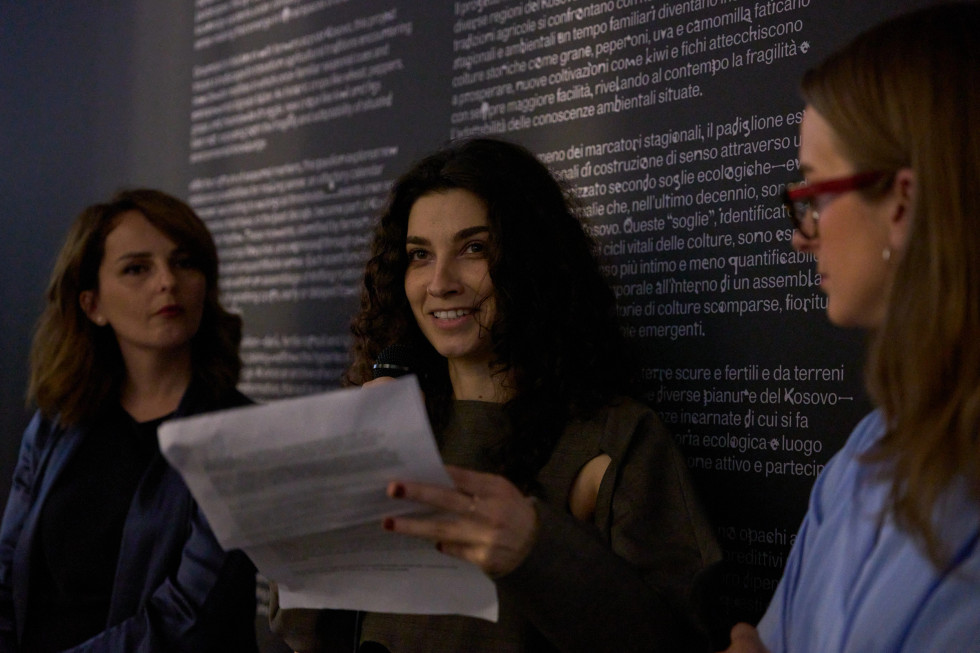 Erzë Dinarama: “Even though the traditional signs through which farmers connect to the land are being disrupted by climate shifts, farmers continue to organize their lives through relational rather than fixed calendars — recalculating planting and harvesting with reflections on how ‘spring and autumn have shifted’, or ‘the old calendars are no longer valid’”
The Biennale as a laboratory for calls and action
This year’s Kosovo Pavilion is in the spirit of the theme set by the general curator of this edition, architect Carlo Ratti. The title of the theme is “Intelligence. Natural. Artificial. Collective”.
At the conference held on Thursday morning, curator Ratti said that in this edition they are trying to make the Biennale a laboratory and a call for action in relation to climate change.
In addition to the collective exhibition, this year 66 countries are represented through national pavilions at the world’s largest architecture event. Over the years, Kosovo has sent pieces of its architecture to this global event.
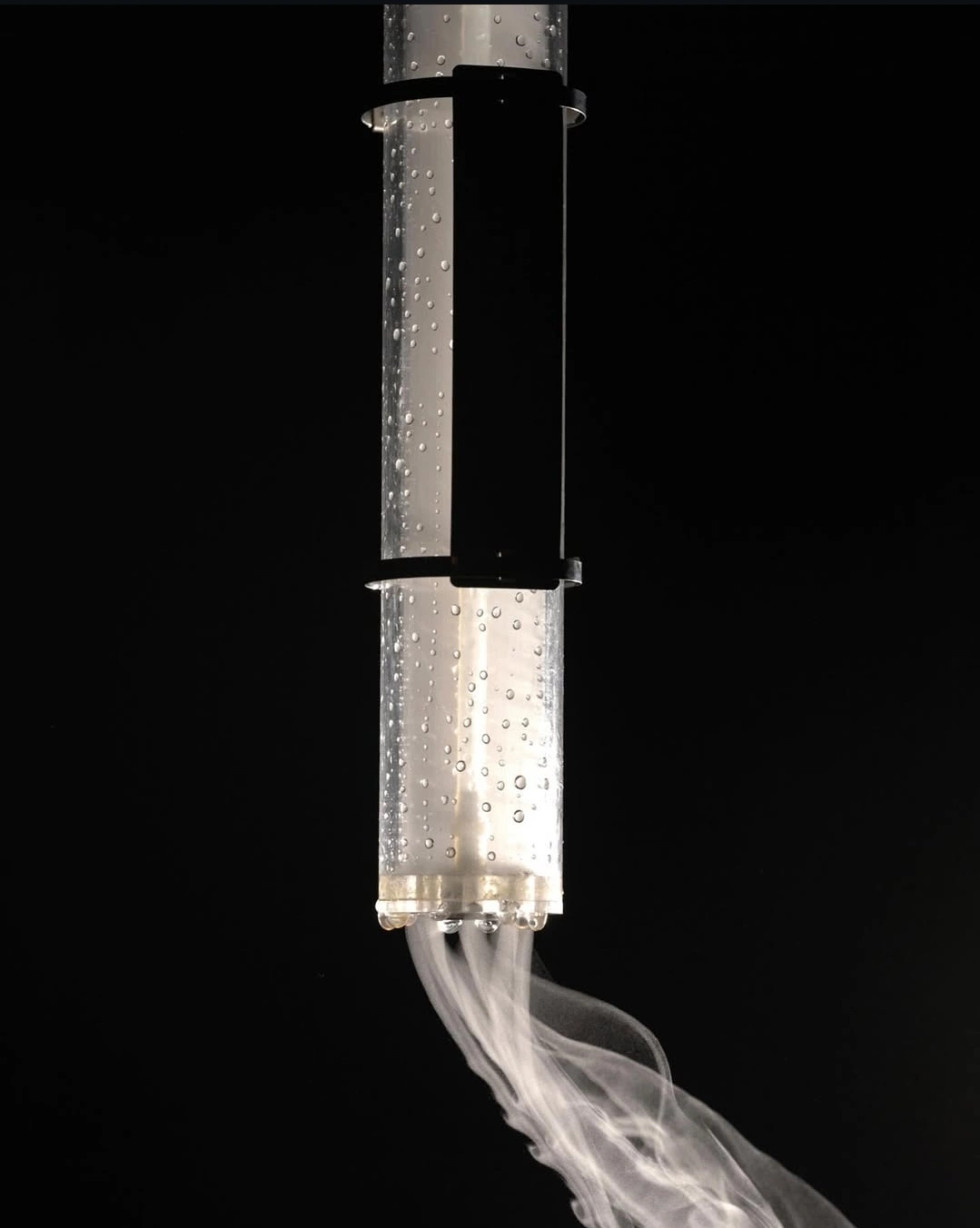 On the floor of soil from different parts of Kosovo are pipes that emit fragrance that completes the mosaic of the presentation of the effects of climate change (Photo: Kosovo Pavilion at the Venice Biennale)
Kosovo’s relationship with the Biennale began in 2012, when it debuted with “The Filigree Worker”, by curator Përparim Rama, now the mayor of Prishtina. The installation aimed to shed light on Kosovo’s cultural heritage. In 2014, Gëzim Paçarizi represented Kosovo with “Visibility (imposed modernism)”. The tower made of 720 benches conveyed the architectural history of Prizren. Two years later, due to the Ministry of Culture’s dispute over the procedures, Kosovo was not represented, only to return in 2018 with Eliza Hoxha, with the work “The City is Everywhere”, which relocated the Kosovo house of the 90s there. In the 2020 edition, Maksut Vezgishi with “Containporary” explored the question of how we can live together. Whereas in 2023, Poliksen Qorri-Dragaj and Hamdi Qorri, with the topic “RKS2 Transcedent Locality”, addressed the phenomenon of migration and its impact on the architecture of cities.
This year, the Kosovo Pavilion presents another relationship of Kosovars with their country: that with the land, flora, and climate change that are determinants of a challenging future.
Visitors to the city with 121 islands and 435 bridges from May 10 to November 13 will have the opportunity to feel the transformations in the ecosystem. They come through the stories of those who are connected to the land and with Erzë Dinarama’s installation. Among others, “Lulebora no longer blooms. Assembly in the open” comes as an alarm and a call for a different approach to climate change. As a sincere call from farmers. Or as a call coming from the land.