

A new species of ribbon worm, Pararosa vigarae, has been discovered off the coast of Galicia, Spain, in the Ría de Arosa estuary. This worm, named the “accordion worm” due to its unique ability to contract its body into regular ring-like folds resembling the bellows of an accordion, adds to the growing catalog of ribbon worm species. The discovery was confirmed through a combination of external characteristics and molecular genetic analysis, as detailed in a study published in the Royal Society Open Science on May 7, 2025. The worm’s physical traits and behavior distinguish it from other species, expanding the biodiversity of the Nemertea phylum.
New Methods to Classify Ribbon Worms
The discovery of Pararosa vigarae not only introduces a new species but also emphasizes the challenges of classifying ribbon worms. For many years, ribbon worms were primarily identified through external features, but the lack of distinguishing characteristics made such methods unreliable. The advent of molecular techniques, which include DNA sequencing, has transformed the identification process, enabling scientists to describe species more accurately and efficiently. This combination of morphological data and genetic analysis has now become a standard in ribbon worm taxonomy, offering an accelerated approach to uncovering marine biodiversity.
Ribbon worms, which are known for their predatory nature and venomous capabilities, often pose a challenge to scientists due to their relatively featureless external anatomy. Traditionally, their internal features were used for classification, but this method has proven to be tedious and error-prone. With the introduction of molecular genetic analysis, researchers now have a more effective and less time-consuming way to uncover new species, as demonstrated by the findings from the recent study.
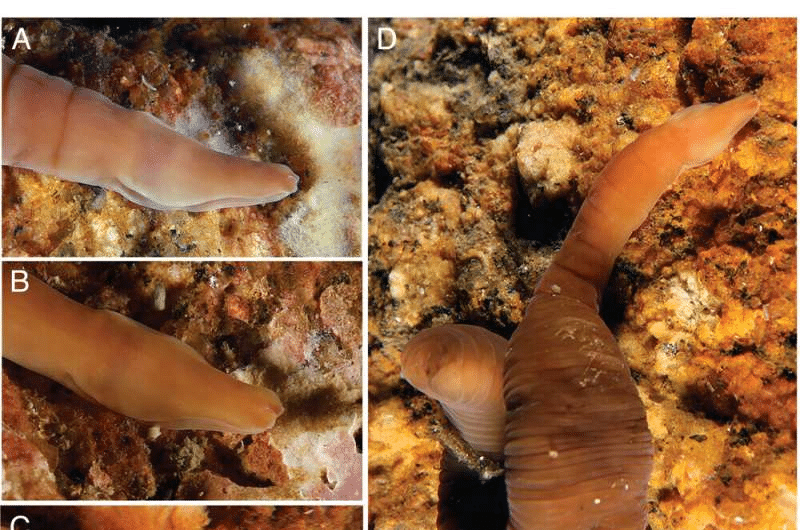 New species of ringworm resembling an accordion discovered in a Spanish estuary. Credit: Royal Society Open Science (2025). DOI: 10.1098/rsos.250313
The Role of Marine Biodiversity in Conservation Efforts
The discovery of Pararosa vigarae further underscores the importance of understanding marine biodiversity, especially in light of the ongoing biodiversity crisis. Although currently only 1,350 ribbon worm species have been identified, experts believe that the true number may be far greater, with estimates suggesting that 1,400 additional species may still be undiscovered. This finding aligns with broader concerns about the rapid depletion of marine habitats and the impact of environmental changes on undiscovered species.
The new species’ habitat, the subtidal zone of Galicia, represents an area that has been under-explored in terms of ribbon worm diversity. Most previous research has concentrated on other European regions, leaving areas like Galicia potentially rich in undiscovered marine species. The region’s biodiversity could hold important clues to the resilience of marine ecosystems and offer a better understanding of how such ecosystems may respond to environmental stressors like climate change and pollution.
A New Era for Taxonomy in Marine Biology
This discovery is also a prime example of how a combination of traditional fieldwork and advanced molecular techniques can rapidly advance scientific understanding. Researchers collected specimens using SCUBA diving, then combined high-resolution imaging with genetic analysis to confirm the species’ identity. This methodological breakthrough not only aids in the classification of new species but also highlights the importance of collaborations between marine scientists and local diving communities who provide critical insights into underexplored ecosystems.
By documenting and describing the unique features of Pararosa vigarae, researchers have taken a significant step forward in understanding the diversity of ribbon worms, particularly in the Galician waters. The study’s findings emphasize the importance of a multifaceted approach that integrates external morphology, behavior, and genetic data to advance marine biodiversity conservation and taxonomy.