
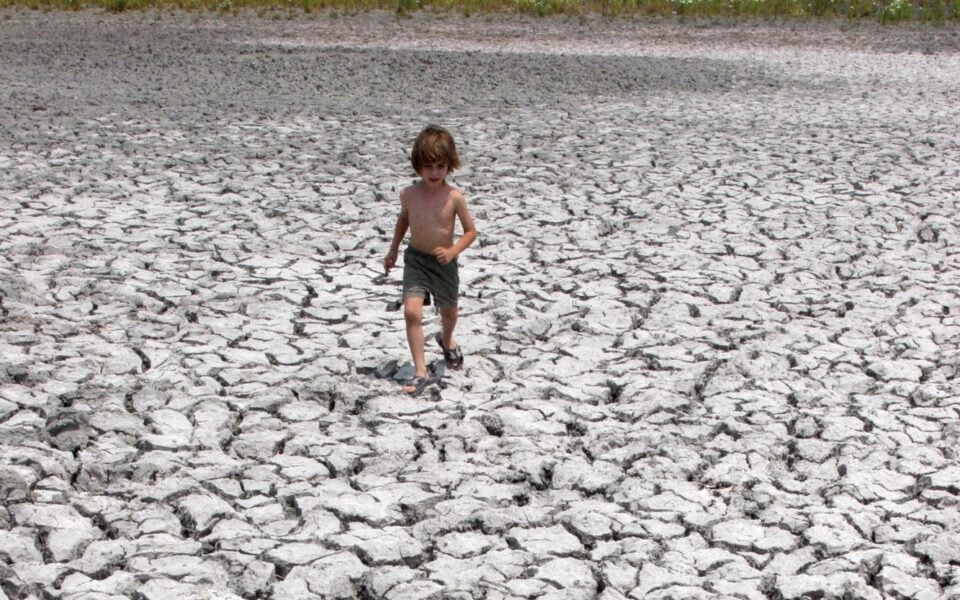
A child plays in a dried-up lakebed in Thessaly, which was devastated by floods as a result of Storm Daniel in September of last year and is now battling drought. ‘We’ve developed a program to ensure we have enough water by the end of August,’ says Dimitris Tsiouris, president of TOEB Pineios. [ΑΜΝΑ]
We are almost used to it in Greece: In the summers, we read expert analyses about the aridity of the soil, which is the main cause of large, destructive, deadly fires. In the winters, we sometimes look at old maps with riverbeds that we buried to build roads and sometimes we listen to analyses about the inability of the soil to retain rainwater because the forests have burned – both awakening us to the nightmare of new large, destructive, deadly floods. In the meantime, we consume water as if there was no tomorrow in the bathroom, the kitchen, the garden, to clean the sidewalks – or even the road surface – from dust, while for years, we thoughtlessly, arrogantly and arbitrarily drained the land to cover the needs of our crops. Ah, yes, and when the time comes to vote, we choose as rulers those whom we love to hate.
In the bigger picture and on the occasion of the new geopolitical crisis that broke out, bringing India and Pakistan to the brink of war again, we see water resources once again being used as a weapon. Kathimerini wrote on May 4 that Indian Prime Minister Narendra Modi closed the Indus dams, threatening Pakistan with water shortages that will destroy cotton and iron production, or with devastating floods if it decides to divert the flow of water. The bigger picture of our global village is complemented by news that links the issue of water management with bloody games of geopolitical pressure, with the aforementioned India-Pakistan case being added to a series of others in Africa, the Middle East and elsewhere.
The nightmarish puzzle is being completed – currently – with the grim reality shaped by data on the number (over 2 billion) of people who do not have access to clean drinking water, as well as on the connection between water scarcity and an increase of at least 10% in migration.
Let’s go from the big picture to the small one, which concerns Greece. What positive actions have we taken to the extent that we are able to? How much have we adapted the field of education to modern needs, such as cultivating a culture of respect for natural resources? Have all the flood protection projects that are needed in the country been carried out? Has any action been taken to promote projects such as seawater desalination? Have we undertaken diplomatic initiatives with other Mediterranean countries to cooperate in the fight against drought caused by the prolonged heatwaves and insufficient rainfall in recent years in our region?