
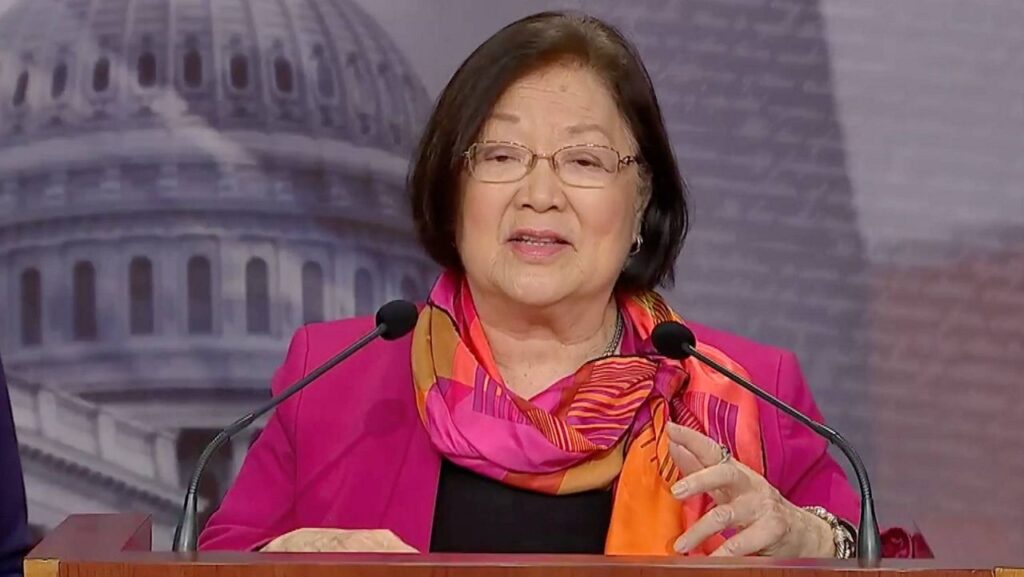
U.S. Sen. Mazie Hirono, D-Hawaii, joined U.S. Rep. Judy Chu, D-Calif., in introducing both a resolution recognizing May 10 as Asian American Native Hawaiian and Pacific Islander Mental Health Day and a bill aimed at increasing awareness of and access to mental health care throughout the AANHPI community.
“As we recognize AANHPI Heritage Month and Mental Health Awareness Month, I am proud to lead the introduction of this legislation to bring attention to the importance of mental health well-being in the AANHPI community,” Hirono said. “Too many members of our communities face economic, cultural, and language barriers preventing them from accessing critical mental health care and these bills reaffirm our commitment to breaking down those barriers. Every person deserves access to culturally and linguistically appropriate mental health care, and I’m glad to partner with Representative Chu as we work to invest in mental health resources, combat the stigma surrounding mental health and ensure that every member of our communities can access the care they need and deserve.”
The National AANHPI Mental Health Day resolution recognizes the importance of mental health to the well-being of AANHPI families and communities and acknowledges the importance of raising awareness around mental health care. It also encourages health agencies to adopt policies to improve the utilization of mental health services for the AANHPI community, as well as other marginalized communities.
According to the Substance Abuse and Mental Health Services Administration, 65.3% of AANHPIs who meet the criteria for a mental health problem do not receive treatment and that AANHPIs are the only racial or ethnic group in the age 10 to 24 category whose leading cause of death was suicide. In Hawaii, the suicide rate is greater than the national average and the rate of suicide for Native Hawaiians is nearly double the national rate.
“The AANHPI community is the least likely of any racial or ethnic group to seek out mental health services,” Chu said. “This disparity is largely driven by language barriers, taboos around shame, a lack of access to culturally competent care, and insufficient disaggregated data within research. As the only psychologist in Congress, I know how important it is to break down these barriers, challenge harmful misconceptions about seeking help, and ensure every community can access the mental health care they need.”
The resolution encourages federal, state and local health agencies to adopt laws, policies and guidance to improve AANHPI “help-seeking” rates.
Meanwhile, the Stop Mental Health Stigma in our Communities Act would direct SAMHSA to establish a national outreach and education mental health and substance misuse strategy for the AANHPI community by partnering with advocacy and behavioral health organizations that have an established record of serving AANHPI communities; and conduct research and collect disaggregated data on the state of behavioral health among AANHPI youth and on the shortage of AANHPI individuals in the behavioral health workforce.
The measure is supported by a broad coalition of AANHPI and mental health organizations.
“This bill is critical, as it provides necessary investments to reduce stigma within Asian American Native Hawaiian Pacific Islander communities. said Pata Suyemoto, executive director of the National Asian American Pacific Islander Mental Health Association.. said Pata Suyemoto, executive director of the National Asian American Pacific Islander Mental Health Association. “Stigma is a driving force that keeps AANHPI individuals from seeking mental health services when they need them. This bill hopefully will improve mental health outcomes through culturally and linguistically relevant services, increased culturally trained workforce, as well as increased research on AANHPI communities.”
Michael Tsai covers local and state politics for Spectrum News Hawaii. He can be reached at michael.tsai@charter.com.