
Dr Sophie Taysom is a sustainability adviser at Keyah. Dee Korab advises on sustainable finance and climate risk at Sparkd
Failure to manage the effects of extreme weather events will create systemic financial risks
At a glance
-
The UK’s Prudential Regulation Authority has put banks and insurers on notice to review their assessments of climate risks, identify gaps and plan how to address them
-
Gaps in banks and insurers’ climate risk assessments represent more than a regulatory compliance issue, they pose a systemic financial risk
-
Real estate is immovable. Assets are inherently exposed to climate events such as rising sea levels, fire and flooding — making climate risk particularly acute for banks and insurers’ real estate portfolios
Banks and insurers have been warned by the UK’s Prudential Regulation Authority to review their assessments of climate risks, identify any gaps and plan how they will address them.
In failing to manage risks such as flooding and extreme weather, and by considering climate risk largely as a reputational issue, banks and insurers are ignoring the broader impact that climate change will have on their and other institutions’ businesses. This points to a slow-building and systematic financial threat.
Real estate is a sector to which banks and insurers have substantial exposure; it also exemplifies how climate risk can materialise as a financial risk. Globally, real estate was valued at an estimated $379.7tn at the end of 2022, almost four times the size of global GDP. More than three-quarters of this value is in residential buildings.
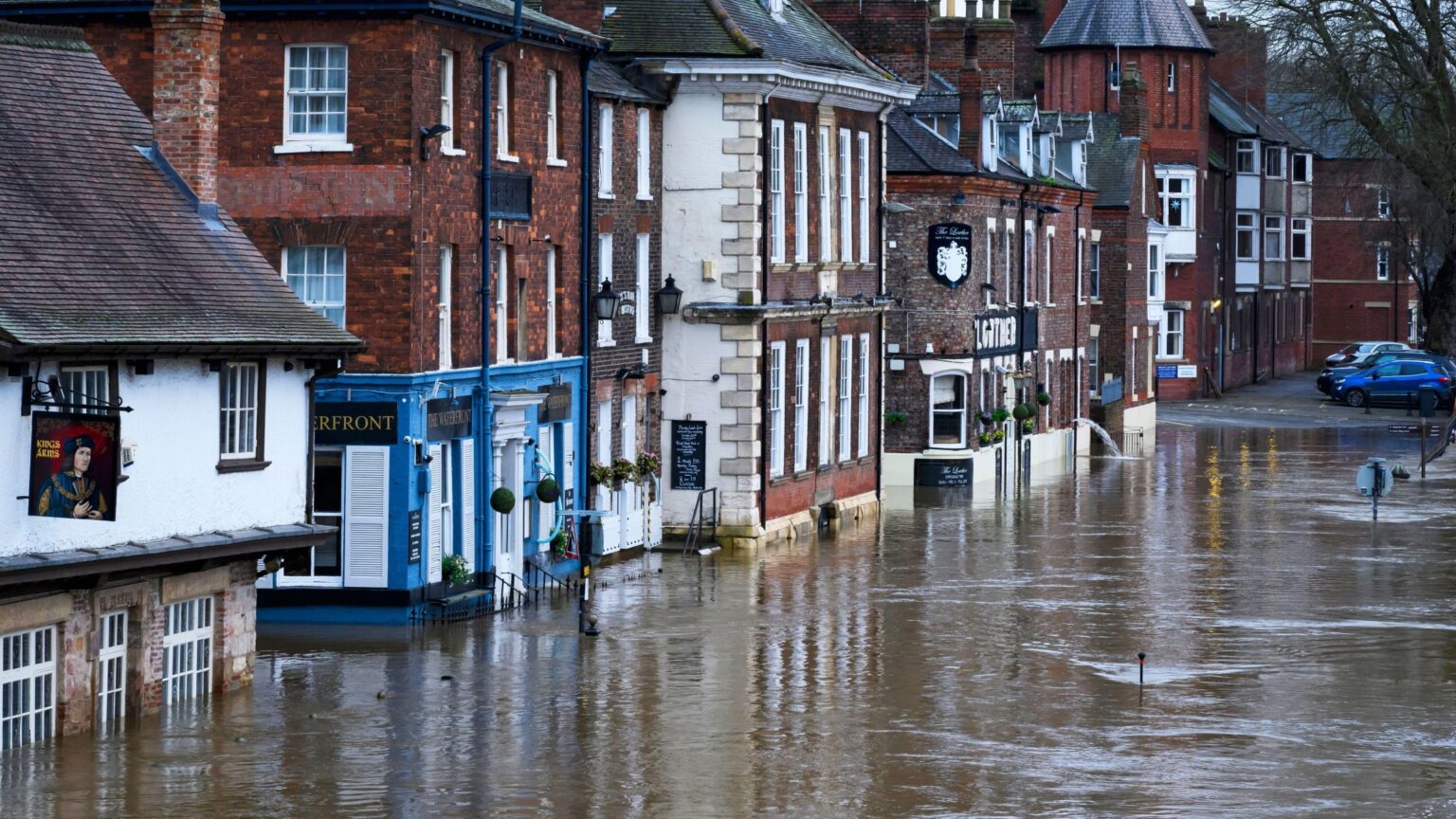
Real estate is immovable. Assets are inherently exposed to climate events such as rising sea levels, fire and flooding, making climate risk particularly acute for banks and insurers’ real estate portfolios.
The probability of property damage and loss is rising, hitting insurers who have to pay claims and banks who hold mortgages on damaged or devalued properties. One study found a 25 per cent price discount for recently flooded homes in the UK. Owners who must bear repair costs, higher insurance premiums, or loss of assets are also affected.
Then there is transition risk.
As we shift to a low-carbon economy, there is a risk that property values and business models will be affected by policy changes, technological advancements or evolving market preferences.
For example, under the UK’s Minimum Energy Efficiency Standards, there could be a ban on the letting or sale of properties that do not meet specific minimum energy standards by set target dates.
This is likely to have an impact on future cash flow and the value of buildings, unless they are retrofitted, which presents additional cost. There may also be a future refinancing wall, where assets that fail to meet specific standards become ineligible for refinancing. Late-moving lenders could, therefore, find they have assets in their portfolios they can’t lease or sell.
Exposure not limited
Banks’ exposure to real estate is not limited to their direct lending; or property insurance, such as mortgages provided to individuals; or commercial real estate lending in their corporate/institutional arms. It extends to every loan to a company that has a physical presence. A manufacturer whose operations are disrupted by a flooded factory could find their ability to repay a loan is reduced, for instance.
Insurers’ exposure to real estate climate risk similarly goes beyond direct property insurance, to business continuity insurance. Damages might be expensive, but they are largely insurable, for now.
Insurance is predicated on an event being low probability but potentially high impact. With climate change, we are seeing an increase in the frequency, intensity or probability of extreme events. As risks rise, so do insurance premium costs. Added to this, insurers are pulling out of the market — as seen in Los Angeles prior to the January 2025 wildfires.
Larger commercial property owners might turn to self-insurance. Where this isn’t possible, individuals and companies may find it impossible to finance their properties if insurance becomes prohibitively expensive or ceases to be available.
The banking industry largely takes it for granted that a standard feature of providing a loan against a property is property insurance — it’s such a standard requirement that it is often treated as a routine legal formality within technical due diligence. But without it, deals won’t go ahead, so what insurers do — or, more importantly, won’t do — has a direct effect on banks.
Timing mismatches
Another challenge is in the timing mismatch between insurance policies (typically annual), and underlying debt (multiyear). If a property insurance policy falls away during the term of the debt, a lender may limit the size of their loan to the value of the land, excluding the building. This would make commercial financing unviable. The timing mismatch also presents a refinancing risk to banks and asset owners.
The PRA has given institutions six months to conduct gap assessments and develop action plans. A strong response would include adopting a forward-looking approach through scenario analysis and stress testing, including climate risk in valuation, pricing and underwriting models, and engaging and supporting asset owners with transition and mitigation directly.
The extent of financial institutions’ exposure to climate risk will be determined by how decisively they move from gap analysis to concrete action. Failure to fully understand the impact of climate on real assets poses a systemic financial risk.
As the PRA points out, the window of opportunity to act is closing fast.