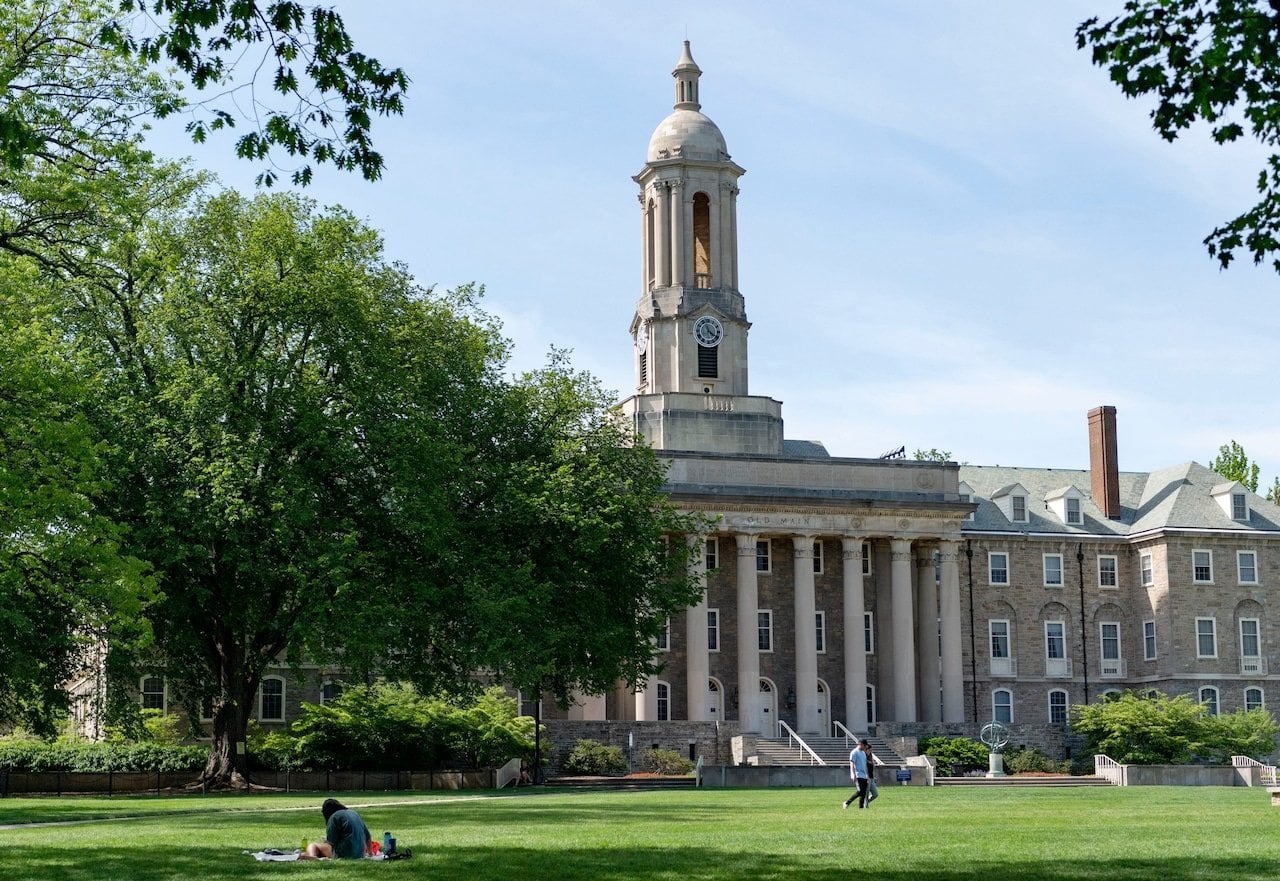
Penn State blames looming campus closures on ‘declining’ Pennsylvania
https://www.pennlive.com/education/2025/05/penn-state-blames-looming-campus-closures-on-declining-pennsylvania.html

Penn State blames looming campus closures on ‘declining’ Pennsylvania
https://www.pennlive.com/education/2025/05/penn-state-blames-looming-campus-closures-on-declining-pennsylvania.html
16 Comments
From the article
Penn State’s [stunning recommendation to close seven of its 20 Commonwealth campuses ](https://www.pennlive.com/pennstate/2025/05/by-making-hard-decisions-now-we-are-choosing-to-lead-through-change-penn-state-president.html)simply reflects the larger decline of the state it calls home – Pennsylvania.
In a [statistic-filled, 143-page report](https://psu-gatsby-files-prod.s3.amazonaws.com/newsdocuments/CWC_recommendation.pdf), the workgroup commissioned by university President Neeli Bendapudi says the proposed closures are directly linked to Pennsylvania’s projected precipitous population declines, especially in its rural counties.
“Pennsylvania is facing widespread population declines, with rural areas experiencing the most pronounced reductions. Forty-one of Pennsylvania’s 67 counties are facing significant population declines: rural counties are projected to lose 5.8% of their total population by 2050, while urban counties are projected to grow slightly (+4.1%),” the report states.
Very few can afford the high price of college. Just like groceries nowadays.
Edit: and the slash in government funding..
It makes perfect sense to me. Spending $240 mil on rural branch campuses with declining local populations makes no sense. People not from that area don’t go to those branch campuses, they go to their local branch campus or main campus. Penn State total enrollment is about 89k with about 50k of them at main campus. Rural Pennsylvania is just facing the decline that most rural areas of a state do and it doesn’t need as many branches as it has. Most state university systems don’t have 20 branches and half of PA’s population is in the Philly metro area.
All states that adhere to the philosophy of Thomas Hobbes and Voltaire over the philosophies of Jean-Jacques Rousseau will struggle economically. Fear is not a good driving factor for innovation and growth.
Such a loaded term. Demographics are declining unilaterally across the planet. Some rural kids will get challenged by campus closures, but the fact is just that people in wilds are having smaller families. People everywhere are. They planned this campus system decades ago. The kids that used it in the 90’s have less kids. The Philly and Pittsburgh universities are meeting enrollment numbers. PSU main campus is appropriately populated. Even the schools in Scranton are generally well populated. Can’t force people to breed, and can’t prohibit people from moving.
Let’s see their books and by what percentage top level administrator’s salaries have increased yoy as well as pensions and tenure being paid out.
My family moved out west decades ago and never really looked back. Went to visit family there and the entire area is run-down. The area is Meth & Maga now.
Almost like everything those evil liberals predicted would happen in the 90s and 2000s about the undermining of rural areas and the effect of big box corporate retail and rising wealth inequality came to fruition.
But it’s easier to blame vulnerable minorities than to understand this, I guess.
Unfortunate that the erosion of these academic institutions will only accelerate the downward-spiral.
I left the Commonwealth almost 50 years ago because I couldn’t make a living. Since then PSU bought a lot of community colleges and expanded. It doesn’t surprise me that they’re a drag.
I don’t think you need to spend too much time driving through rural Pennsylvania to (anecdotally, at least) see a state in decline. I know that’s true of other states, but in Pennsylvania it feels more pronounced. I think the size of the state and the remoteness of some of the communities gives them less appeal to young families than rural parts of neighboring states like Maryland and New York.
The York and Wilkes Barre closings make sense to me because they have other branches in commutable distance. The rest of the cities I am not familiar with, but two appear to be near Pittsburgh (which has its own branch) and the others are rural.
Population decline is always framed as a negative, systematic health does not inspire clicks but a healthy future for us all demands it. Supply should meet demand and that doesn’t always mean more more more is better
TBH with the massive rise in cost of college I don’t have a tear to shed. If they can charge what they do and still can’t figure out the numbers then that’s just the market doing its work.
As an alum that left PA and has no intentions on going back, yeah, this just makes sense. Demographics aren’t favorable for rural PA growth, so you’ll continue to see pullback of services, from higher education to medical and more. In fact, its been happening for decades. Hell, the area where I’m from doesn’t even have any grocery stores anymore, and it had 2 when I grew up there. But it has a Dollar General!
We just need to hurry up and engineer practical teleportation so that location doesn’t matter and we can optimize these systems.
Oh, yeah! It’s a great time to kick out the immigrants.
I think there are a few things at play here that are worth considering:
– PA has a rurality problem. It does not have a coherent strategy for dealing with the fact that rural communities that experienced 19th century growth and 20th century decline have no structured path towards self-sufficiency in the 21st century. All of the infrastructure that supported life in rural PA— which in the early 2000s had _the largest_ rural population in the US— is in disrepair and can’t sustainably be maintained without outsized investment that outpaces demand or population trends. And I mean all infrastructure. Not just bridges that get decommissioned vs. being repaired or roads that are allowed to be milled and turned into dirt/gravel roads vs. being paved; but also K-12 schools, municipal golf courses, churches, septic systems, and even universities.
– Penn State is a unique beast that is state-affiliated (as are Temple and Pitt) but isn’t state-run (like the California or Texas university systems) which means its state funding must be used sparingly and otherwise its operating entirely as a private school would. It doesn’t have the same inherent mission to serve communities at a loss because it’s in the commonwealth’s interest as the PASSHE schools do (who, by the way just went through their own consolidation).
– Penn State’s main campus is in an extremely rural and central part of the commonwealth but its branches aren’t necessarily aligned and weren’t chosen with the idea that they’d induce or meet specific demand. They’re also near but not in the states 3 primary economic-driver metros: Philadelphia, Pittsburgh, and the Lehigh Valley. This value proposition worked fine in previous decades where college demand was insatiable but given recent trends, I suspect there’s been a lot of migration of candidates who would otherwise attend these city-adjacent campuses to either schools IN the cities or community colleges.