
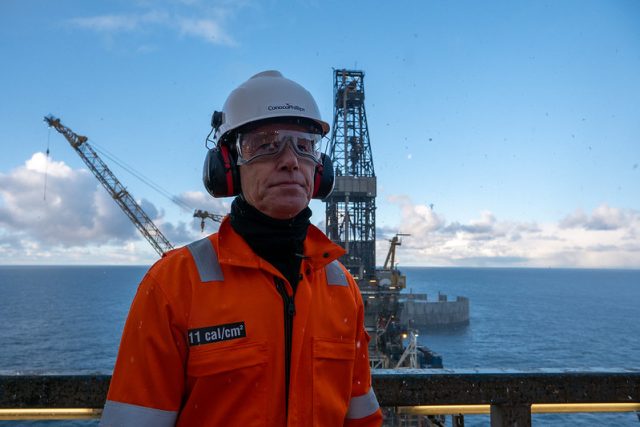
The Norwegian government is not only offering new record-large offshore areas in the Arctic for more oil and gas exploration, it’s seeking support in Parliament to pull more money out of its Oil Fund than ever before. The money, made up of oil and gas revenues over the past 30 years, would be used mostly to cover an extra NOK 50 billion in aid to Ukraine.
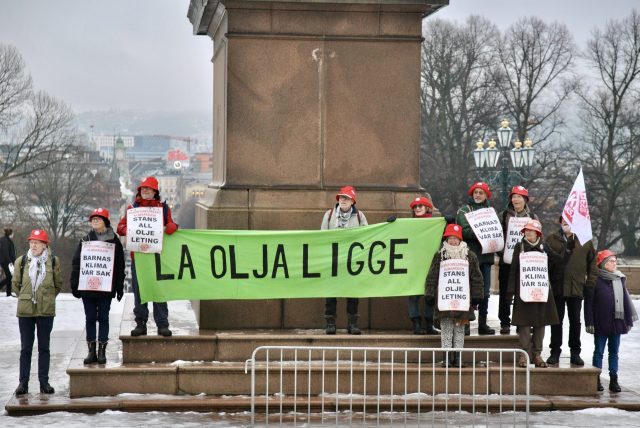 Demonstrators like these in front of the Royal Palace last winter want to halt all oil exploration in Norway. “Let the oil lie” read their banner, where it is under the seafloor. Now the Norwegian government has authorized a major expansion of more offshore exploration licenses in Arctic areas, while the state budget includes more money from the oil and gas industry than ever before. PHOTO: NewsinEnglish.no/Morten Møst
Finance Minister Jens Stoltenberg stressed that this was money already approved by Parliament and would be spent entirely outside Norway, on military equipment for Ukraine and other “international weapon initiatives.” That’s part of Norway’s own build-up in defense spending, but since it will be spent abroad, Stoltenberg said the extra NOK 50 billion won’t have any impact on Norway’s own economy.
Use of Oil Fund money is currently limited to 3 percent of the value of the fund itself, down from an initial 4 percent after it had experienced such rapid growth. There’s always been a concern, dating back to Stoltenberg’s earliest ministerial periods in Norwegian government, that spending too much of Norway’s oil wealth would overheat the economy.
Now the fund has grown further, despite major losses earlier this year when US President Donald Trump first announced huge tariffs that threatened an international trade war. He has since backed off given the market reaction, and Norway’s Oil Fund is bouncing back.
Norwegian politicians nonetheless tend to be very careful about Oil Fund use, and Stoltenberg seemed prepared for opposition when he unveiled his revised state budget on Thursday. It amounts to a string of new spending proposals through the rest of the year, and thus needs support again from Parliament. The Conservatives, the Christian Democrats and the non-socialist Liberals, though, quickly branded his revised budget as too expansive. The conservative Progress Party wants more tax relief, especially on food, fuel and energy.
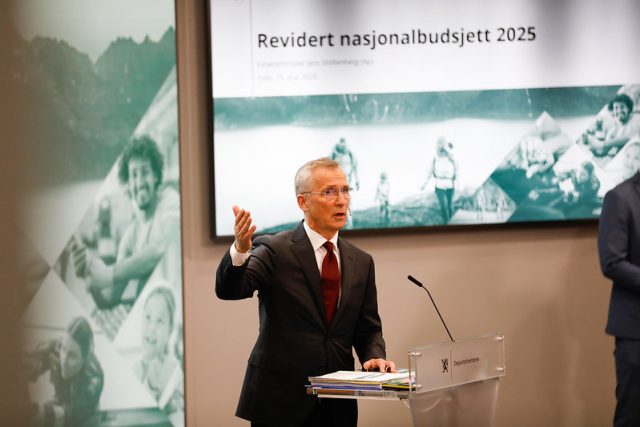 Finance minister Jens Stoltenberg staunchly defended his revised state budget’s use of more oil money when he presented it on Thursday. PHOTO: Ida Laingen/Finansdepartementet
Stoltenberg was braced for such reaction to the NOK 542 billion he now wants to withdraw from the Oil Fund, even though that only amounts to 2.7 percent of the fund’s current size. It’s up from the NOK 492.5 billion approved for 2025. Some economists also reacted negatively, with Ole Andreas Bø of Sparebank1 telling state broadcaster NRK that “now the oil money is flowing.” He thinks too much of it, meant to be fund pensions for future generations, is being spent even though the government expects more economic growth and low unemployment despite international tensions.
Professor Ola Grytten was also skeptical. “I had expected Stoltenberg would present a tighter budget, but now they’re jacking up oil fund use quite a lot,” he told NRK. He doesn’t think that will help bring down interest rates, which currently are higher in Norway than in many other countries. Others were more accepting, noting that government policy hadn’t changed much and that there’s broad support for ongoing aid to Ukraine as it remains under attack by Russia. That has deeply disturbed Norwegians since Russia attacked Ukraine more than three years ago: Norway also shares a border with Russia and expects borders to be respected.
While the goverment’s actual policy hasn’t changed much, it is boosting support for local governments still suffering from higher costs for everything from day care centers to schools and elder care. Municipal governments around Norway will be given as much as NOK 4.9 billion more in state support. The government also has budgeted for nearly NOK 1.3 billion more to help cover household electricity bills if rates climb again.
Stoltenberg claimed he was presenting “responsible” budget revisions at a time when price growth is expected to be around 2.8 percent. “The most important thing is to retain order in the Norwegian economy,” Stoltenberg said. While most countries need to borrow and build up huge national debt, not least in their support for Ukraine, Norway has its enormous piggy bank of unspent oil revenues.
Oil and gas revenues may also continue to grow after the ministry in charge of Norway’s oil industry opened up 76 new blocs in the Arctic late last week despite all the efforts over the past decade to restructure Norway’s economy away from fossil fuels. The current government even changed the name of the former Oil & Energy Ministry to just the “Ministry of Energy” in an apparent effort to downplay oil and gas. Climate and environmental advocates have long wanted to cut way back on production of both, but now the Labour Party-led government remains committed to offshore oil and gas.
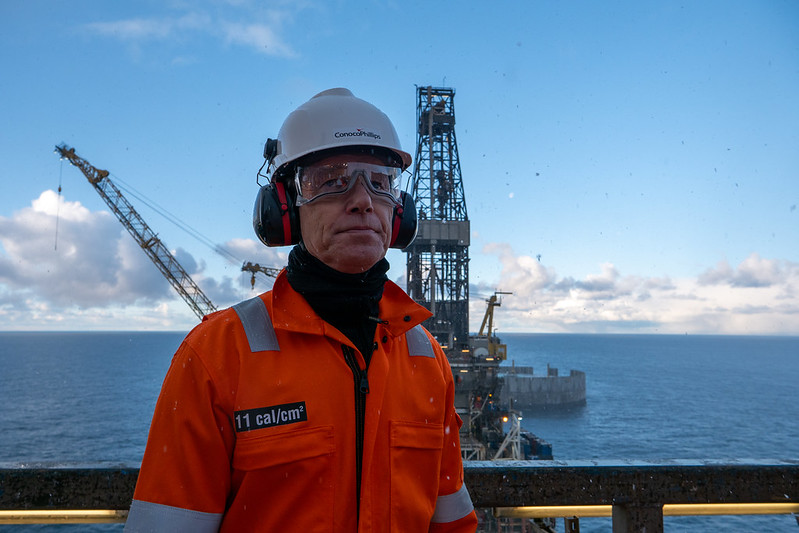 Energy Minister Terje Aasland of the Labour Party is bullish on oil and gas production. He’s pictured here during a visit to the opening of a new oil field in 2023. PHOTO: Ministry of Energy/Fanny Løvholm
“We need to explore more, discover more and produce more,” stated Energy Minister Terje Aasland, adding it was therefore “important to ensure (oil and gas) companies have stable access” to exploration areas. He called that “good for Norway and for Europe,” which has needed Norwegian gas to replace gas supplies from Russia.
While leaders of the industrial organization Offshore Norge called that “very good news,” environmental organizations were predictably disappointed and frustrated. “People, the nature and the climate are the losers here,” said Frode Pleym, leader of Greenpeace in Norway. Lars Haltbrekken, the former leader of Friends of the Earth in Norway (Naturvernforfund), claimed Aasland was being “totally irresponsible,” arguing that “we have already found more oil and gas than we can use if we intend to avoid destruction of the climate. We can’t continue to close our eyes to how destructive these licenses will be for the world’s climate.”
NewsinEnglish.no/Nina Berglund