
Norway’s domestic intelligence agency PST has joined top politicians in warning voters about potential meddling from abroad in this autumn’s upcoming elections. Not only is the national parliamentary election (Stortingsvalget) at risk, so is the Sami Parliament’s election (Sametingsvalget), with Russia viewed as most keen to sway election results.
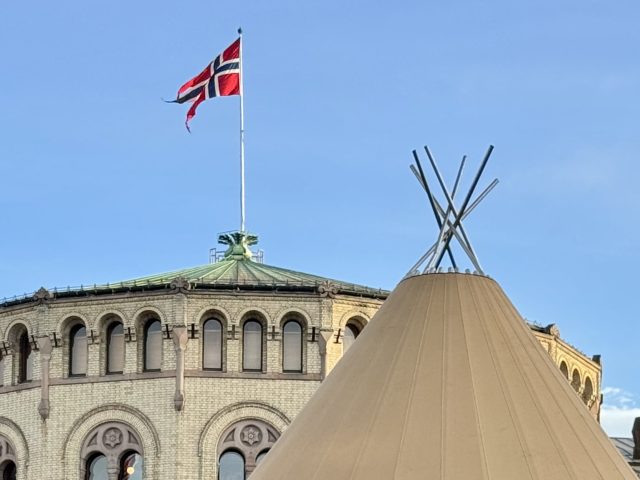 Upcoming elections of representatives for both the Norwegian and Sami parliaments in Norway are under threat of foreign interference. PHOTO: NewsinEnglish.no/Morten Møst
“We have seen examples in Norway of how Russian players have latched on to election issues and put their own twist on them to create discord,” Johan Roaldsnes, PST chief in Norway’s northernmost county of Finnmark, told state broadcaster NRK on Wednesday. Finnmark borders on Russia in the east, and is also home to many Sami and the Sami Parliament in Karasjok.
Roaldsnes said Russia is known to spread false information to create conflicts and divisiveness among the electorate. Elections can also be disrupted technically or through a form of an “information war” to create chaos.
“We haven’t discovered anything concrete ahead of the this fall’s election,” Roaldsnes said, “but because of the global security and political situation, we’re paying extra attention to this type of threat.”
The leader of the Norwegian Parliament’s defense- and foreign affairs committee, Ine Eriksen Søreide, was also warning this week of possible Russian interference in the September election. “There’s all reason for the alarms to be ringing,” Søreide told newspaper Aftenposten on Wednesday. “I’m extremely aware that we must not think we’re immune to this. We think maybe this won’t hit Norway, but it certainly can. Russia, China and Iran have both interests in and the ability to influence the public sector here in Norway. I think this is a real concern for our democracy.”
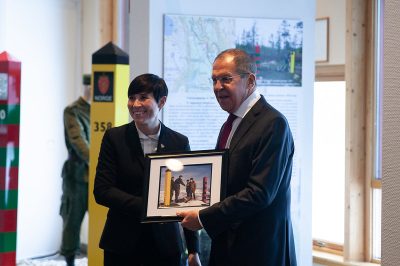 Relations between Norway and Russia have frozen since former Norwegian Foreign Minister Ine Eriksen Søreide posed in 2019 with her Russian counterpart at the time, Sergej Lavrov, on the 75th anniversary of the liberation of Finnmark by Soviet soldiers. Russia’s invasion of Ukraine three years later changed everything. PHOTO: Forsvaret/UD/Preben Aursand
Søreide, a former defense- and foreign minister for the Conservative Party, was especially concerned about how a small new political party with questionable financing managed to plaster Oslo’s public transportation system with a major advertising campaign calling for a halt to the Norwegian government’s support for Ukraine. The ads started showing up on Norway’s own national day on the 17th of May, upsetting many metro passengers before the ad campaign was halted two days later.
Questions flew about how the small party, called FOR, could afford such a campaign, estimated to cost more than NOK 1 million, and some quickly equated it to “Russian propaganda.” The party’s leader initially refused to respond, but later revealed the money had come from Norwegian businessman Atle Berge, the former owner of concrete producer Ølen Betong who has had extensive interests in Russia. Berge, who has written on social media that he currently lives in Murmansk, confirmed to NRK Tuesday night that he had donated around a million kroner (around USD 100,000) to the party, and was likely to donate more.
Ølen Betong officials have since distanced themselves from Berge, claim they’ve had no connection with him since March 2023, that he no longer has any stake in the company and stressed that it is no longer active in Russia. PST has already confirmed that it’s following the situation around FOR, which is also under probe by the Norwegian commission in charge of enforcing rules applying to political parties’ campaign and election financing.
Influence peddling ‘well-documented’
Eskil Grendahl Sivertsen at Norway’s defense research institute (Forsvarets forkningsinstitutt) told Aftenposten that Russian efforts to influence elections are already well-documented. “Russia uses a lot of money to persuade countries to reduce their support for Ukraine,” Sivertsen said. “At the same time, they use money and resources to divide (voters) and to change public opinion in several European countries.”
Asked whether that can affect Norway’s election campaign and the election itself, Sivertsen said Russian interference “is occurring all the time, not just in connection with an election. We should be prepared that Norway can be a target of Russian campaigns, also during the election campaign.”
The president of the Sami Parliament, Silje Karine Muotka of the Norske Samers Riksforbund party, agreed that it’s “important to be aware (of possible meddling) during elections and of our democracy, we can’t be naive.” She told NRK that she wasn’t aware of any attempts at foreign interference, but said everyone should be on the alert.
A former editor at Aftenposten, meanwhile, cautioned against being overly suspicious of political opponents in Norway, or tearing down a political party’s ads like those set up by the small FOR party. Harald Stanghelle, now a commentator and author, told newspaper Klassekampen on Wednesday that he’s “very skeptical” towards “all forms of suspecting an opponent’s financing without any concrete evidence.” Stanghelle also condemned how some members of the public vandalized or took down the party’s ads that were posted on metro trains.
“There’s no doubt that they (FOR) expressed themselves in a manner that reflects Russian views,” Stanghelle said, “but that doesn’t mean they are bought and paid for by the Putin regime.” The party ran a new full page ad in newspaper Klassekampen on Wednesday calling for a “stop to the genocide” in Gaza and an end to cooperation with the US.
NewsinEnglish.no/Nina Berglund