
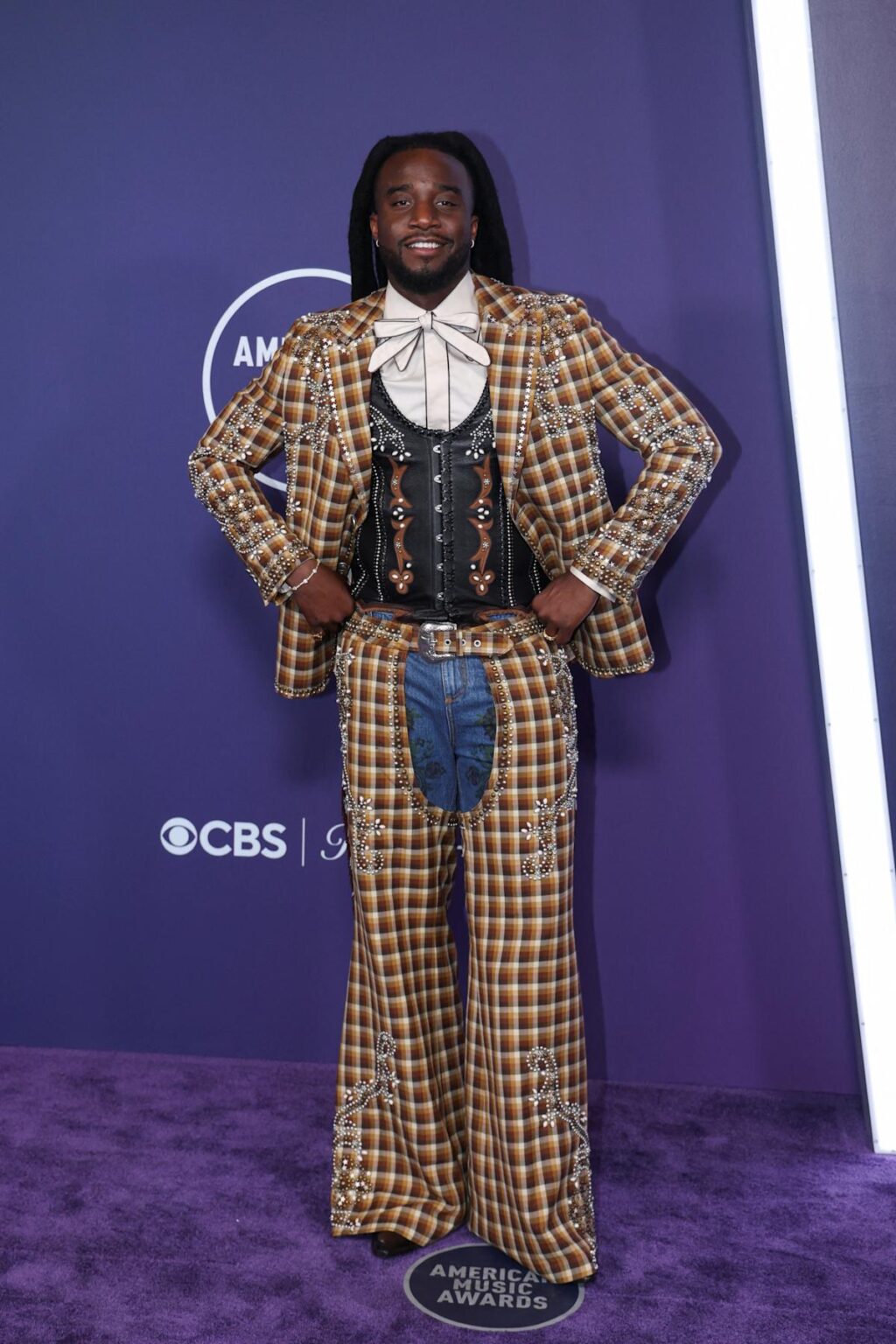
During the American Music Awards broadcast, a curious moment occurred when breakout country stars Megan Moroney and Shaboozey took the stage in Las Vegas to present the award for favorite country duo or group.
After the “A Bar Song (Tipsy)” vocalist noted groundbreaking African-American country performer Charley Pride’s 1974 victories for best country album and the genre’s favorite male artist of the year, Moroney stated that in 1974, favorite female artist went to Lynn Anderson and favorite country duo or croup went to the Carter Family, “who basically invented country music.”
At that point in the script, Shaboozey paused and drew his eyebrows together before making a short laugh and presenting the category’s nominees. Dan + Shay won.
Shaboozey had reason to be stunned.
Foundational country icons the Carter Family were among the genre’s early breakout stars, but they were far from the genre’s inventors.
Here’s what to know about the AMAs moment and the Carter Family.
Who are Megan Moroney and Shaboozey?
Georgia native Megan Moroney was the Academy of Country Music’s and Country Music Association’s best new artist of 2024.
In the past two years, she has released two Billboard Top 10 country and Top 10 all-genre albums — “Lucky” and “Am I Okay?” — which have yielded consistent Top 20 country radio rotation for songs such as “Tennessee Orange” and “No Caller ID.”
As far as Shaboozey, the Virginia native’s career took off in 2024 after he appeared on Beyoncé’s “Cowboy Carter” album, which explored country music’s Black roots. He followed up his guest spots with his own massive single “Bar Song (Tipsy).”
This isn’t the first awkward interaction with the music industry he’s had since then. His name was the punchline of several jokes at the Country Music Association Awards in November, and not all of them landed. Born Collins Obinna Chibueze, he told Billboard he picked up his stage name in high school when his football coach misspelled his name.
Who are the Carter Family? How do they fit into country music history?
Many tie country music’s roots back to the banjo being a West African musical instrument that, as far back as the 17th century, gained renown when Black Africans were first brought to the Americas as enslaved people. Three centuries of intertwining this tradition with English, German, Latin and Scotch-Irish folk traditions ultimately created the root of what is popularly regarded as “traditional” country music.
Record executive and producer Ralph Peer recorded acts including the Carter Family and Jimmie Rodgers (of “Blue Yodel No. 9” fame) in 1927 in the city of Bristol, located at the Virginia-Tennessee border. Black inspiration was also not far.
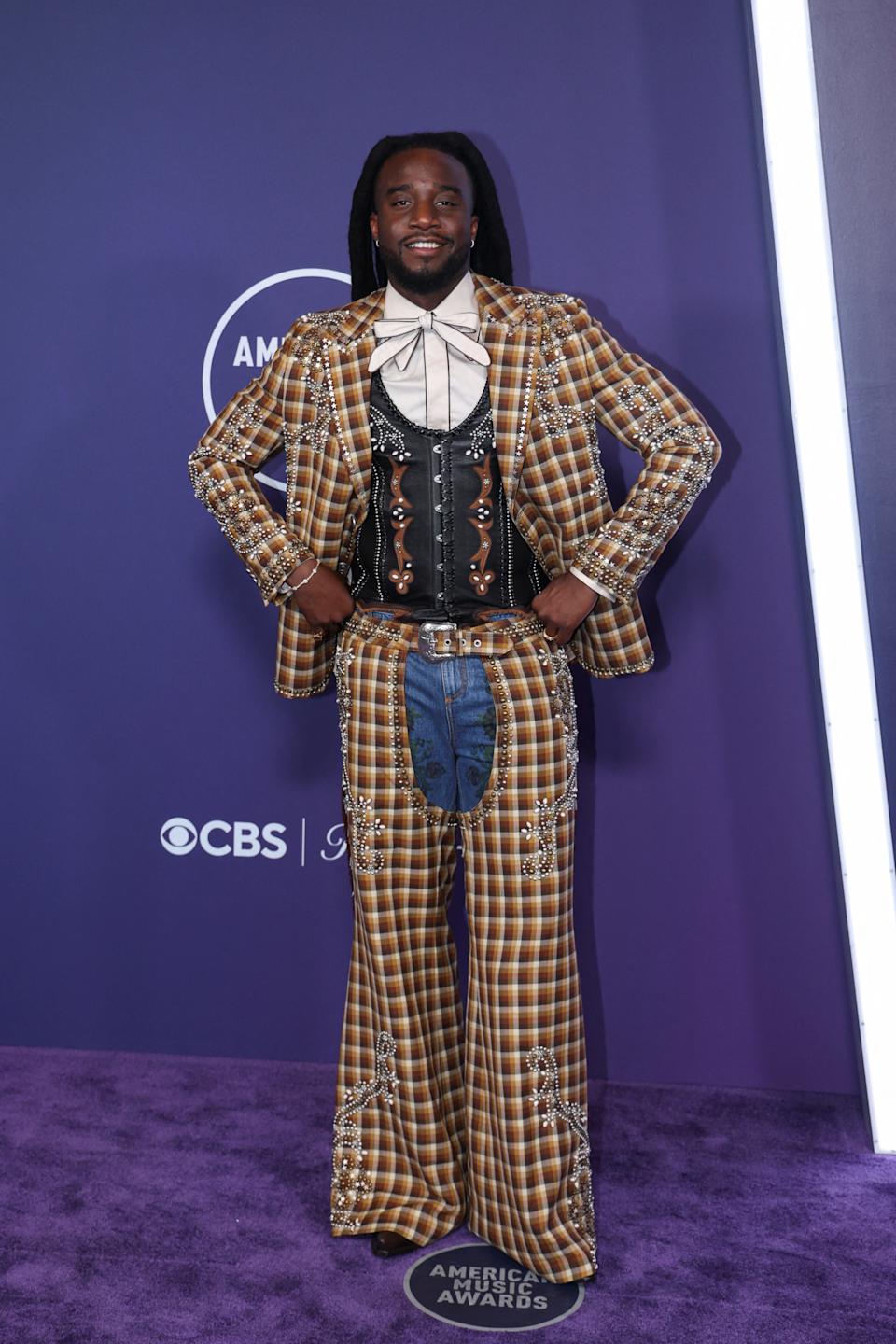
Shaboozey attends the 2025 American Music Awards, in Las Vegas, Nevada, May 26, 2025.
Lesley Riddle, a Black artist familiar to the nearby Appalachian hollers, taught the area’s best songs to A.P. Carter, his sister-in-law “Mother” Maybelle Carter and Maybelle’s sister, Sara.
“I was (A.P.’s) tape recorder,” Riddle once said to the Birthplace of Country Music Museum.
Notably, in the roughly dozen or so trips in a half-decade that A.P. Carter took alongside Riddle, he was taught songs including “The Cannonball,” “Let The Church Roll On” and “Coal Miner’s Blues.” Not content to stop there, Riddle also helped Maybelle Carter develop her renowned “Carter Scratch” guitar style, featured in many Carter Family songs, including “Wildwood Flower.”
By the 1974 era referenced at the 2025 American Music Awards, the Carter Family was two generations into their legacy. Following A.P.’s death in 1960, “Mother” Maybelle Carter and the Carter Sisters began using the name “the Carter Family” for their act.
Lesley Riddle’s legacy
Though instrumental in the Carter Family’s legacy, Lesley Riddle left music in the 1940s.
“There was no career in music in those years, and Lesley didn’t try to make a career in music,” Don Flemons, African-American author, singer-songwriter and ethnomusicologist, told The Tennessean for a 2019 story.
However, in 1965, at the behest of folklorist Mike Seeger, who documented Riddle’s songs and stories before his 1980 death, the legendary performer began playing again.
Riddle was one of many Black musicians who impacted country’s initial boom. Western Kentuckian Arnold Schultz’s inimitable style influenced bluegrass legend Bill Monroe. A young Hank Williams received “all the music training I ever had” from Black Alabama bluesman Rufus “Tee Tot” Payne.
This article originally appeared on Nashville Tennessean: What to know about Carter Family, Shaboozey’s reaction to AMAs script