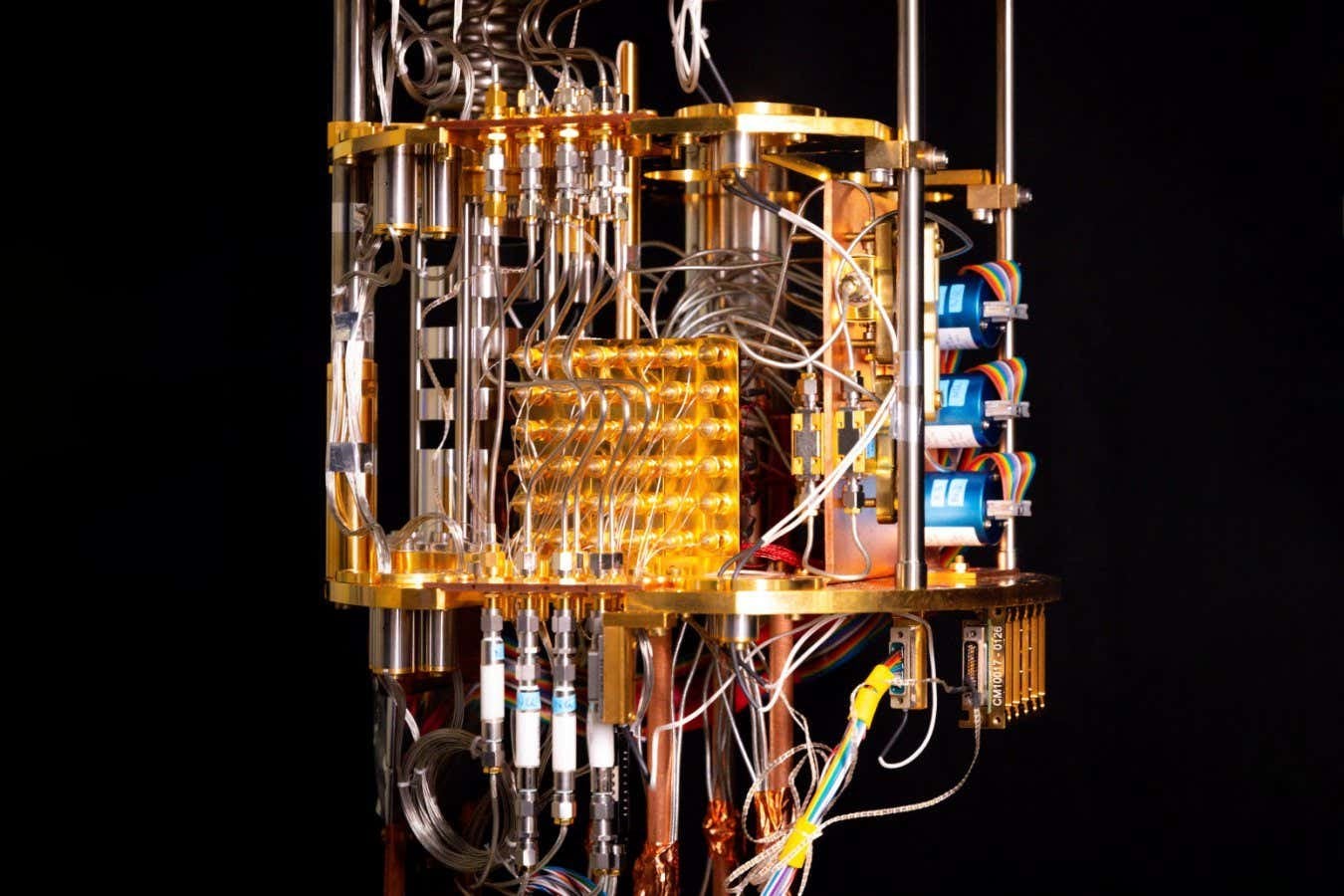
Qubit breakthrough could make it easier to build quantum computers
https://www.newscientist.com/article/2482057-qubit-breakthrough-could-make-it-easier-to-build-quantum-computers/

Qubit breakthrough could make it easier to build quantum computers
https://www.newscientist.com/article/2482057-qubit-breakthrough-could-make-it-easier-to-build-quantum-computers/
2 Comments
Quantum and fusion, both technologies that are never going anywhere.
> To correct its own errors, a traditional computer saves duplicates of information in multiple places, a practice called redundancy. For quantum computers to achieve their own version of redundancy, they typically require many additional quantum bits, or qubits – **hundreds of thousands** of them.
> Now, a Canadian quantum computing start-up has created a qubit that they say will let them slash that number to **mere hundreds.** “The basic underlying idea behind our hardware is… having qubits that have intrinsic redundancy”.
> Quantum error correction requires either more qubits – so that information can be stored in a group of connected qubits rather than a single one, protecting the system from any individual qubit’s failure – or for each qubit to be “bigger” in the sense of how information is stored within it. The new qubit uses the second technique, **storing information in a mathematical space that is effectively four-dimensional.**
> Nord Quantique projects that its fault-tolerant quantum computers will be up to **50 times smaller** than those that use qubits made from superconducting circuits, like the most advanced ones built to date. Additionally, the company estimates machines built with its qubits will consume **just a tenth as much power** as these other machines.