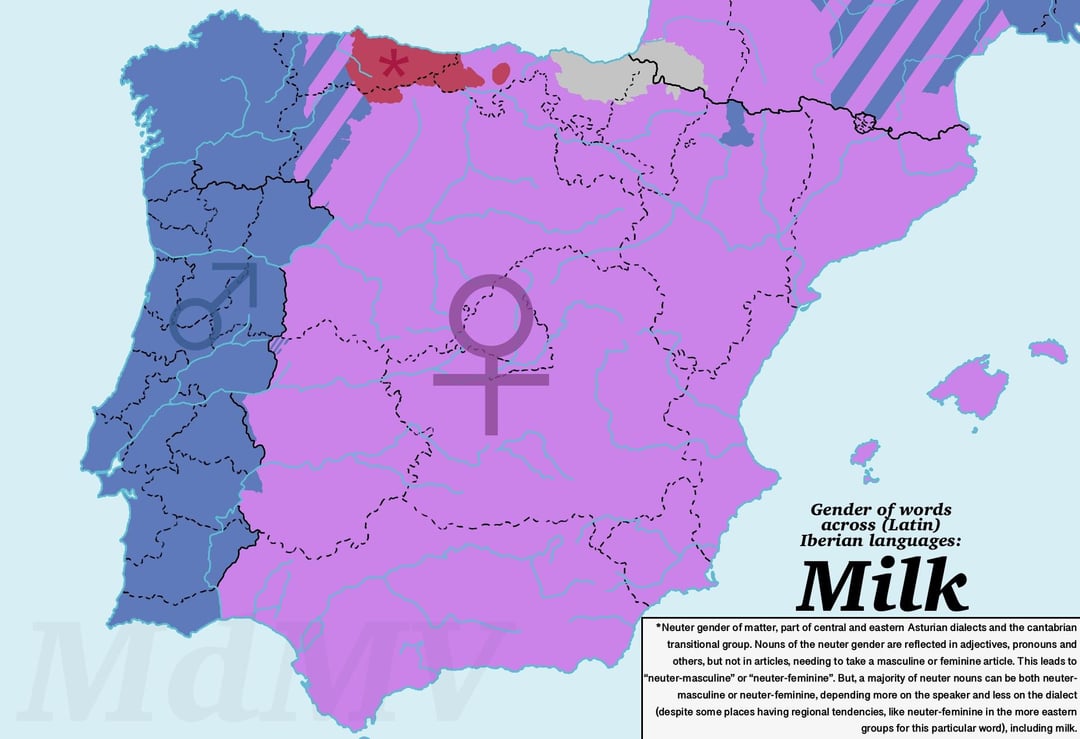
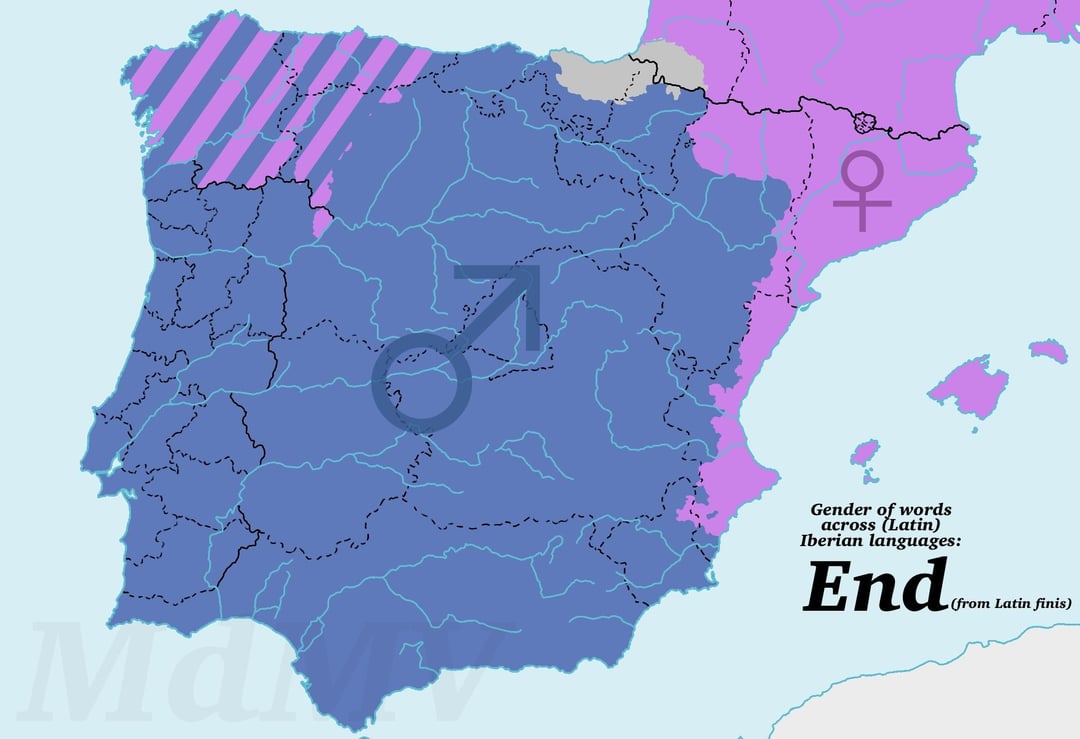
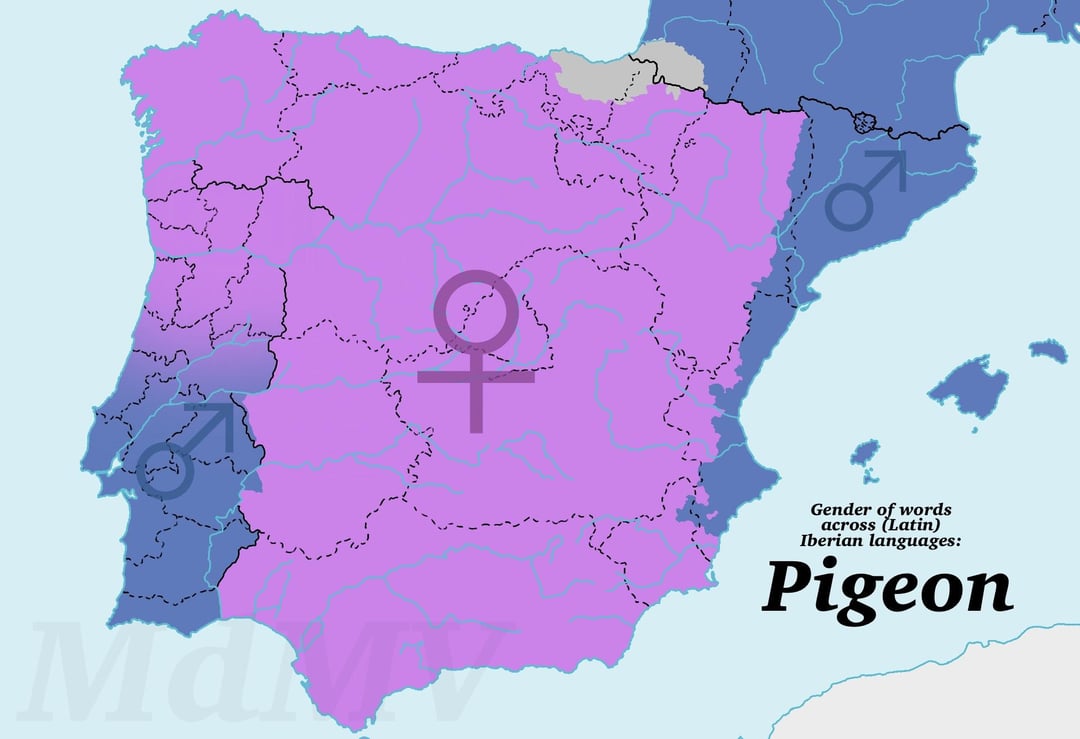
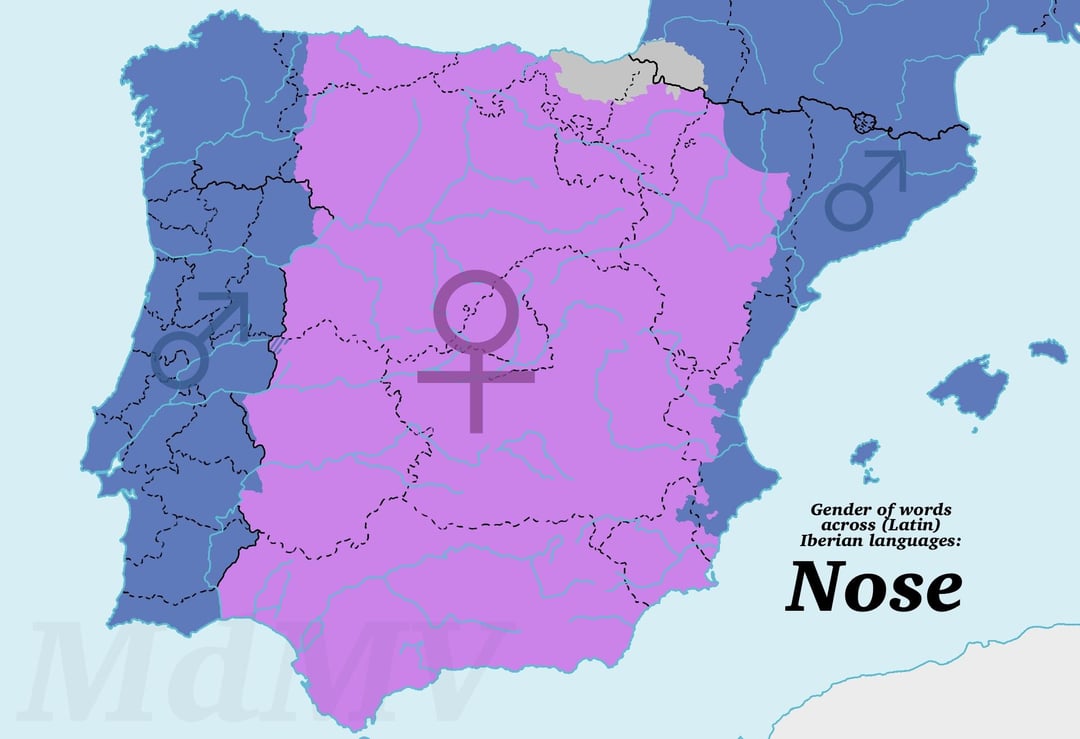
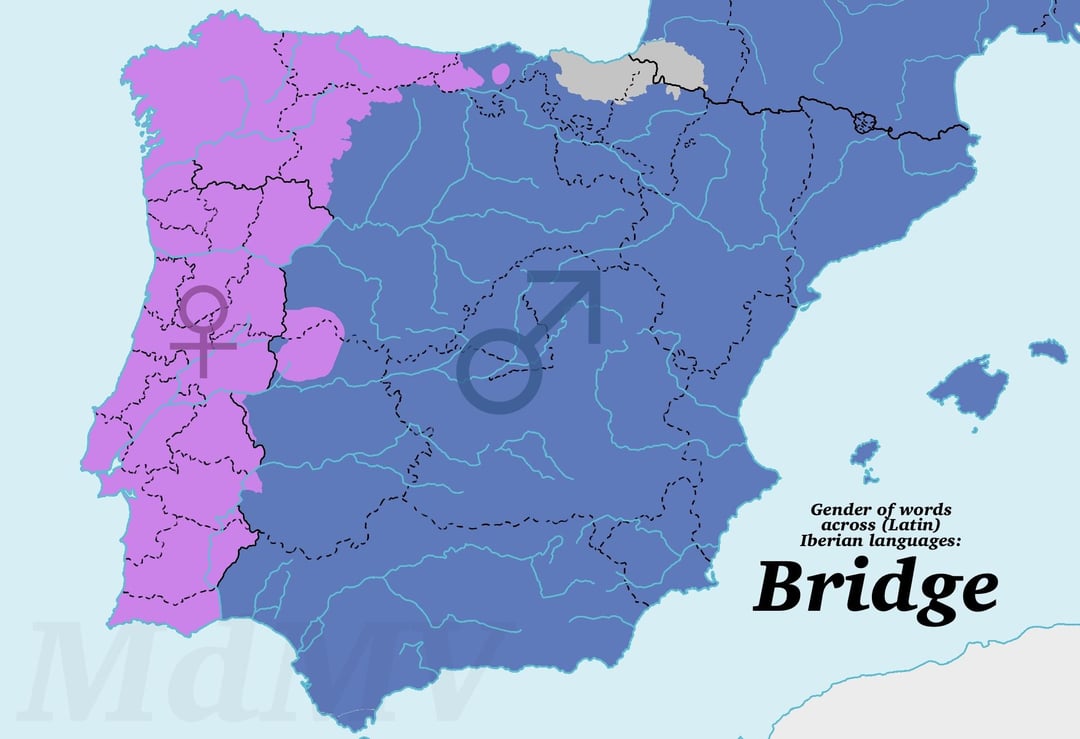
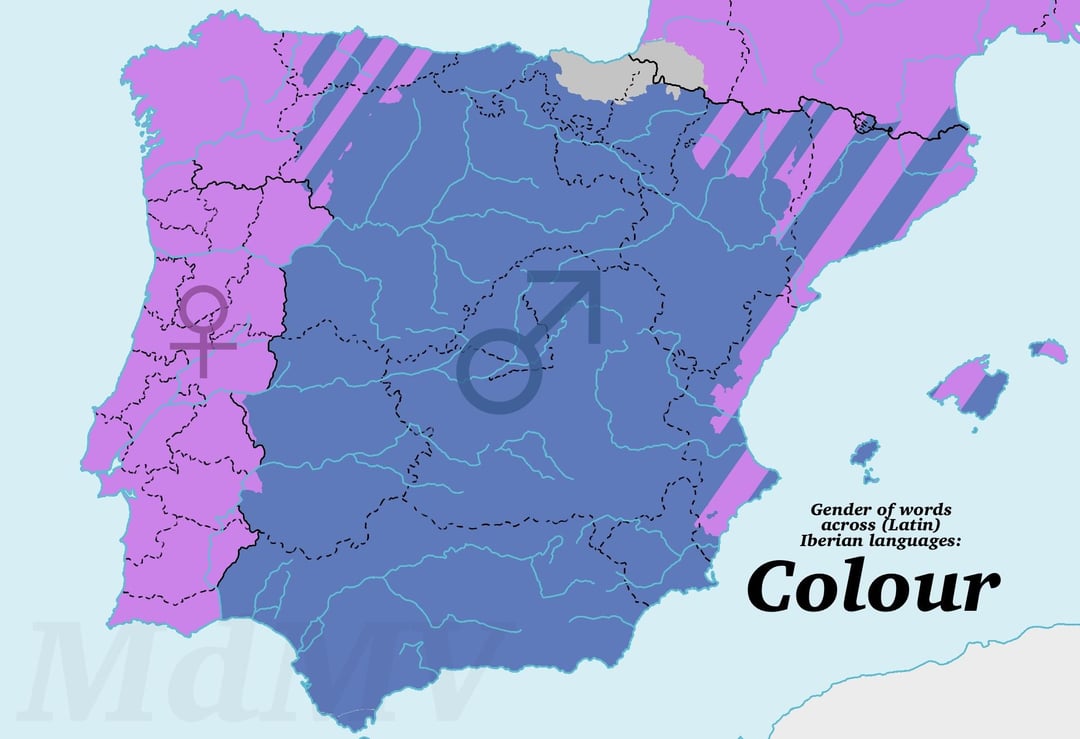
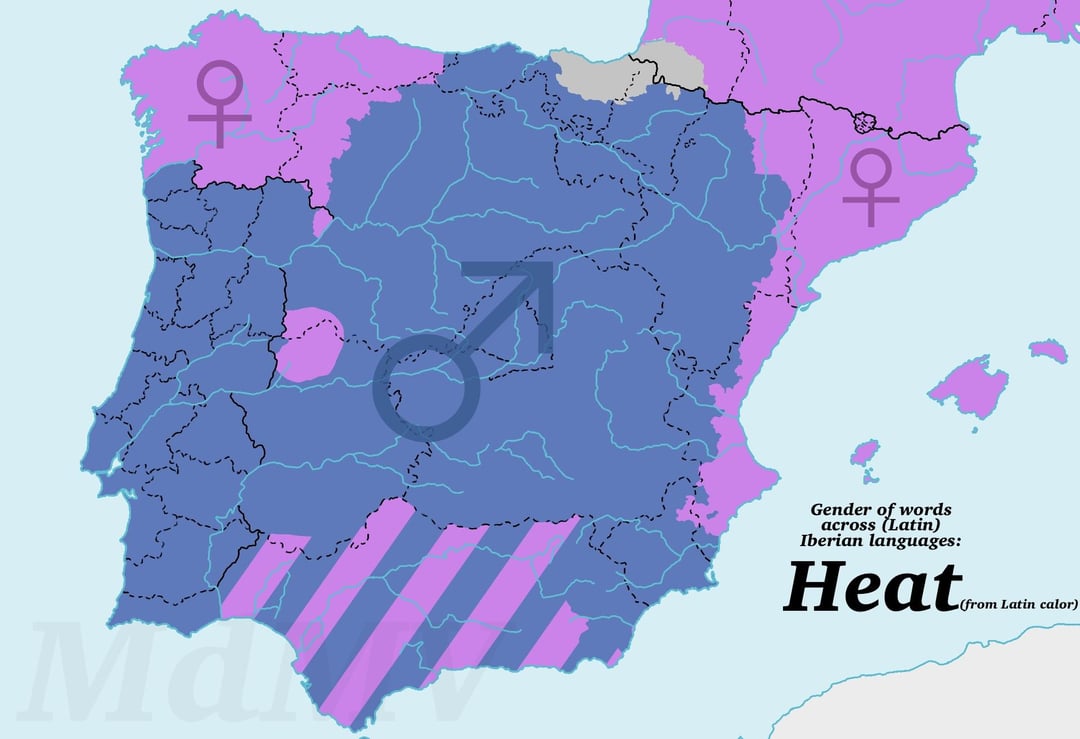
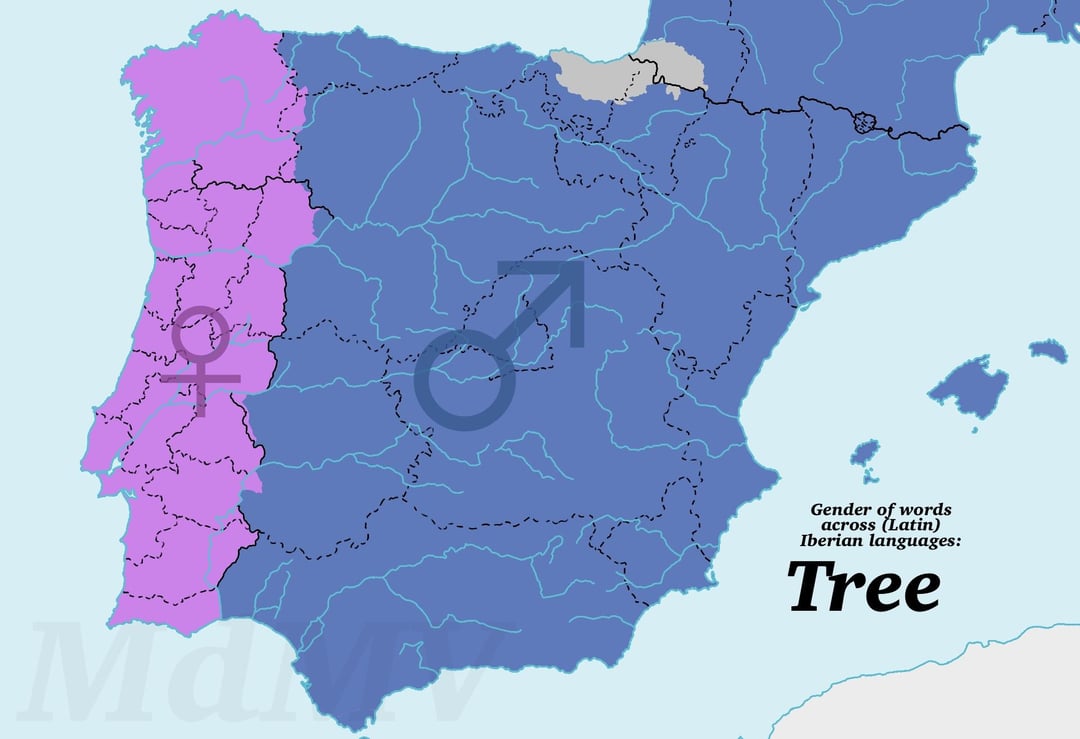
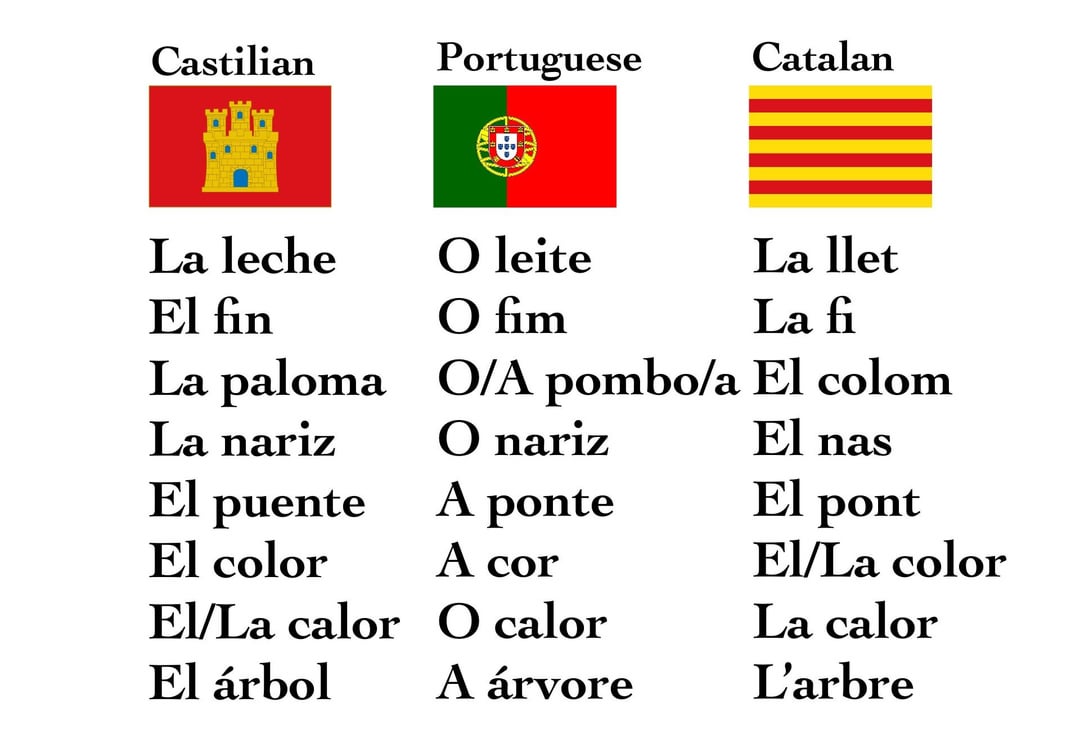
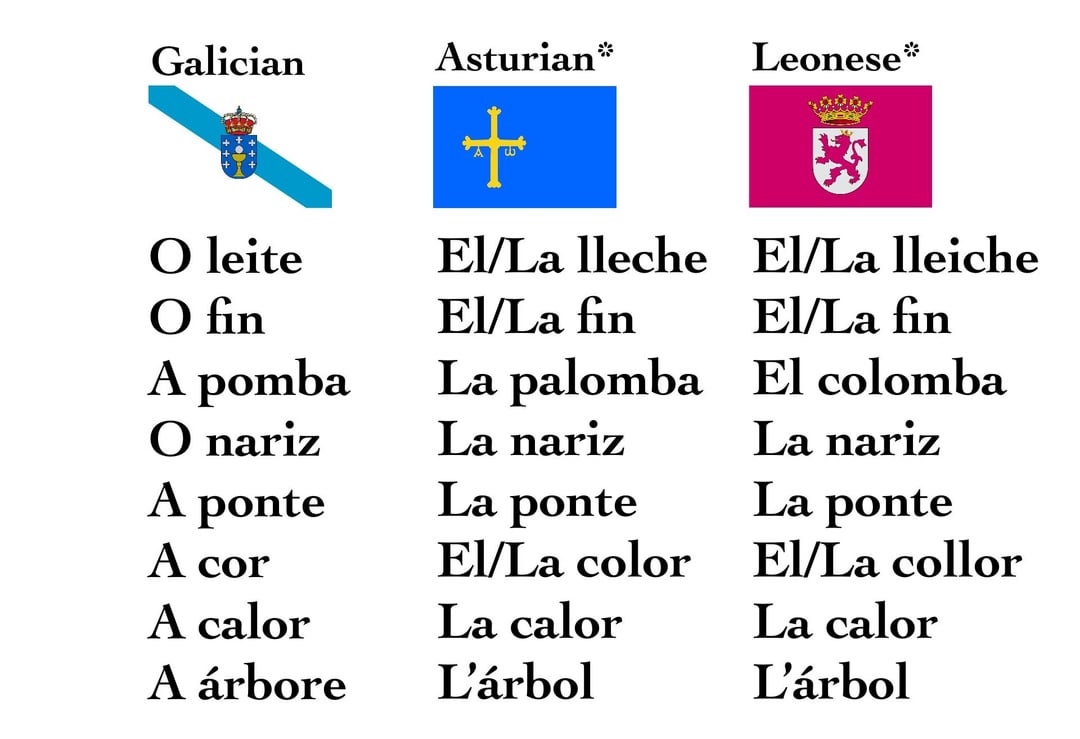
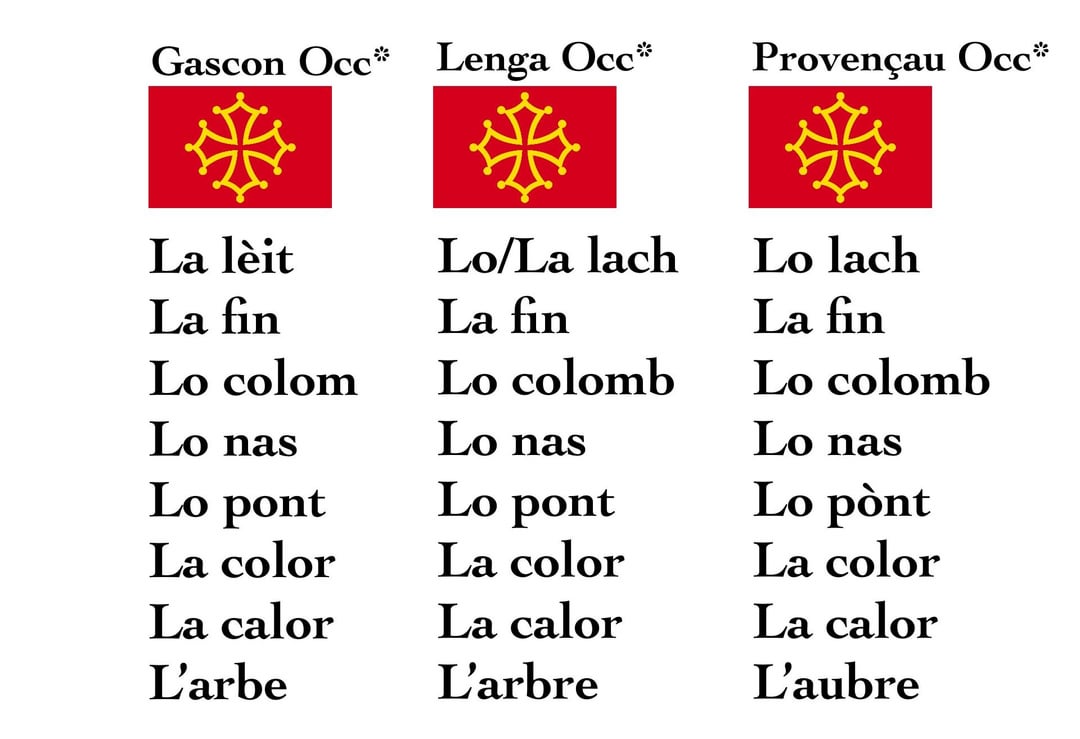
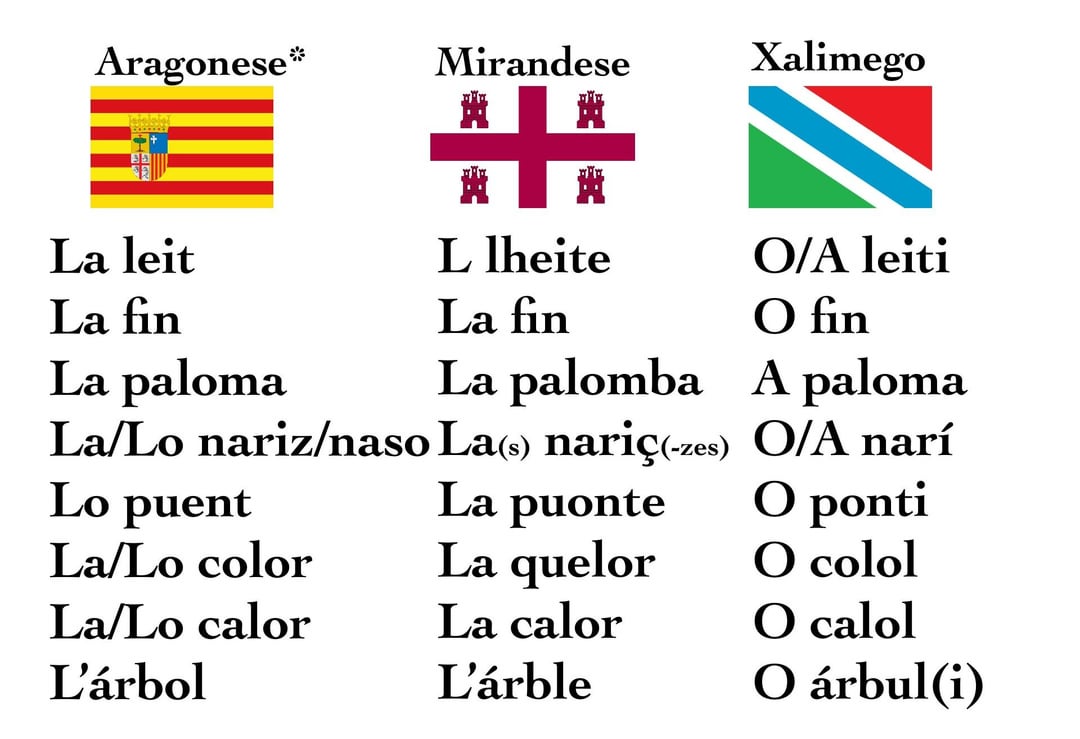
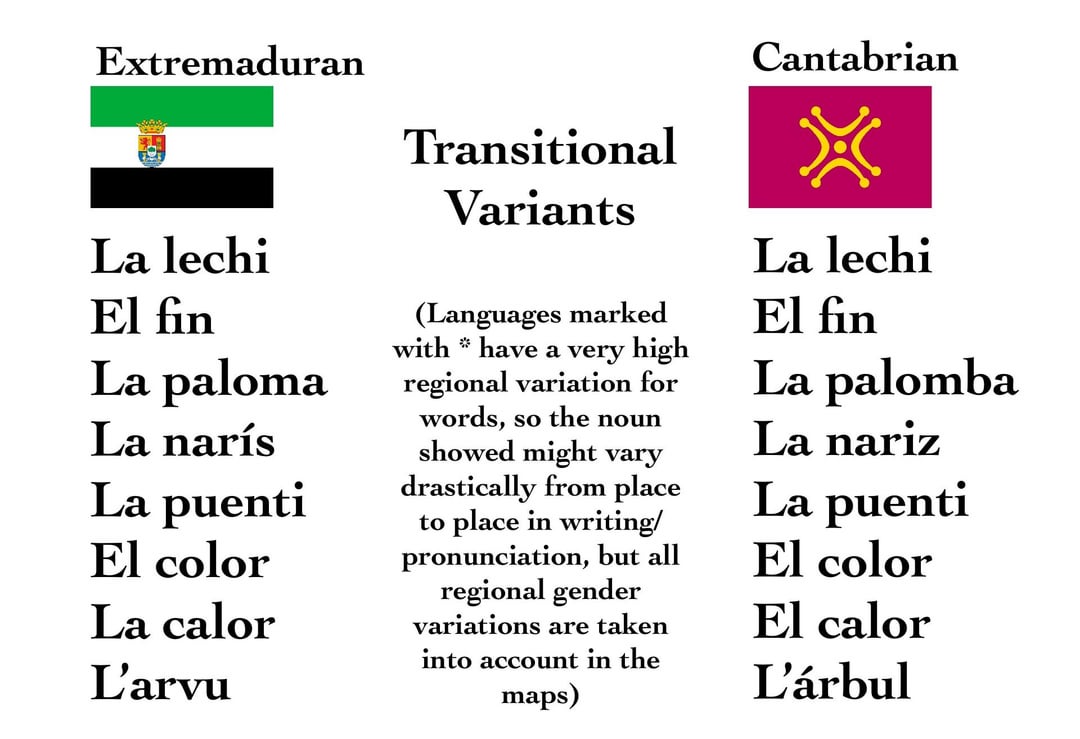
Words in Iberia with opposite grammatical genres (remake)
https://www.reddit.com/gallery/1kzvt6y
Posted by MdMV_or_Emdy_idk

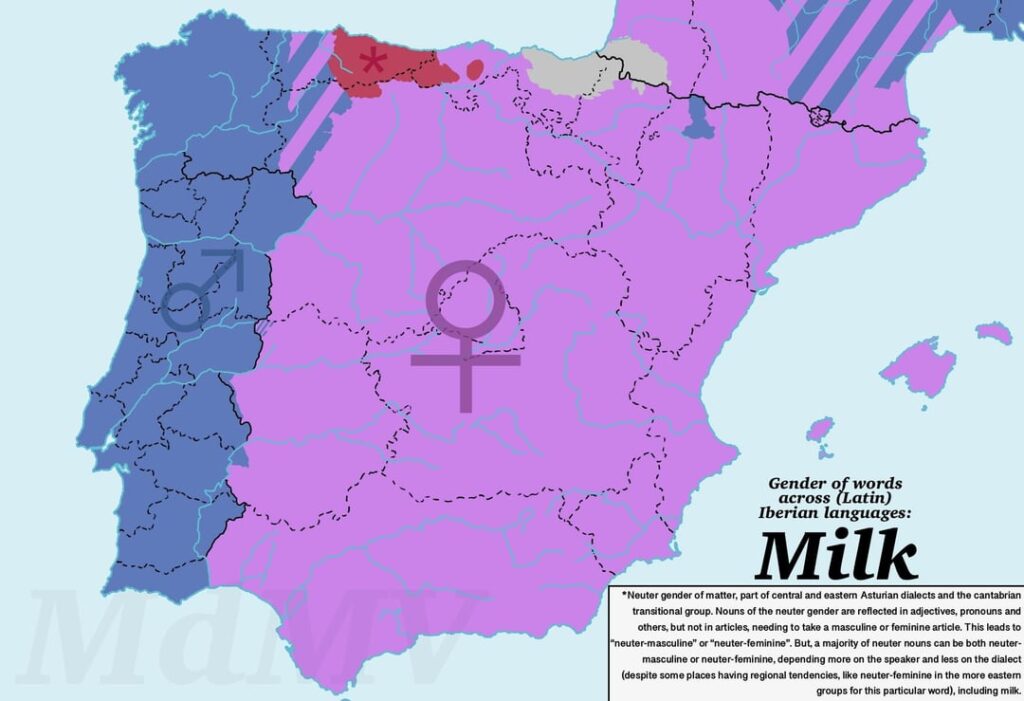
Words in Iberia with opposite grammatical genres (remake)
https://www.reddit.com/gallery/1kzvt6y
Posted by MdMV_or_Emdy_idk
6 Comments
>Just to clear confusion:
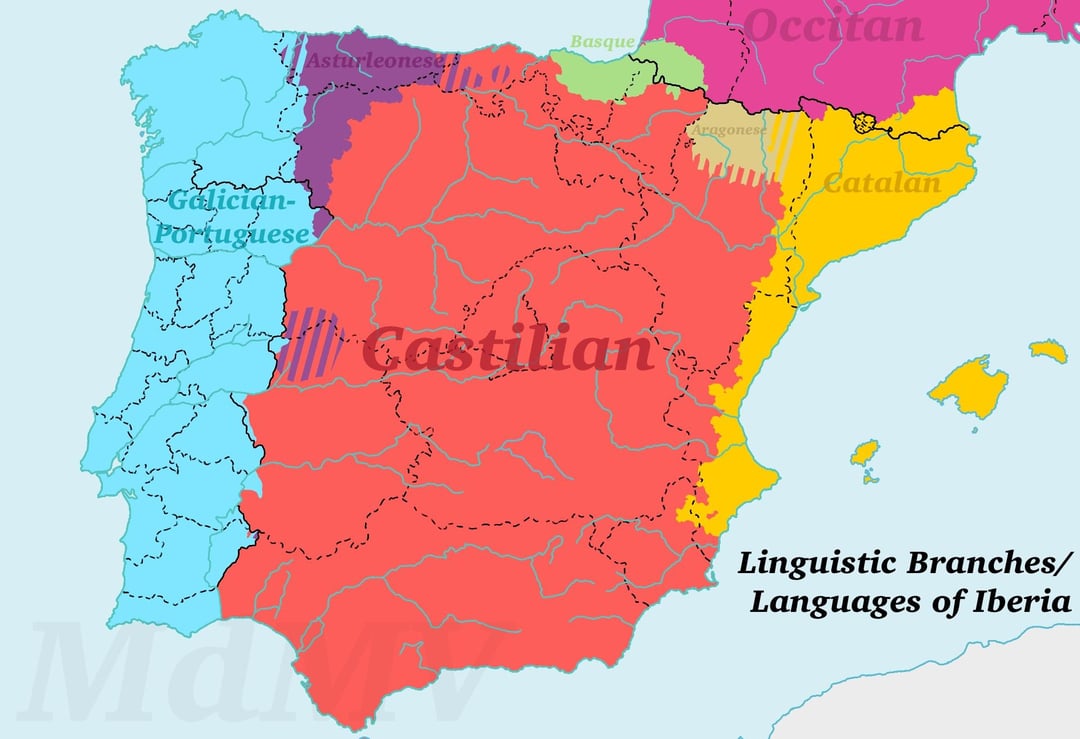
>-In the linguistic map (9th), striped areas dont mean bilingual areas, they mean transitional speeches
>-Minority languages are highlighted and prioritised so this map doesn’t just show three languages
>-All languages have words for both genders of pigeon, but just like most animals, one of the two genders is picked for the “standard”. (Like how the standard gender of dog is masculine until you know the gender of said dog, or when you’re making a hypothetical scenario where a dog is mentioned, unless you want to specify it’s feminine)
>-*End* is (in Castilian) FIN, not FINAL, the equivalent for all other languages
En catalán existe tanto “la fi” (f.), que significa “finalidad” o “última parte”, como “final” (m.), la traducción literal de “end” o “final”. “Al final” es una expresión que existe tanto en castellano como en catalán. Para decir “el final de la cola”, por ejemplo, *creo* que sería correcto decir “el final de la cua”.
La puente?
Por cierto aquí calor nunca lo he oído femenino
Pero el cántabro no es una lengua como tal ¿no? ¿No es un dialecto dentro del asturleonés?
Milk (lleite/ leite) and nose are femenine words in eonaviegan variety. Color is masculine.
Nice map though, some mistakes in such particular strips while representing the whole peninsula’s linguistics are normal.
Color es usado también como femenino en la acepción 2
m. color natural de la tez humana. U. t. c. f.
Sólo como dato curioso