Scientists Discover Bizarre Bacteria That “Breathe” Electricity Instead of Air
https://scitechdaily.com/scientists-discover-bizarre-bacteria-that-breathe-electricity-instead-of-air/

Scientists Discover Bizarre Bacteria That “Breathe” Electricity Instead of Air
https://scitechdaily.com/scientists-discover-bizarre-bacteria-that-breathe-electricity-instead-of-air/
2 Comments
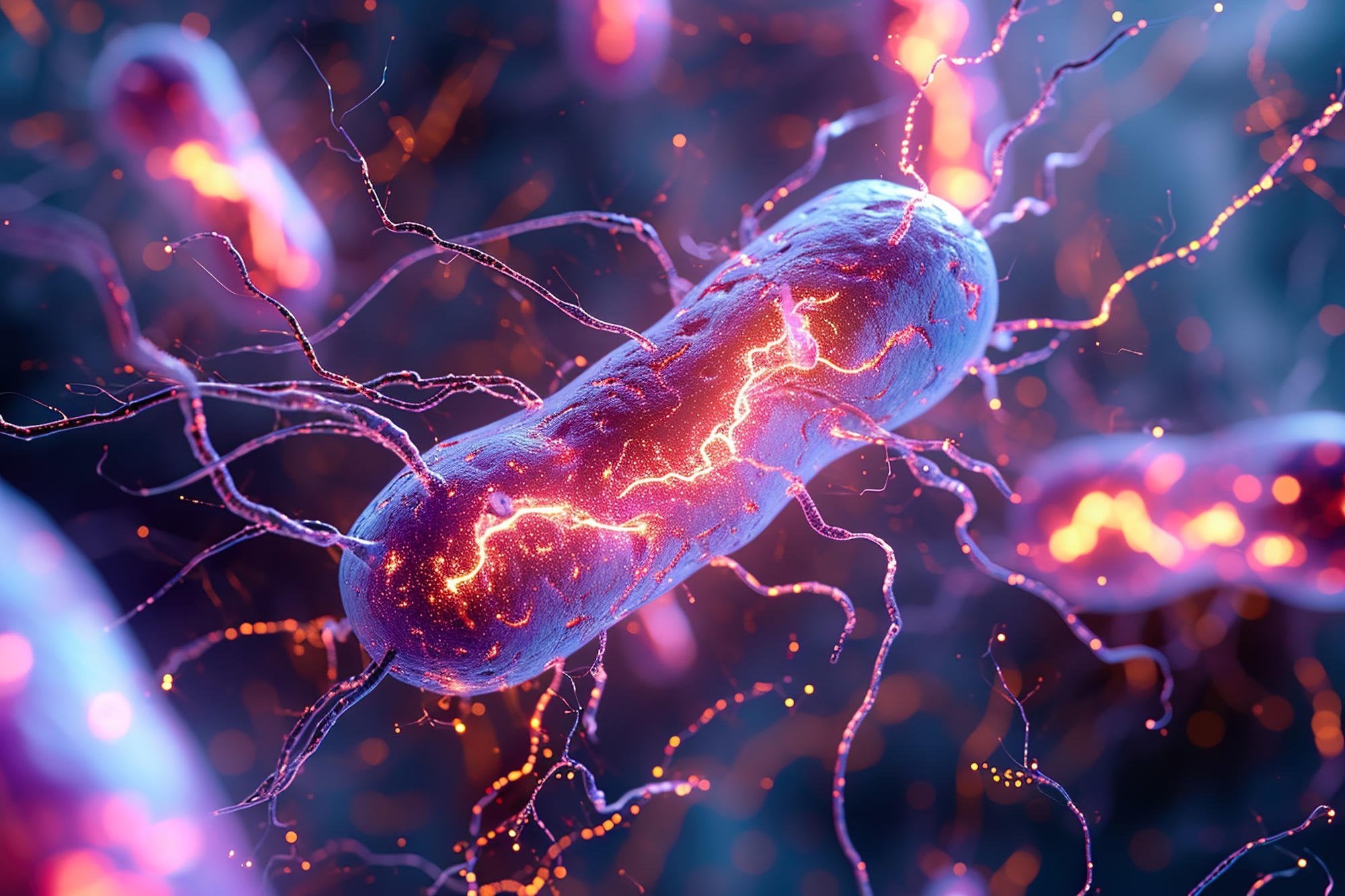
> A team led by Rice University bioscientist Caroline Ajo-Franklin has discovered how certain bacteria breathe by generating electricity, using a natural process that pushes electrons into their surroundings instead of breathing oxygen.
> “Our research not only solves a long-standing scientific mystery, but it also points to a new and potentially widespread survival strategy in nature”. The researchers found that some bacteria use naturally occurring **compounds called naphthoquinones to transfer electrons to external surfaces.** This process, known as extracellular respiration, mimics how batteries discharge electric current, enabling bacteria to thrive without oxygen.
> Using advanced computer modeling, they simulated bacterial growth in environments devoid of oxygen but rich in conductive surfaces. The simulations revealed that bacteria could indeed sustain themselves by discharging electrons externally. Further laboratory tests confirmed that bacteria placed on conductive materials continued to grow and generate electricity, **effectively breathing through the surface.**
> Biotechnology processes such as wastewater treatment and biomanufacturing could be significantly improved through better management of electron imbalances. **Electricity-exhaling bacteria could fix these imbalances** to keep the systems running efficiently. “Our work lays the foundation for harnessing carbon dioxide through renewable electricity, where bacteria function similarly to plants with sunlight in photosynthesis,” Ajo-Franklin said.
Sure seems like ants in my area (East Texas) love invading Electrical circuits . Can someone explain this to me ?